
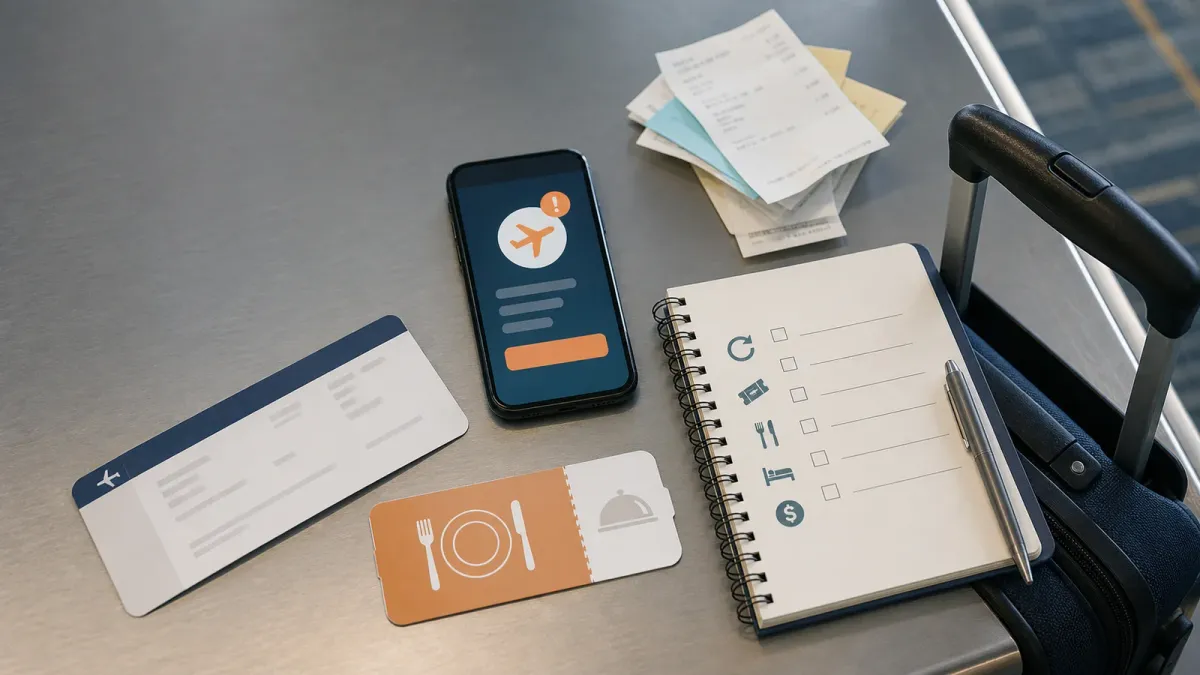
Flight delays and cancellations are spiking in search interest as summer travelers run into storms, ground stops, smoke, and crowded airport schedules. The practical question is not just whether your flight is late. It is what you should ask for before you tap accept on a rebooking, voucher, or travel credit.
The Federal Aviation Administration's daily report for Friday, July 17, 2026, warned that thunderstorms could delay flights at major airports including Atlanta, Chicago, Dallas-Fort Worth, Las Vegas, Phoenix, Seattle, and several Florida hubs. It also said wildfire smoke could reduce visibility around New York-area airports. Conditions change quickly, so your airline's app remains the flight-specific source.
The U.S. Department of Transportation says airlines usually rebook passengers on the next available flight on the same carrier at no extra charge after a cancellation. If that option creates a major delay, ask whether the airline can endorse your ticket to another carrier or rebook you through a partner agreement.
Do this first
- Take a screenshot before choosing an option. Save the delay notice, cancellation notice, boarding pass, itinerary, and any proposed voucher or credit terms.
- Check whether the disruption is controllable. Airline-controlled problems, such as maintenance or crew issues, often unlock stronger meal, hotel, and rebooking commitments than weather or air-traffic delays.
- Compare the airline's offer with DOT's dashboard. The dashboard lists each major U.S. carrier's stated commitments for controllable cancellations and significant delays.
- Ask about another airline before buying your own replacement ticket. Some carriers commit to rebooking on a partner or another airline with an agreement; others do not.
- Decide whether you still want to travel. If a cancellation or significant delay makes the trip no longer useful, a refund may be better than a rushed rebooking.
Check these details
For U.S. domestic trips, airlines generally are not required to pay extra cash compensation just because a flight is delayed or canceled. That is different from a refund. A refund becomes relevant when the airline cancels or significantly changes the flight and you do not accept rebooking, travel credit, miles, or another form of compensation.
Meals and hotels depend on the carrier's commitments and the cause of the disruption. DOT's dashboard shows that many large airlines commit to meal vouchers when a controllable cancellation or delay causes a wait of three hours or more. Overnight hotel commitments also vary by carrier and by whether the airline caused the problem.
For a long airport wait, keep receipts for meals, transportation, hotel rooms, and basic necessities. Ask airline staff whether expenses will be covered before spending, and use the airline's written policy or app chat when possible so you have a record.
Common mistakes
Do not assume a voucher is the same as a refund. A voucher may expire, limit where you can book, or lock you into the same airline. Do not cancel your own ticket before the airline cancels or significantly changes the flight unless you understand the fare rules. And do not rely only on airport monitors; apps, email, text alerts, and gate agents can update at different speeds.
When to get help
If the airline refuses a refund or does not honor a written commitment, file a complaint with DOT's Office of Aviation Consumer Protection and include documentation. For immediate travel, ask for a supervisor, contact the airline through its app and phone line at the same time, and check whether your credit card or separate travel insurance includes trip-delay coverage.


