
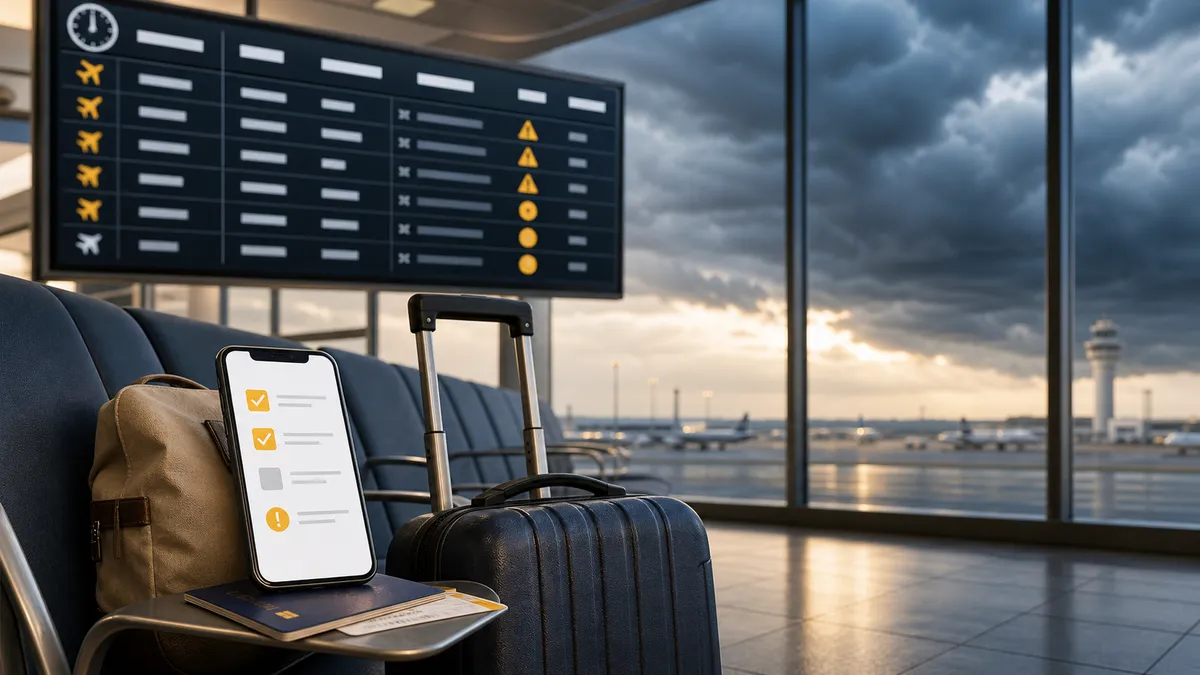
The July 4 air-travel rush is not fully over yet. TSA said it expected to screen nearly 18.7 million travelers between Tuesday, June 30, and Monday, July 6, while FAA status pages on Sunday, July 5, showed weather and traffic-management constraints still affecting parts of the national airspace.
If your flight is delayed or canceled, the first useful move is not to argue at the gate. It is to sort the disruption into three buckets: what caused it, whether you still want to travel, and what the airline has already promised customers in that situation.
Those distinctions matter because U.S. passenger rights are narrower than many travelers assume. The Department of Transportation says airlines generally are not required to pay extra compensation for a delayed or canceled domestic flight, except in oversale bumping situations. But refunds, rebooking and service commitments can still matter a lot.
1. Ask whether the problem is controllable
A controllable disruption is one the airline can reasonably manage, such as maintenance, crew scheduling or some operational problems. Weather, air-traffic restrictions and security events usually are not controllable for the airline, even when they create the same missed connection for you.
This is the key to meals, hotels and ground transportation. DOT's Airline Cancellation and Delay Dashboard lists what each major U.S. airline has committed to provide when the cause is within the airline's control. Before accepting a small voucher or sleeping in the terminal, check the dashboard and ask for the specific commitment that applies.
2. Decide whether you still want the trip
A refund is different from compensation. DOT says travelers are entitled to a refund when a flight is canceled or significantly changed and they choose not to travel or accept rebooking. The refund should go back to the original payment method unless the passenger accepts another form, such as a voucher.
That choice is important. If the airline can put you on a later flight and you still want to go, rebooking may be better than a refund. If the trip no longer makes sense, ask for the refund before spending more money around a replacement plan.
3. Keep the paper trail simple
Save the airline's delay notice, cancellation notice, boarding pass, receipts and screenshots of app messages. If you paid for a bag, seat, Wi-Fi or another extra service that was not provided, keep that receipt too. DOT's refund guidance includes certain paid services and delayed checked baggage in situations where money may be owed.
For same-day decisions, use the airline app, airport monitors and FAA status pages together. FAA data can explain a regional ground stop or thunderstorm delay, but the airline still controls rebooking options, voucher handling and customer-service commitments.
The practical rule is simple: do not accept the first answer without knowing which bucket you are in. Weather may limit what an airline owes beyond rebooking, but a controllable cancellation can unlock more help. A canceled or significantly changed trip you no longer want can make a cash refund the right ask.


