
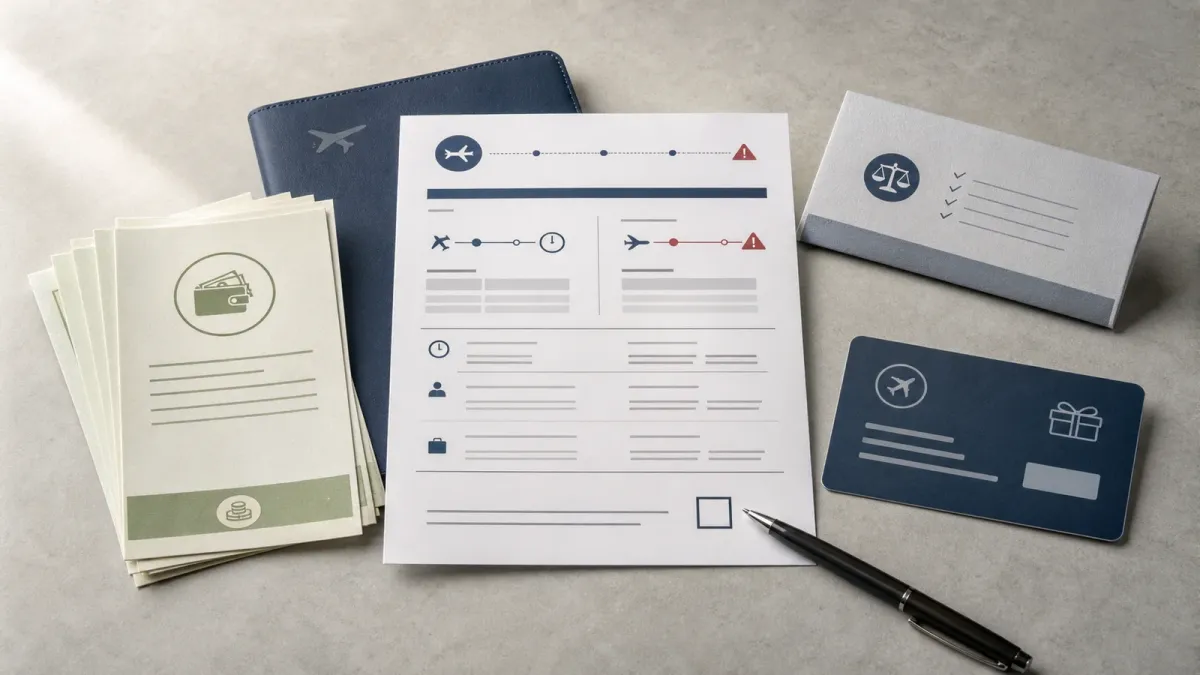
When an airline cancels a flight, moves the schedule, changes airports, adds connections, downgrades a seat, or leaves bags far behind, the first offer a traveler sees may not be the best one. A rebooking, voucher, credit, miles offer, or refund can all be legitimate options, but they do not mean the same thing.
The useful rule is simple: decide whether you still want to travel on the changed itinerary before you accept anything. Under U.S. Department of Transportation rules, cash refunds are tied to specific events and to whether the passenger accepts the airline's alternative.
This matters during a busy travel season because flight prices move quickly, AI flight-search tools are pushing more flexible deal hunting, and scammers are also using travel disruptions as bait. The right answer is not always cash, but travelers should know what they are giving up before clicking accept.
The short answer
If the airline cancels your flight, significantly delays it, significantly changes it, or involuntarily downgrades you, you may be entitled to a refund if you choose not to travel and do not accept a rebooking, voucher, credit, miles, or other compensation instead. DOT says airlines must tell passengers about the refund right when they make those offers.
A voucher can still be the better practical choice when the replacement flight works, the credit is richer than the cash value, or you know you will use it. But it should be a deliberate trade, not the default button pressed while standing at the gate.
Do this first
Check what changed. For U.S. refund rules, a significant schedule change can include arriving at least three hours later on a domestic itinerary or at least six hours later on an international itinerary. It can also include a different origin or destination airport, more connections than the original itinerary, or a downgrade to a lower class of service.
Decide whether you still want the trip. If you accept the changed flight or an alternative flight and travel, DOT says you generally are not entitled to a refund of the ticket price under those rules. That is different from asking for meal, hotel, or other assistance when a delay is within an airline's control.
Save the offer before you respond. Keep screenshots of the original booking, the changed itinerary, the airline message, any deadline to accept a new flight, and the terms of a voucher or credit. If the price of replacement travel changes later, those records help you reconstruct what happened.
Find the merchant of record. If you booked through an online travel agency or travel agent, the company shown on the card statement may be responsible for the airfare refund when one is owed. Optional-service refunds, such as a paid bag or seat fee that was not provided, may still need to go through the airline.
Check these details

Look for the payment deadline. DOT says refunds owed after a rejected alternative are due within seven business days for credit-card purchases and within 20 calendar days for cash or check purchases. If you do not respond to an alternative offer and do not travel, the refund clock can depend on when the changed or alternative flight departs.
Check voucher restrictions. Airlines may offer credits instead of cash, but DOT says they must disclose material restrictions, limitations, or conditions and that the credits or vouchers must be valid for at least five years. Read whether the credit is transferable, whether it covers taxes and fees, and whether it can be combined with another fare.
Watch baggage and add-on fees separately. A checked-bag fee can be refundable when the bag is lost or significantly delayed. DOT describes a significant domestic baggage delay as more than 12 hours after arrival, while international timing can depend on flight length. File the mishandled baggage report as soon as you know the bag did not arrive.
Common mistakes
Do not treat every delay as a refund case. If the original flight operates as scheduled and a passenger simply changes plans, misses the flight, or bought a nonrefundable ticket, the refund right may not apply. A bad service experience after taking the flight is not the same as a canceled or significantly changed itinerary.
Do not assume a new flight number always gives you cash. DOT's aviation consumer office posted on July 8, 2026, that it extended a temporary enforcement pause through July 7, 2027, for refunds tied only to flight renumbering while it considers a rulemaking. DOT said it would continue waiving enforcement when passengers are successfully rebooked under a new flight number and the flight operates without a significant change or delay.
Do not use a search-result phone number for urgent help. The Federal Trade Commission warned in June 2026 that travel scammers sometimes buy ads, place phone numbers beside well-known company names, or build sites that only look like an airline or hotel brand. Type the airline's web address yourself, use the app, or use contact information from the original confirmation.
What to watch
AI-powered flight tools can help flexible travelers find cheaper destinations and dates, but they are not a substitute for checking the final fare, baggage rules, refundability, and booking merchant. Google says its Flight Deals feature is experimental, prices change often, and some searches are not supported yet.
The safer habit is to separate the search from the purchase decision. Use deal tools to discover options, then confirm the airline, fare class, cancellation terms, baggage fees, and refund path before paying. If a disruption happens later, decide first whether the new itinerary still works; then choose cash, rebooking, or credit with the tradeoffs visible.


