
The expensive subscription mistake is not always forgetting to cancel. It is starting a trial without knowing who bills you, where the cancellation button lives, when the charge can hit, and what proof you will have if the company says you waited too long.
That matters now because New York City says its adopted "Click to Cancel" rule will take effect on October 1, 2026. The city says consumers will then be able to file complaints about businesses that make subscriptions hard to cancel, and its Department of Consumer and Worker Protection says violations can carry civil penalties starting at $525 and may require refunds.
The rule is local, but the problem is national. The Federal Trade Commission says negative-option offers include automatic renewals and free trials that convert to paid plans. The agency also says these offers can harm consumers when sellers make poor disclosures, charge without consent, or make cancellation difficult or impossible.
The short answer
Treat every free trial like a small contract, not a harmless button. Before you subscribe, capture the price, renewal date, billing company, cancellation path, refund rule, and confirmation method. If you cannot find those details quickly, that is the warning sign.
Do this before you start the trial
First, identify who will actually bill you. A streaming app, fitness service, meal plan, software tool, or news subscription may be billed directly by the company, through Apple, through Google Play, through a wireless carrier, through PayPal, or through another marketplace. The cancellation path often follows the billing path, not the brand name on the app icon.
Apple tells users who cannot find a subscription to search for receipts and check which Apple Account was used. If the charge came from another company, Apple says the consumer must contact the company that bills them. Google Play gives similar practical guidance: sign in to the Google Account that has the subscription, then cancel through subscriptions in Google Play.
Second, check whether uninstalling the app does anything. Google Play is explicit that uninstalling an app will not cancel a subscription. That distinction catches people because deleting an app feels like ending the relationship, while the billing agreement may keep running in the background.
Third, write down the trial end date and the first paid renewal date. Apple says that if you signed up for a free or discounted trial and do not want it to renew, cancel at least 24 hours before the trial ends. Google Play says an authorization hold may appear up to 48 hours before the next renewal period, or up to five days before renewal in some countries. The practical rule is simple: do not wait until the last day if avoiding the charge matters.
Save proof while the cancellation is fresh
Use a folder, note, or password manager entry for every paid subscription you might forget. Save the offer page, the renewal price, the trial end date, the account email, the billing source, and the cancellation confirmation. If the service sends a confirmation email, keep it. If the account page shows a cancellation status or expiration date, screenshot it.
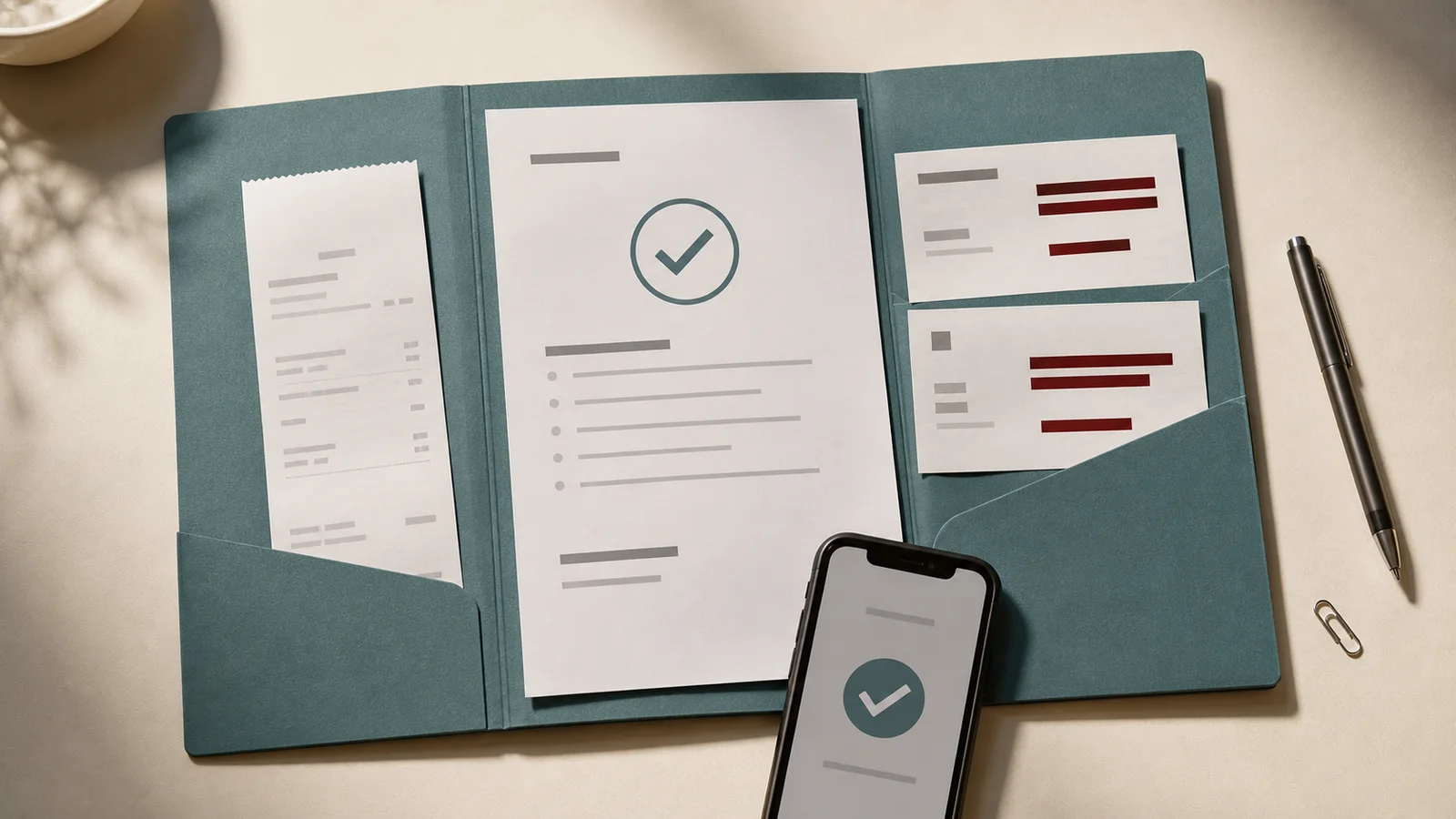
That proof can matter when a company says the account was not canceled, when a charge appears under an unfamiliar processor name, or when customer support asks for an account email you do not remember using. It also helps you avoid accidentally canceling the wrong plan if you have multiple accounts or family subscriptions.
Watch for the friction points
The strongest warning signs are not subtle. Be careful when the sign-up process is online but cancellation requires a phone call, in-person visit, mailed form, chatbot loop, or a different account you do not use. New York City's rule summary says the adopted rules are meant to ensure that consumers can easily cancel subscriptions and avoid deceptive or unconscionable cancellation practices.
Another warning sign is unclear pricing after the trial. Look for the exact monthly or annual charge, taxes or fees, renewal frequency, and whether a discount disappears after the first term. If the service shows a low introductory price but hides the renewal price until checkout, slow down.
Also check whether the plan includes a payment installment or prepaid period. Google Play says that once a payment method is charged for a payment plan, users may not be able to cancel remaining payments, though they may be able to stop auto-renewal. A cancellation can stop the next renewal without undoing the current obligation.
If a charge already happened
Start with the billing source. Check your bank or card statement, then match the charge to the account, platform, or company. If the charge came through Apple, Google Play, PayPal, a carrier, or another marketplace, use that marketplace's cancellation and refund path. If it came directly from the company, use the company's account settings and customer support channel.
Then gather proof before escalating: the original offer, cancellation confirmation, account email, charge date, amount, and any chat or email transcript. Keep the request factual. Say when you canceled, what confirmation you received, what amount was charged, and what refund or correction you are asking for.
Be cautious with refund messages. The FTC's Amazon Prime refund page says eligible customers may receive up to $51 under that settlement and warns that the FTC will never ask consumers to pay to get a refund. That warning applies broadly: anyone demanding a fee, password, verification code, or bank login to release a refund deserves skepticism.
What to do with this
Before your next free trial, use a two-minute test. Can you name the billing company? Can you find the cancellation page without searching the web? Do you know the first paid date? Do you know whether cancellation ends access immediately or at the end of the paid period? Do you have a place to save the confirmation?
If the answer is no, the trial is not really free yet. It is an open billing relationship you have not mapped. The better strategy is to decide before you click subscribe how you would get out, what proof you would keep, and how early you would act if the service is not worth another charge.


