
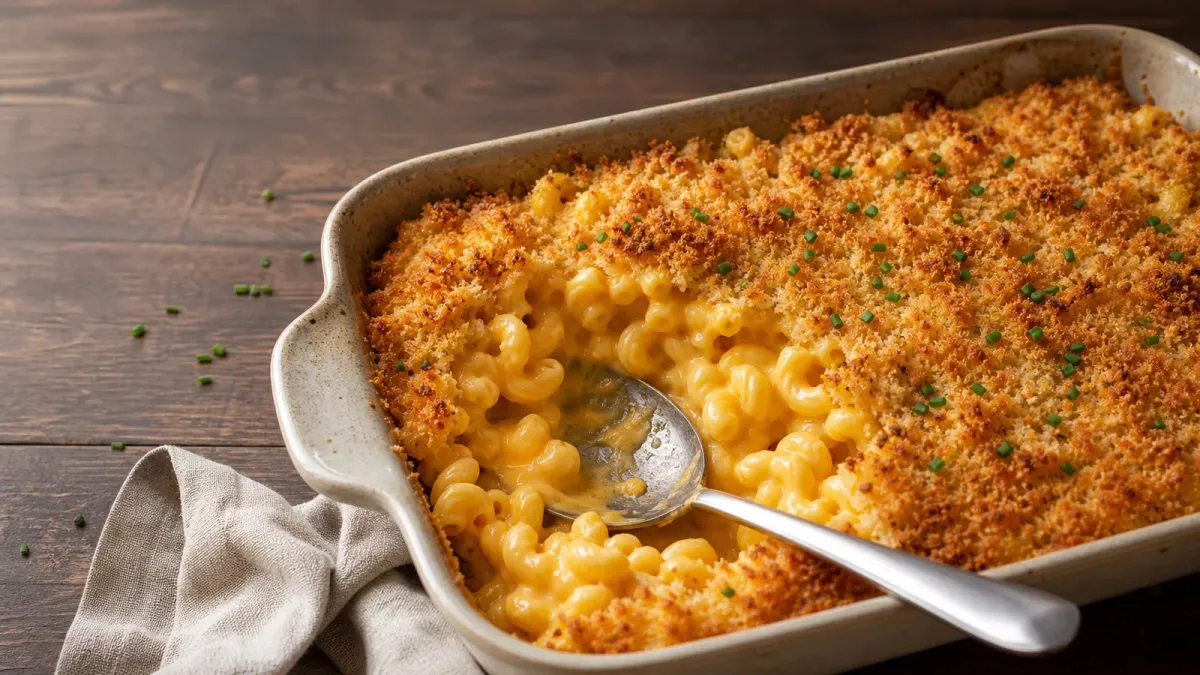
Friday night comfort food should feel generous without turning the end of the week into a kitchen project. This baked mac and cheese lands in that sweet spot: the sauce is glossy and deeply cheesy, the center stays creamy, and the top comes out crisp enough to crackle under a serving spoon.
The trick is to separate the two jobs. Evaporated milk and a light coating of cornstarch help the cheese melt into a stable sauce, while a short blast in a hot oven browns the garlic-butter crumbs without drying out the pasta. You get the cozy edges of a casserole and the silkiness of stovetop mac and cheese in the same pan.
The recipe serves six generously, takes about 20 minutes to prepare and 25 to 30 minutes to cook, and leaves room for a salad or roasted vegetable if you want something fresh alongside it.
Ingredients
Shred the cheese before you start cooking. Once the milk is warm, the sauce comes together quickly.
For the pasta and cheese sauce
- 1 pound cavatappi, small shells or elbow macaroni
- Kosher salt, for the pasta water
- 12 ounces sharp cheddar, freshly shredded
- 4 ounces Monterey Jack, freshly shredded
- 2 tablespoons cornstarch
- 1 12-ounce can evaporated milk
- 1 cup whole milk, plus more if needed
- 2 teaspoons Dijon mustard
- 1/2 teaspoon garlic powder
- 1/2 teaspoon freshly ground black pepper
- Pinch of cayenne, optional
For the crisp topping
- 1 cup panko breadcrumbs
- 3 tablespoons unsalted butter, melted
- 1/2 cup finely grated Parmesan
- 1/2 teaspoon smoked paprika
- 2 tablespoons chopped chives or scallions, for finishing
How to make crispy-topped mac and cheese
- Heat the oven. Set a rack in the upper third and heat the oven to 425 degrees Fahrenheit. Lightly butter a 9-by-13-inch baking dish or another shallow 3-quart casserole.
- Cook the pasta just shy of done. Bring a large pot of well-salted water to a boil. Add the pasta and cook it for about two minutes less than the package's al dente time. Scoop out 1 cup of pasta water, then drain. The noodles should be flexible but still firm at the center because they will finish cooking in the oven.
- Coat the cheese. Toss the shredded cheddar and Monterey Jack with the cornstarch in a large bowl until no dry pockets remain. This distributes the starch evenly instead of letting it clump in the milk.
- Warm the base gently. In the empty pasta pot, combine the evaporated milk, whole milk, Dijon, garlic powder, black pepper and cayenne. Warm over medium-low heat until steaming, but do not let it boil.
- Build the sauce. Reduce the heat to low. Add the cheese a handful at a time, whisking until almost smooth before adding more. Take the pot off the heat as soon as the last handful melts. Fold in the drained pasta. If the sauce looks tight rather than loose and glossy, stir in reserved pasta water 2 tablespoons at a time.
- Add the crunchy layer. Transfer the pasta and sauce to the baking dish. Mix the panko, melted butter, Parmesan and smoked paprika, then scatter the crumbs evenly over the surface.
- Bake briefly. Bake for 10 to 12 minutes, until the sauce bubbles at the edges and the crumbs are golden. For deeper color, broil for 30 to 60 seconds only if the baking dish is broiler-safe. Watch closely. Rest for five minutes, then finish with chives or scallions.
Why this sauce stays creamy
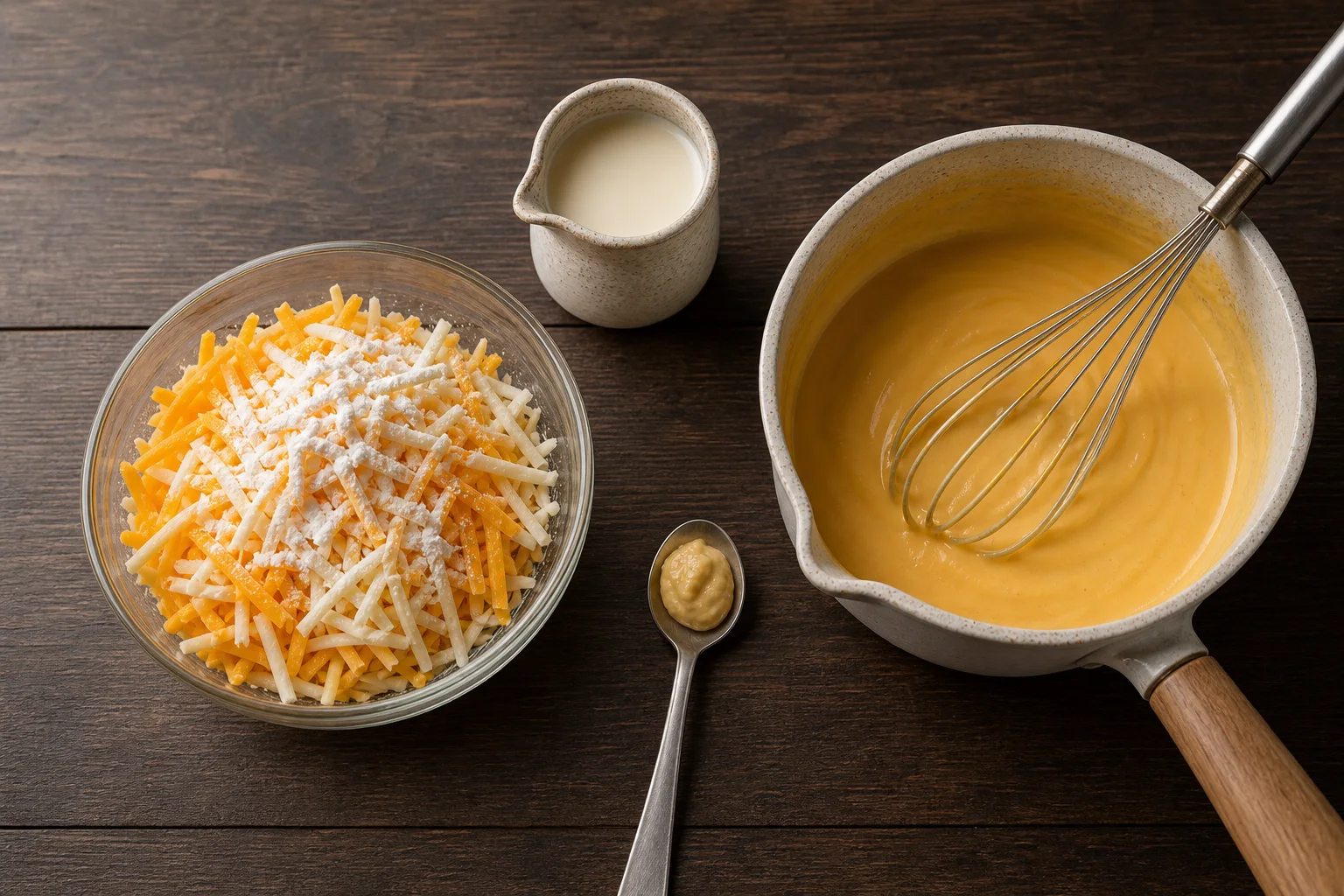
Cheese sauce can turn grainy when high heat squeezes fat and moisture away from the cheese proteins. Gentle heat matters: the milk should steam, not boil, and the pot should come off the burner as soon as the cheese melts. Freshly shredded cheese also melts more predictably than many pre-shredded blends, which can carry extra anti-caking powder.
Evaporated milk supplies concentrated milk proteins, while cornstarch thickens the water phase just enough to keep the sauce cohesive. The approach follows the same practical food-science logic behind Serious Eats' streamlined stovetop mac and cheese, adapted here for a baked version with a crisp topping.
Easy swaps without losing the comfort
- Make it smokier: Replace 4 ounces of the cheddar with smoked Gouda. Keep at least half the cheese mild enough to melt smoothly.
- Add green vegetables: Stir in 2 cups of small steamed broccoli florets or thawed peas with the pasta. Pat them dry first so they do not water down the sauce.
- Give it a little heat: Add a drained 4-ounce can of diced green chiles, or double the cayenne. Avoid adding a very wet salsa before baking.
- Skip the oven: Leave the sauce slightly looser, toast the crumb mixture in a skillet until golden and spoon it over individual bowls of stovetop mac and cheese.
What to serve with it
A sharp, crunchy side keeps the dinner from feeling one-note. Try a lemony green salad, vinegar-dressed slaw or roasted broccoli with plenty of black pepper. If the mac and cheese is the side rather than the main event, it pairs well with roast chicken, pulled pork or simple baked beans.
For a low-effort Friday-night table, set out the baking dish, the salad and hot sauce, then let everyone serve themselves. The recipe is rich enough that you do not need a long list of extras.
Store and reheat leftovers safely
Refrigerate leftovers in shallow containers within two hours of cooking. The USDA Food Safety and Inspection Service recommends using refrigerated leftovers within three to four days and reheating them to 165 degrees Fahrenheit.
For the best texture, add a splash of milk before reheating. Cover and warm individual portions in the microwave in short intervals, or reheat a larger portion in a 350-degree oven until hot throughout. Uncover for the last few minutes if you want to revive the crunchy top.
A simple Friday-night timeline
Start the oven and pasta water first, then shred the cheeses and mix the topping while the water heats. The sauce comes together while the pasta drains, and the short bake gives you enough time to toss a salad and clear the counter. From the first pot of water to the first creamy scoop, dinner is on the table in about 50 minutes.


