
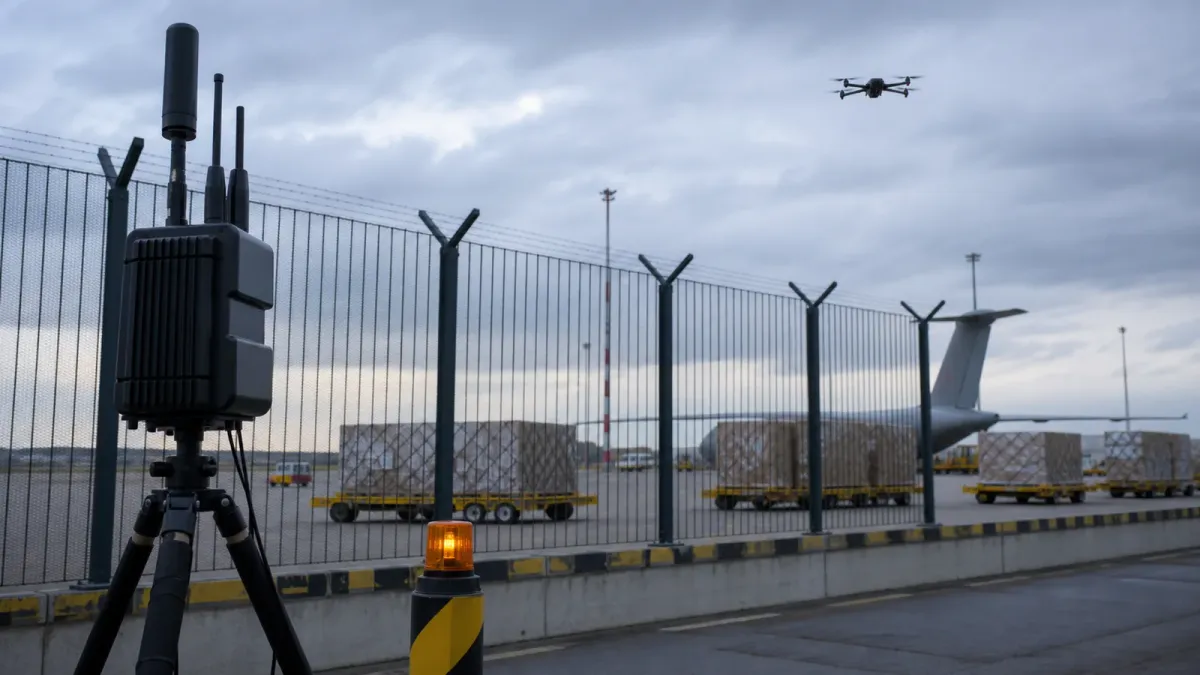
Germany's latest drone alarm is no longer just an airport-security story. After an explosives-equipped drone was found at Leipzig/Halle Airport and two more drones were later reported over a Bundeswehr site in Mechernich, the question for European officials is whether critical infrastructure can detect small airborne threats before they reach cargo hubs, military logistics sites and power-linked facilities.
The short answer is that Germany is treating the incidents as part of a wider hybrid-threat problem, not as isolated hobby-drone violations. Interior Minister Alexander Dobrindt has warned that the Leipzig/Halle case marked a new level of danger, while German authorities have not publicly assigned responsibility for the incident.
What changed
At Leipzig/Halle, German officials said a drone carrying an explosive device was discovered near cargo operations at a major freight airport that also matters to NATO, German military logistics and Ukrainian transport activity. The airport temporarily disrupted operations while bomb-disposal specialists handled the device.
The incident was followed by a separate report of two drones over the Bundeswehr's Mechernich site in western Germany. The Associated Press reported that Germany's military confirmed the sightings, military police responded, and local police opened an investigation.
Those details matter because the threat is no longer limited to surveillance. A small drone over a runway or military storage site can force flight changes, trigger evacuations, test detection systems and create uncertainty even before investigators know who launched it.
Why Germany is worried
Leipzig/Halle is not an ordinary airfield in this context. It is a major cargo hub, a logistics point tied to military transport, and a location connected to Ukrainian cargo operations. The Guardian reported that German officials were examining whether a foreign state could be involved, while also noting that the government had not formally blamed Moscow.
That distinction is important. European governments have repeatedly accused Russia of sabotage, espionage and influence operations since the full-scale invasion of Ukraine in February 2022, but the Leipzig/Halle investigation still has to prove who was responsible for this specific device.
The policy problem is bigger than attribution. If a cheap, modified drone can reach a cargo apron, a military base perimeter or a logistics chokepoint, governments have to decide who is responsible for detection, who has authority to stop it, and how much disruption is acceptable when a suspicious object appears.
The infrastructure test
Counter-drone defenses are hard because the target is small, mobile and often mixed into normal civilian airspace. Airports already have strict operating rules, but they are also designed to keep aircraft moving. Military and logistics sites need tighter protection, but many are near civilian roads, warehouses and flight corridors.
That creates a practical tradeoff. Moving too slowly risks missing a hostile device. Moving too aggressively can shut down flights, interfere with lawful aircraft or create new safety hazards. The Leipzig/Halle case shows why officials are under pressure to improve detection without turning every drone sighting into a full-scale aviation shutdown.
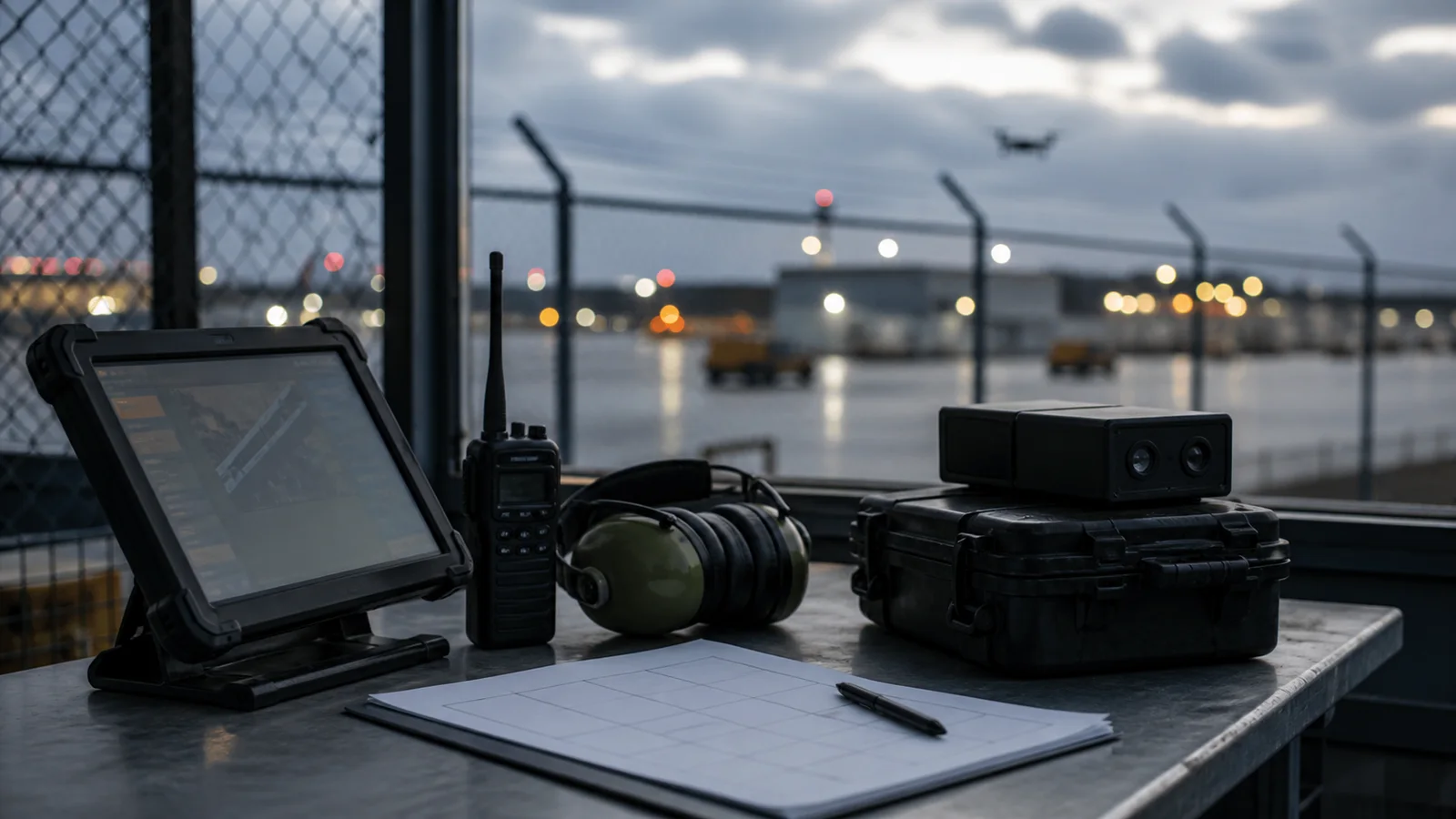
Germany's reported plan to expand drone-security research, including a new facility at a German Aerospace Center test airfield in Saxony-Anhalt, points to the kind of response officials are likely to prioritize: better sensors, clearer command rules, more testing and closer coordination between police, military, airports and intelligence agencies.
What remains unknown
Investigators have not publicly established who launched the Leipzig/Halle drone or the drones reported over Mechernich. Public reporting has described suspicions of foreign involvement, but suspicion is not proof. Officials also have not released a complete public technical account of how the device reached the airport area or what detection systems did and did not see.
The unanswered questions are the story. If the device was part of a broader campaign, Germany and its allies will have to treat drones as another layer of hybrid pressure on Ukraine-linked logistics. If it was a more limited plot, the same operational lesson still applies: high-value infrastructure now has to plan for small airborne systems that can be cheap, quiet and difficult to classify quickly.
What to watch next
The next signal is whether German officials release more findings from the Leipzig/Halle investigation, including details on the device, the failed or disrupted detonation mechanism and any evidence tying it to a person, group or state actor.
Also watch whether Germany changes airport or military-site drone rules after the research-center rollout. A serious policy shift would likely show up as new detection requirements, expanded police or military authority around critical sites, or formal procedures for how airports respond when a suspicious drone appears near cargo or passenger operations.
For readers outside Germany, the lesson is broader than one airport. Drones are becoming a low-cost way to test the seams of high-value systems. The countries that depend on fast cargo, energy infrastructure and military logistics now have to prove they can tell the difference between nuisance, surveillance and attack quickly enough to matter.


