
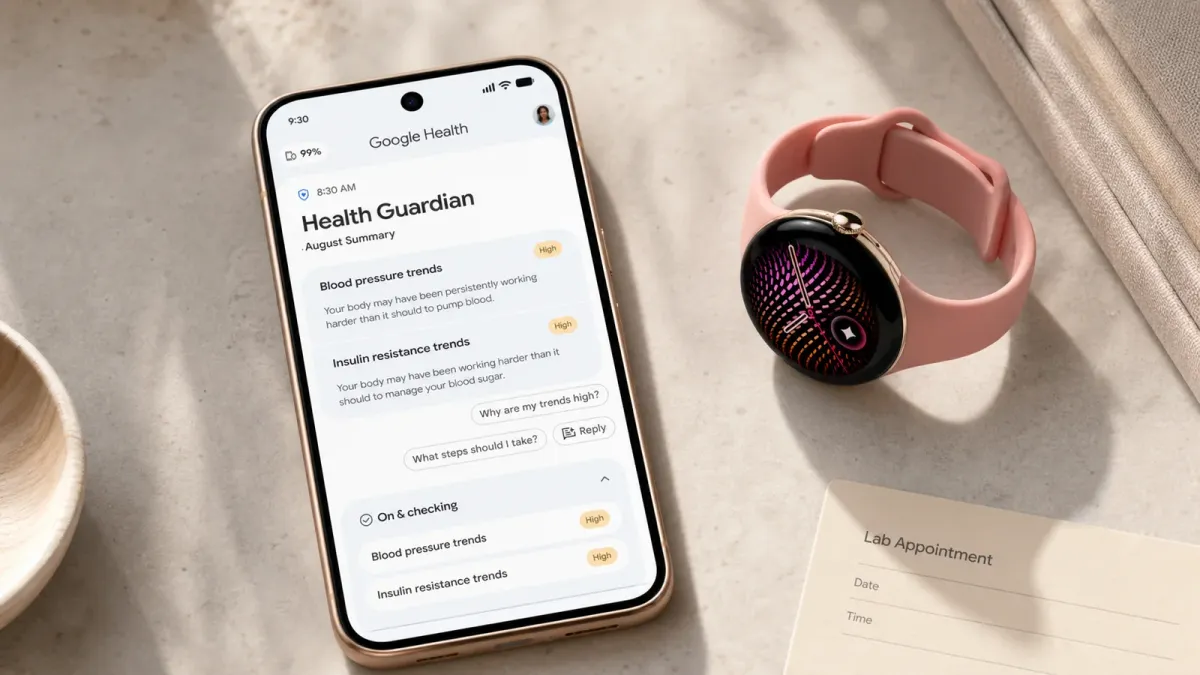
Google is turning the Pixel Watch and Fitbit into a more ambitious health-warning system, but the most important limit is also the simplest: its new insulin-resistance feature is not a glucose monitor.
The company said on August 12, 2026, that Health Guardian features coming to qualified Pixel Watches and Fitbit Air will analyze longer-term physiological patterns for insulin resistance, blood-pressure trends, sleep-breathing quality and, on Pixel Watch in select European countries, breathing emergencies.
For readers, the practical question is not whether a smartwatch can replace a doctor or a continuous glucose monitor. It cannot. The question is whether a monthly trend alert can become an earlier prompt to check sleep, movement, nutrition and a clinician's advice before metabolic risk is easier to ignore.
The short answer
Google says Insulin Resistance Trends will look across multi-week wearable data and report shifts in metabolic health without requiring a blood draw. The company describes it as a first-of-its-kind feature on Pixel and Fitbit wearables.
That does not mean the watch will show blood sugar in real time. It also does not mean it can diagnose diabetes, confirm insulin resistance or guide medication decisions. Google says the feature is for general wellness and informational use, not medical treatment.
The distinction matters because consumer wearables increasingly sit near the boundary between everyday wellness and regulated health care. A useful nudge can help people ask better questions. A misunderstood nudge can create false confidence, anxiety or self-treatment.
How the feature works
Google says the feature analyzes physiological data over several weeks to spot whether insulin-resistance trends are shifting. Its public announcement points to wearable signals such as pulse, motion and broader monthlong patterns rather than a direct chemical reading from blood.
Insulin resistance describes a state in which the body has to work harder to move energy from food into cells. Over time, unmanaged insulin resistance can be associated with worsening metabolic health and a higher risk of prediabetes or Type 2 diabetes, but a wearable trend is not the same as a lab result.
Google's research arm published a related 2025 study on insulin-resistance prediction using wearable data and routine blood biomarkers. That work used data from 1,165 remote participants and an independent validation cohort of 72 people. The research paper and Google's own blog emphasized that the models were informational and had not been cleared or approved as medical devices.
What is actually new
The new consumer-facing step is packaging this kind of trend detection into Health Guardian, a product layer for Pixel Watch and Fitbit devices. Google says users will see information in monthly summaries inside the Google Health app, with notifications when a feature detects something that may need attention.
The broader Health Guardian bundle also includes blood-pressure trends, sleep-breathing quality trends and a breathing-emergency feature for Pixel Watch in select European markets. The company is trying to move wearables from passive logs toward earlier warnings about patterns people may not feel day to day.
Coverage of the launch from health and technology outlets framed the insulin-resistance feature as part of a wider race among consumer tech companies to find useful metabolic-health signals without turning every wrist device into a clinical instrument. That is why the caveats are central, not fine print.
What to check before trusting it
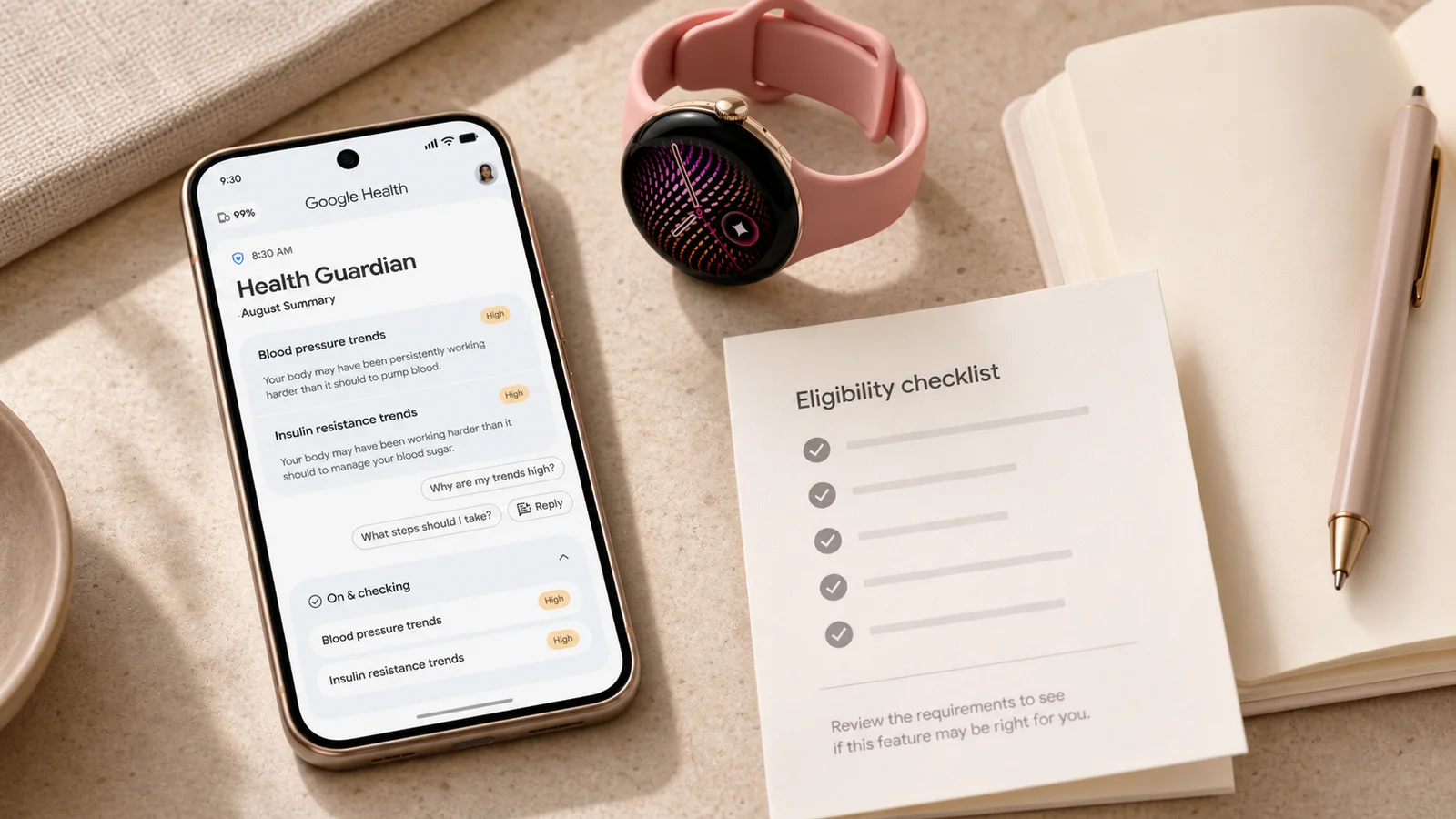
First, check device and regional eligibility. Google says availability varies by country, device and feature, and some Health Guardian tools require a Google Health Premium subscription, the Google Health app and internet access.
Second, separate wellness trends from clinical readings. If a user is worried about diabetes risk, symptoms, medication, pregnancy, blood pressure or sleep apnea, the right next step is a health professional or validated medical test, not a watch setting.
Third, watch for the behavior the alert creates. A good use of the feature would be to review sleep, activity, diet patterns and family history, then decide whether to ask a clinician about lab work. A bad use would be changing insulin, medication, diet extremes or monitoring routines based only on a wearable summary.
Why it matters
The appeal is obvious: metabolic problems often build quietly, and many adults do not notice risk until a routine appointment or lab test. A passive, monthlong signal could lower the friction of paying attention.
The risk is equally real. Wearables can make uncertain predictions feel precise because they arrive with charts, alerts and app language. The more serious the health implication, the more important it is to know what the device measured, what it inferred and what it did not prove.
Google's announcement is worth watching because it moves a major consumer platform deeper into proactive health interpretation. The best way to read it is as an early-warning prompt, not a medical answer.


