
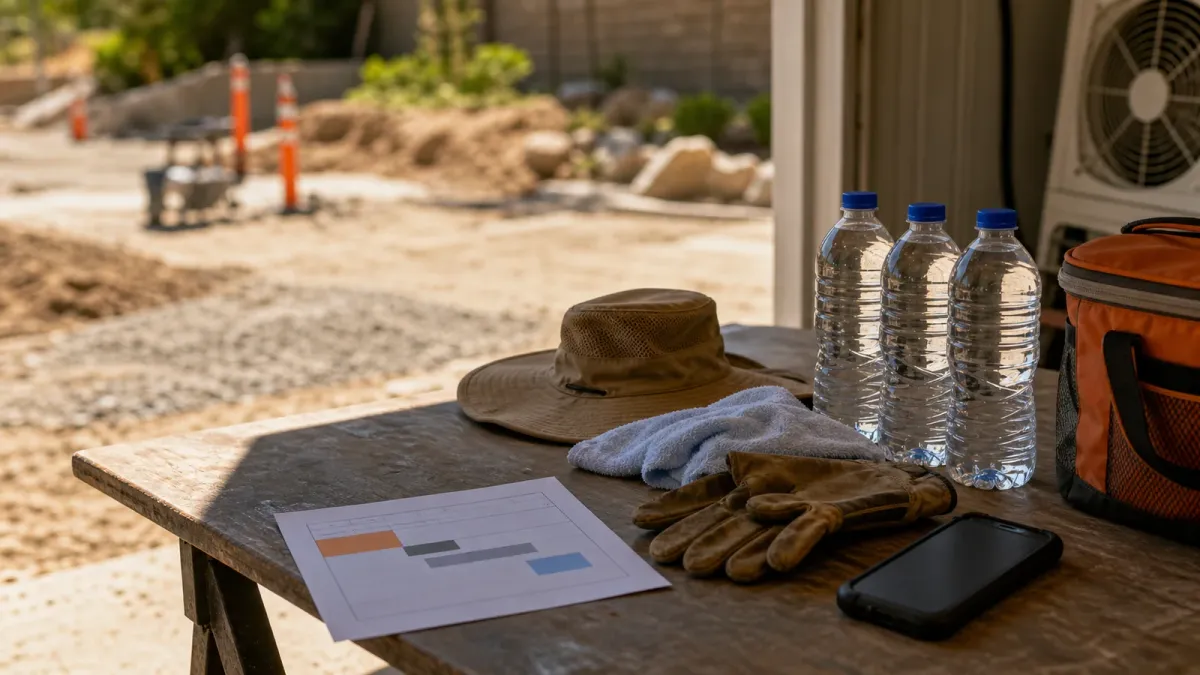
Extreme heat is not just a forecast detail this week. On Thursday, July 23, 2026, the National Weather Service said dangerous heat would expand from the Gulf Coast into the Southern Plains and Desert Southwest through week's end, with another zone of extreme heat shifting from the Pacific Northwest toward the northern Plains by the weekend.
That makes a simple pre-shift question useful for more than construction crews and farmworkers: before anyone works, exercises, commutes, cares for an older relative or sends a child to outdoor practice, what has to be checked first?
The short answer is water, rest, shade and a way to cool down fast. The longer answer is that those protections need to be planned before the hottest hours arrive, because heat illness can move from discomfort to emergency quickly.
Do this first
Check the alert level for the place where the work or activity will happen, not just the nearest big city. The NWS says an Extreme Heat Warning means extremely dangerous heat conditions are expected or occurring. Its safety guidance says people should avoid outdoor activity during the heat of the day when possible, stay in air conditioning as much as they can, drink water and take frequent shade breaks if they must be outside.
Then make the plan physical. Put water where people can reach it without a long walk. Identify a shaded or air-conditioned recovery spot. Move heavy tasks to early morning or evening when possible. Decide who can call a stop if someone becomes dizzy, confused, weak, nauseated or unusually short of breath.
For workplaces, the Occupational Safety and Health Administration's heat guidance reduces the issue to water, rest and shade. OSHA says employers should require breaks when heat stress is high, and that break length and frequency should increase as heat stress rises.
Check these details
Start with the overnight forecast. Heat risk rises when nights stay warm because the body and indoor spaces get less time to recover. In some Southwest alerts issued Thursday morning, NWS offices warned of afternoon temperatures above 105 degrees and warm overnight lows that would limit relief through Monday, July 27.
Look for the people who will not reliably notice risk early. CDC lists older adults, infants and young children, pregnant people, people with asthma, people with heart disease and people working or exercising outside among groups that may need extra precautions on hot days.
Check medication and equipment needs before the temperature peaks. CDC warns that many medicines can make people dehydrated or overheated, and that some medications need to be kept out of hot places. Anyone who relies on refrigerated medication or an electronic medical device should have a plan for power outages and cooling access.
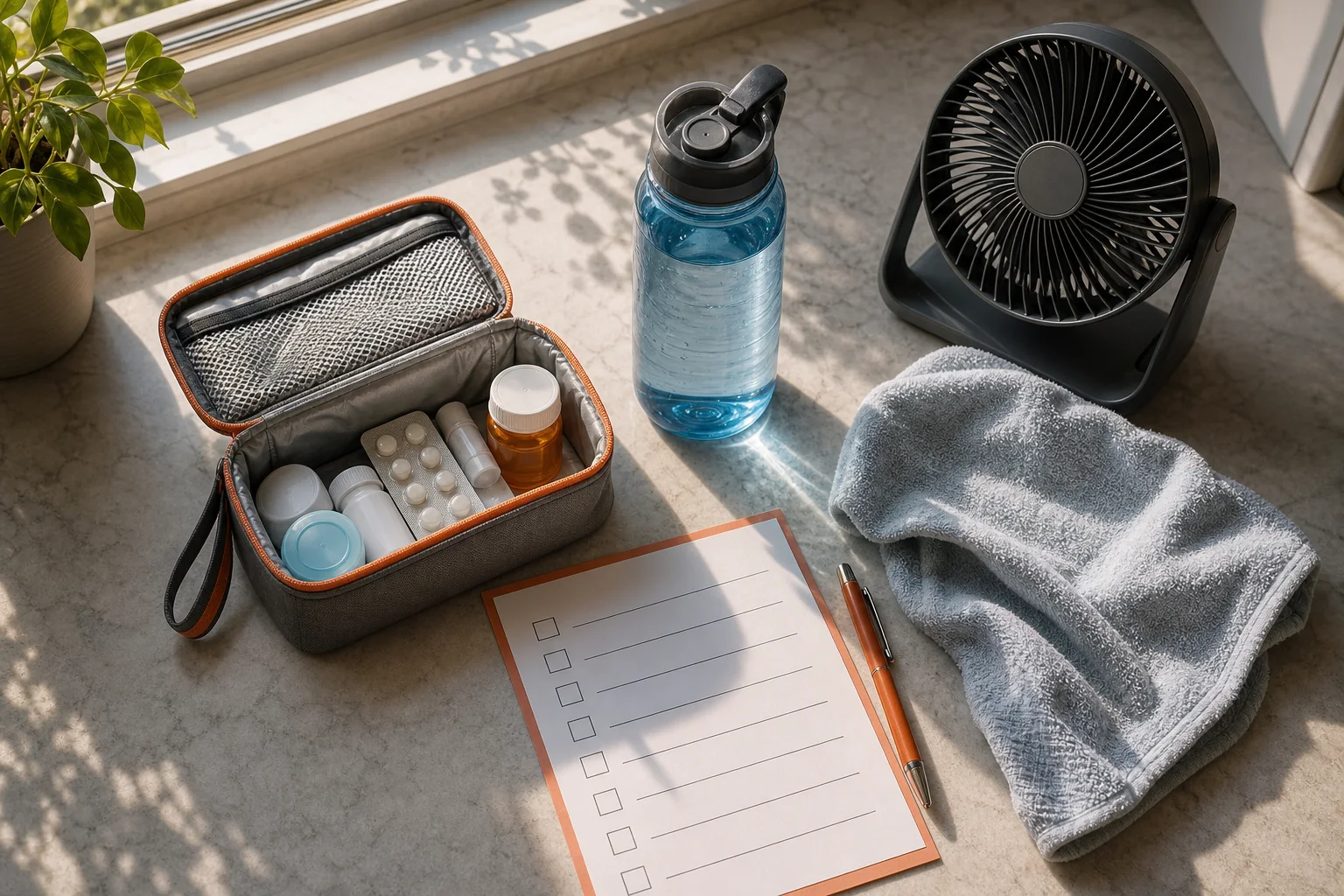
If the day involves school sports, delivery work, landscaping, event staffing or home repairs, check who has authority to slow the schedule. A safety plan that depends on one person toughing it out is not a plan. Rest breaks, water refills and cooling access should be normal enough that no one has to negotiate them while already overheated.
Common mistakes
The first mistake is treating a Heat Advisory and an Extreme Heat Warning as interchangeable. Both mean take action, but a warning is the stronger signal. NWS guidance says a warning is used when extremely dangerous heat is expected or already happening.
The second mistake is relying on a fan in a room that is already too hot. CDC says fans can help only when indoor temperatures are below 90 degrees. Above that, a fan can increase body temperature instead of cooling the person using it.
The third mistake is waiting for thirst, sweat or cramps to prove there is a problem. CDC says symptoms of overheating can include muscle cramping, heavy sweating, shortness of breath, dizziness, headaches, weakness and nausea. Heat stroke is an emergency; NWS warning text tells people to move anyone overcome by heat to a cool, shaded place and call 911.
The fourth mistake is leaving a child, pet or vulnerable adult in a vehicle for even a short stop. NWS heat warnings repeatedly stress that car interiors can become lethal within minutes. The errand can wait; the person cannot.
When to get help
Call 911 immediately if someone shows signs of heat stroke, such as confusion, collapse, loss of consciousness or a dangerously altered mental state after heat exposure. While waiting for help, move the person to a cooler location and start cooling them with shade, air conditioning, cool cloths or water if available.
Use local public resources before the situation becomes urgent. CDC recommends checking local HeatRisk and air quality, and says people without air conditioning can look for cooling locations through 2-1-1, state cooling-center lists, local health departments or emergency management agencies.
For workers, the practical test is simple: if there is no water source, no planned rest break, no shade or cooling area and no emergency response plan, the job is missing the basics for a high-heat day. That is true even when the task is routine and even when the people doing it are experienced.
Bottom line
Extreme heat turns ordinary plans into safety decisions. Before the shift, practice, commute or errand, check the alert, move the hardest work away from peak heat, keep cooling options real and treat symptoms as a reason to stop early rather than a reason to push through.


