
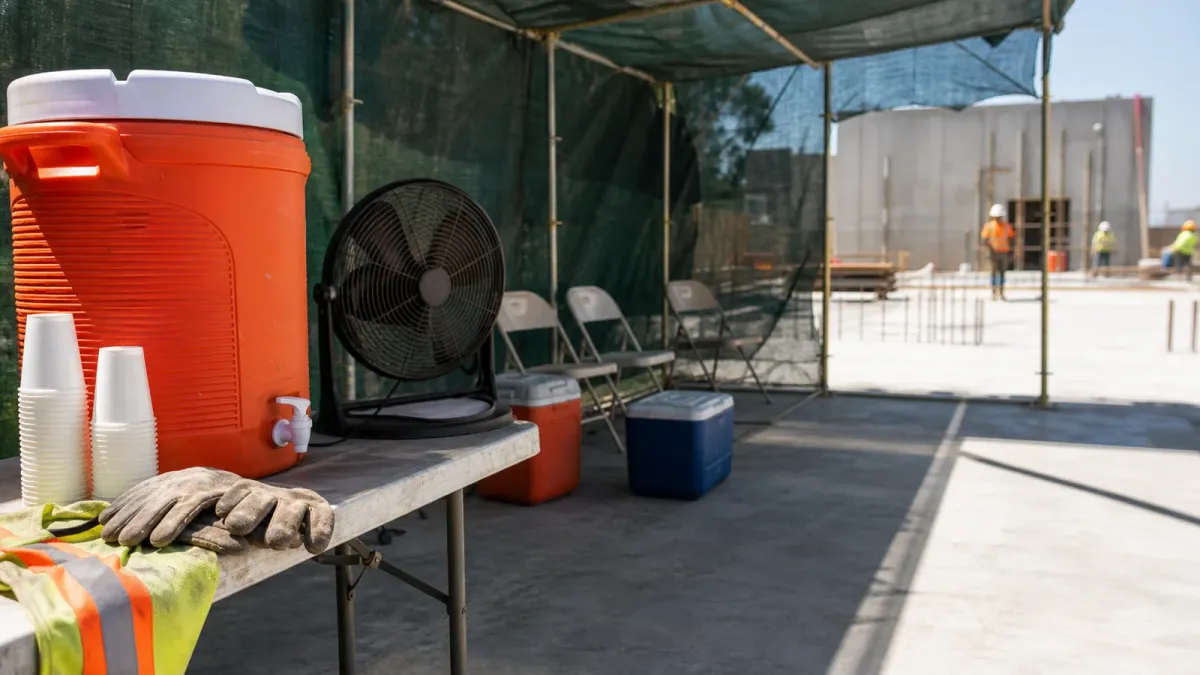
A new national poll released this weekend found unusually broad support for workplace heat protections, putting a practical policy question behind a summer of extreme heat, floods and wildfire smoke.
Data for Progress said 88% of likely voters support state policies requiring employers to provide basic heat protections such as drinking water, shade, breaks and air conditioning where needed. Only 7% opposed the idea, according to the poll of 1,164 likely voters conducted July 2-5, 2026.
The same survey found that 61% of likely voters believe extreme weather events have become more frequent over the past five years. Heat waves were the clearest point of agreement: 67% said climate change is making them worse, especially during long outdoor shifts and overheated indoor work.
The short answer
The poll does not create any new rule. It does show that heat safety has moved beyond a narrow labor or climate debate. Voters who disagree on climate politics still largely support concrete steps that make a hot workday safer.
That distinction matters because the United States still does not have a finalized nationwide heat standard for most workplaces. The Occupational Safety and Health Administration published a proposed Heat Injury and Illness Prevention rule in 2024. OSHA says the public hearing concluded on July 2, 2025, and the post-hearing comment period ended on October 30, 2025.
Why it matters
Outdoor workers in construction, agriculture, delivery, landscaping and roofing face obvious heat exposure. Indoor workers can also be at risk in warehouses, kitchens, factories and other spaces without adequate cooling or ventilation.
OSHA says excessive workplace heat can cause heat stroke and death if it is not treated properly, and that workers in indoor and outdoor settings without adequate climate controls are at risk. The proposed federal standard would require covered employers to create a plan to evaluate and control heat hazards.
For readers, the practical takeaway is simple: heat protection is not just about the daily high temperature. Humidity, direct sun, heavy protective gear, limited water, lack of shade, long shifts and poor indoor airflow can all turn a routine workday into a health risk.
What to watch
The next step is whether federal rulemaking advances and whether more states move first with their own standards. The Data for Progress result suggests state-level protections may be politically easier to defend than broader climate measures because they focus on water, rest, shade and cooling rather than an abstract climate fight.
Workers and managers should also watch local heat alerts and workplace-specific triggers. A useful plan usually answers basic questions before the hottest part of the day: where water is available, where people can cool down, how new workers acclimate, who checks symptoms and when work should slow or stop.
The poll is a snapshot, not a forecast. But on July 19, 2026, it adds a clear signal to the summer heat conversation: voters may be divided on climate language, but they are much less divided on protecting people who have to work in dangerous heat.


