

High-yield savings accounts are back near the top of the personal-finance search list. A PS News review of Google Ads Keyword Planner on July 5, 2026, found the query "high yield savings account" at 1 million to 10 million average monthly searches in the United States for the June 2025 to May 2026 window, with Google showing a 900% year-over-year increase.
That does not mean every high-yield account is a good fit. It does mean many savers are asking the same practical question: if cash is sitting in a low-rate account, what should you check before moving it?
The short answer is to compare more than the headline rate. A high annual percentage yield can matter, especially for emergency funds, tax reserves, down-payment savings or cash that needs to stay outside the stock market. But the account should also be insured, easy to use, transparent about fees and realistic about how often the rate can change.
Start with APY, not just the interest rate
The Consumer Financial Protection Bureau's Truth in Savings rules require banks to disclose key deposit-account terms, including annual percentage yield, interest rates, minimum-balance requirements and fee schedules. APY is the cleaner comparison point because it reflects the amount of interest paid over a year while accounting for compounding.
That matters when two accounts advertise similar rates. One may compound daily, another monthly. One may require a minimum balance to earn the advertised APY. Another may offer a temporary promotional rate that drops later. Before opening an account, look for the APY, whether it applies to all balances or only a tier, how long any promotional rate lasts and what the standard rate becomes afterward.
Check deposit insurance before chasing yield
For most savers, the first safety question is whether the institution is federally insured. The FDIC says the standard deposit insurance amount is $250,000 per depositor, per FDIC-insured bank, per ownership category. Credit unions have a parallel federal insurance system through the National Credit Union Administration.
The ownership-category language is important. A single account, a joint account and some trust or retirement account structures can be treated differently for coverage purposes. If your cash balance is comfortably under the limit, the check may be simple. If you are holding more than $250,000 at one institution, or you use multiple accounts at the same bank, verify coverage before moving money.
Also separate insured deposits from investments. Savings accounts, checking accounts, money market deposit accounts and certificates of deposit at insured banks are generally deposit products. Stocks, bonds, mutual funds, crypto assets, annuities and similar investments are not FDIC-insured just because they are offered through a financial company.
Rate cuts can change the deal
High-yield savings rates tend to move with the broader interest-rate environment. On June 17, 2026, the Federal Reserve said it maintained the federal funds target range at 3.5% to 3.75%. That policy backdrop helps explain why cash still earns meaningful interest at some institutions, but it also explains why rates can move.
A savings account APY is usually variable. The bank can raise or lower it as market conditions, funding needs and competition change. A certificate of deposit may lock a rate for a term, but it can also limit access and impose penalties for early withdrawal. For emergency cash, flexibility often matters as much as yield.
Watch the friction points
Before transferring money, check the account's practical rules. Look for monthly maintenance fees, minimum opening deposits, minimum balances to avoid fees, limits on external transfers, ATM access, mobile deposit support and the expected time for ACH transfers to clear. A slightly lower APY at an easier-to-use bank may be better than a top advertised rate attached to awkward rules.
Customer support is part of the comparison, too. If the account will hold emergency money, you need to know how quickly you can reach the institution, reset access, transfer funds and close the account. Online-only banks can be efficient, but the trade-off should be explicit.
A simple checklist before moving cash
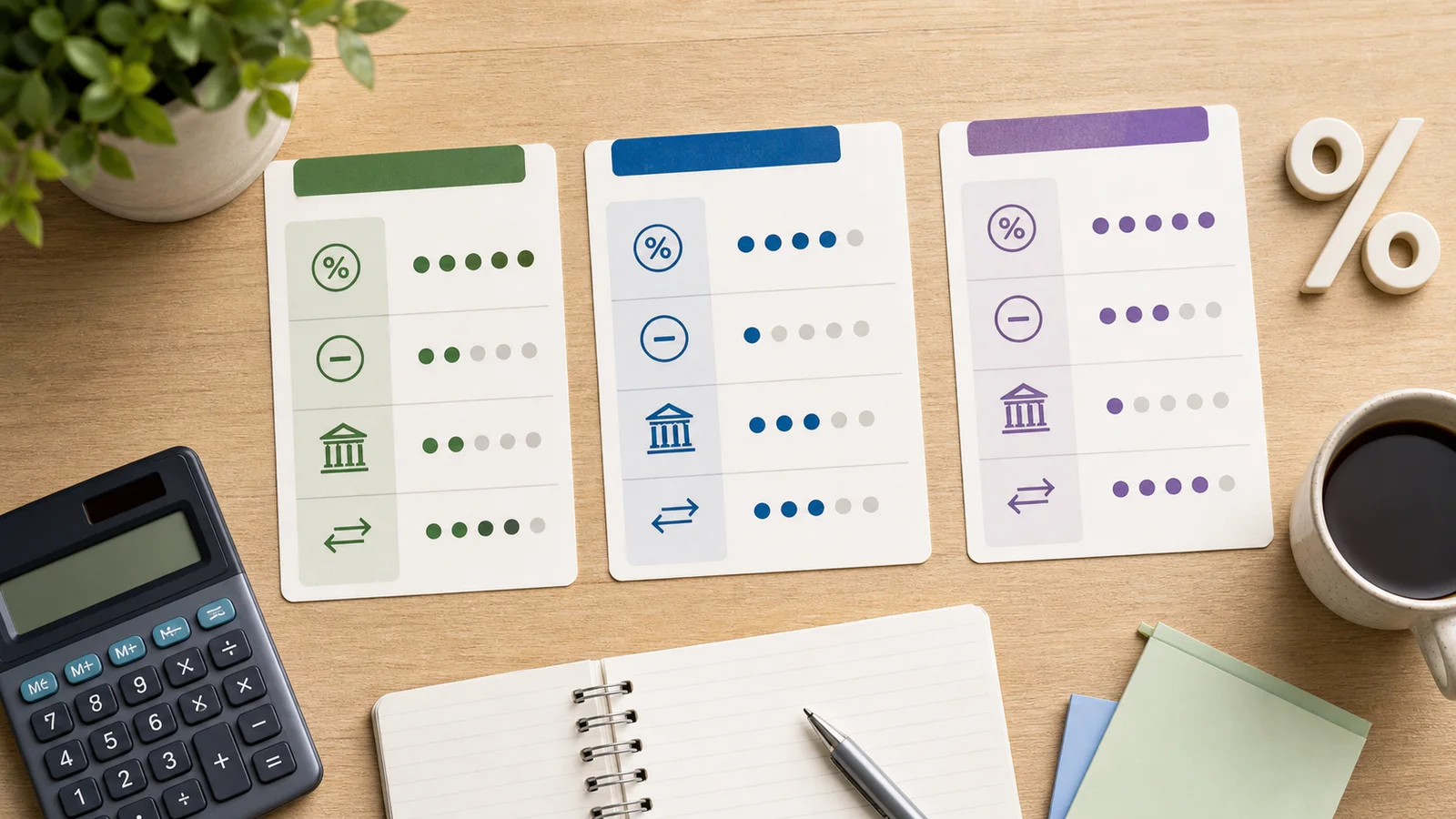
First, confirm the institution is FDIC-insured or NCUA-insured and that your expected balance fits within coverage limits. Second, compare APY, not just the stated interest rate. Third, read the fee schedule and minimum-balance terms. Fourth, test whether transfers, debit access, bill pay or ATM withdrawals match how you actually use emergency cash. Fifth, assume the APY can change and decide whether you would still keep the account if the rate falls.
The broader takeaway is not that everyone needs to chase the highest rate. It is that cash deserves an occasional review. If your savings account still pays very little while insured alternatives pay more, the difference can add up. The safest move is not the flashiest advertised APY; it is the account that pays a competitive yield while keeping your money insured, accessible and easy to manage.


