
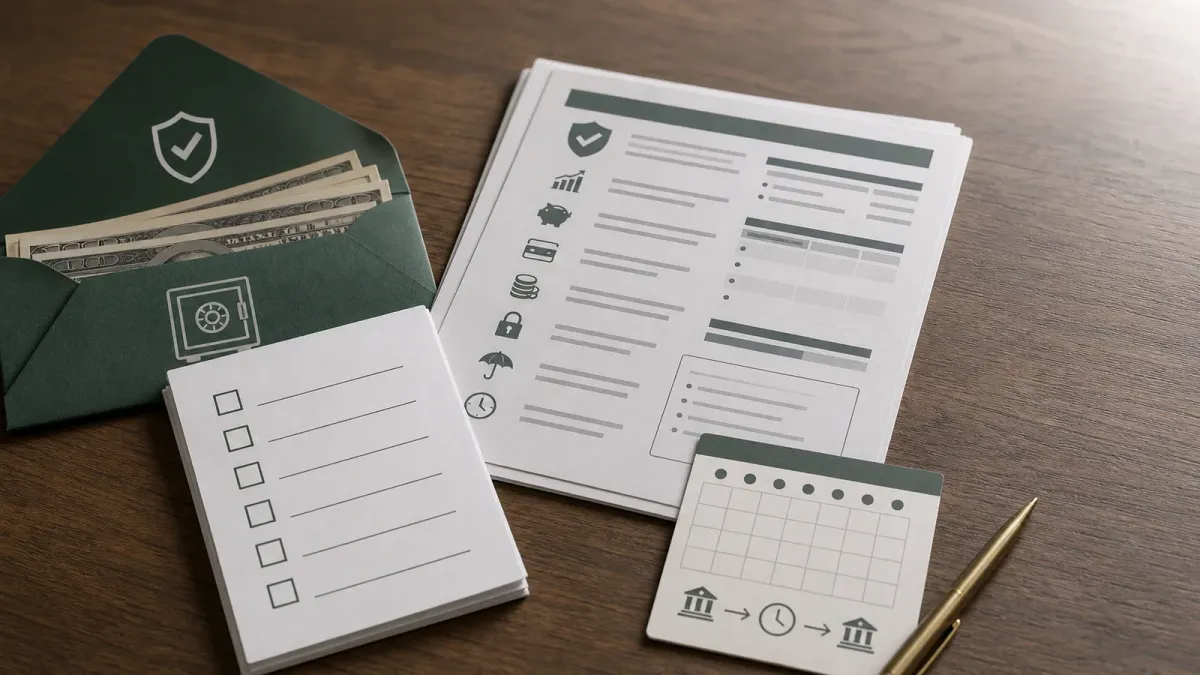
High-yield savings accounts look unusually attractive in July 2026 because many advertised rates are still clustered around 4%, while the FDIC-tracked national savings rate is far lower. That gap is real enough to matter, but it is not the only number savers should compare before moving emergency cash.
The better question is not simply which account has the highest annual percentage yield. It is whether that yield applies to your full balance, whether fees or balance rules can erase it, and whether your money remains easy to reach when a bill, repair or layoff turns the account from a spreadsheet line into a safety net.
The Short Answer
A high-yield savings account can be a good place for short-term cash when it is federally insured, has no avoidable monthly fee, pays the stated APY on the balance you actually plan to keep, and lets you transfer money fast enough for your needs. It is less useful when the headline rate is temporary, applies only to a small slice of the balance, requires complicated activity, or sits at an institution you have not verified.
Current rate lists from major personal-finance publishers show top accounts near the low-to-mid 4% range this month. The St. Louis Fed's FRED database, which republishes FDIC national-rate data, lists the national savings rate at 0.38% for July 2026. That spread is why the topic is drawing attention, but the spread should start a checklist, not end it.
Do This First

Verify insurance before chasing yield. The CFPB says bank deposits can be insured by the FDIC and credit union deposits by the NCUA, generally up to $250,000 per depositor, per ownership category. Do not rely on a homepage badge alone. Look up the bank or credit union, confirm the legal institution name, and remember that multiple accounts at the same insured institution may count together for coverage purposes.
Ask which dollars earn the advertised APY. Some accounts pay the top rate only up to a cap, only after a minimum balance, or only for a promotional window. Regulation DD, the federal Truth in Savings rule implemented by the CFPB, requires disclosures for annual percentage yield, interest rates, minimum-balance requirements and fees. Read the account disclosure before opening, especially if the ad uses phrases such as up to, boost, tiered or for a limited time.
Check the fee math. A monthly maintenance fee, paper-statement fee or outbound-transfer fee can matter more than a few tenths of a percentage point in APY. If you are moving $3,000, a $5 monthly fee is $60 a year, enough to wipe out a meaningful share of the extra interest. The best account for emergency cash is often the one with a slightly lower rate and cleaner rules.
Check These Details
First, decide what the money is for. Emergency funds, tax reserves, insurance deductibles and near-term down-payment cash usually need liquidity. A certificate of deposit may pay more, but it can penalize early withdrawal. A money-market mutual fund may be convenient in a brokerage account, but it is an investment product and not the same as an FDIC-insured deposit account.
Second, test the transfer path before moving the full balance. Some online savings accounts need one or two business days to move money back to checking. That may be fine for a planned insurance payment, but not ideal if the account is your only emergency fund. A small test transfer can reveal routing problems, hold times and external-account limits before the stakes are higher.
Third, compare the account after taxes. Savings interest is generally taxable, so a higher APY is not the same as a risk-free raise. The tax point should not scare savers away from better rates, but it does mean the practical benefit is smaller than the gross interest figure printed in an ad.
Common Mistakes
The first mistake is moving money for a teaser rate without calendar reminders. If an introductory APY expires after 60 days or six months, set a reminder to review the account before the rate drops. Otherwise, the account can slowly become the low-yield account you tried to leave.
The second mistake is ignoring ownership categories. A couple, a solo account holder and a trust can have different insurance coverage depending on how accounts are titled. For balances near insurance limits, use the FDIC or NCUA tools instead of guessing.
The third mistake is treating rate tables as personalized advice. Publishers update lists frequently, and banks can change variable savings rates. Use July 2026 rankings as a shopping prompt, then verify the institution's current disclosure, balance tiers, fees and insurance status yourself.
Bottom Line
A 4% savings rate can be worth pursuing when your current account pays close to the national average. Just do the boring checks first: insurance, rate tiers, fees, transfer speed, tax treatment and expiration dates. The right account should make emergency cash work harder without making it harder to use.


