
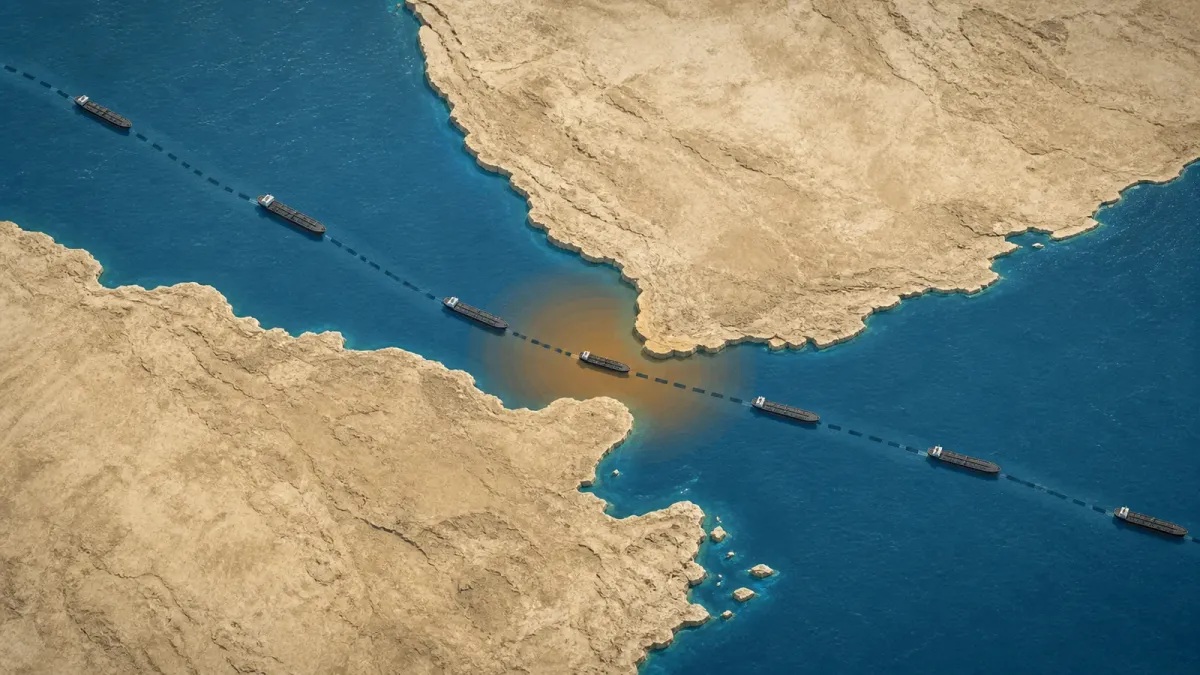
Conflicting claims over the Strait of Hormuz are putting energy markets back on a simple test: whether ships can move safely through one of the world's most important oil chokepoints.
President Donald Trump said the United States had "total control" of the strait and suggested Washington might keep it, CBS News reported in live updates on August 13, 2026. Iran rejected that framing, with Moneycontrol reporting that Tehran said the waterway would not fully reopen until its conditions were met.
The disagreement matters because the market consequence is not settled by a social post, a televised warning or a diplomatic leak. Traders, shippers and consumers need to see sustained transit, lower war-risk costs and fewer military incidents before the crisis premium can fade.
What changed
The latest development is not just another warning about a tense waterway. It is a direct clash over who can credibly claim control of traffic through the strait while the U.S.-Iran conflict remains unresolved.
Fox News live coverage on August 13 highlighted warnings that Tehran could become more aggressive as the conflict moves into a new phase. CBS reported Trump's new control claim, while Moneycontrol reported Iran's response that the strait remained blocked unless Washington accepted conditions that included ending the war and blockade.
Those claims cannot all be true in the same practical sense. For markets, the important question is narrower: can commercial vessels pass on predictable terms, and will insurers, charterers and energy buyers treat the route as reliable?
Why markets care
The Strait of Hormuz links the Persian Gulf with the Gulf of Oman. The U.S. Energy Information Administration has long described it as a critical oil transit chokepoint, and past disruptions or threats there have quickly affected crude prices, shipping decisions and inflation expectations.
Its location makes even ambiguous claims costly. A vessel operator does not have to believe every threat to delay a route, and an insurer does not have to see a full closure to charge more for risk. That is why markets often respond before officials confirm a lasting change in supply.
A short disruption can raise costs even before supply is physically lost. Tanker owners may demand higher compensation, insurers may reprice risk, and refiners may look for alternative cargoes. Those costs can show up first in crude futures and later in fuel prices if the disruption lasts.
The current signal is mixed. Reports of diplomatic efforts suggest neither side may want an uncontrolled escalation, but the public claims show how far apart Washington and Tehran remain on the core issue of control.
What to watch next
The clearest near-term indicators are physical ones: tanker traffic through the strait, insurance premiums, U.S. and Iranian military statements, and whether any announced understanding produces a stable route for commercial vessels.
If ships keep moving and neither side interferes, oil markets may treat the rhetoric as a temporary risk flare. If traffic slows again or new attacks hit the region, the claim of control will matter less than the visible cost of proving it.


