
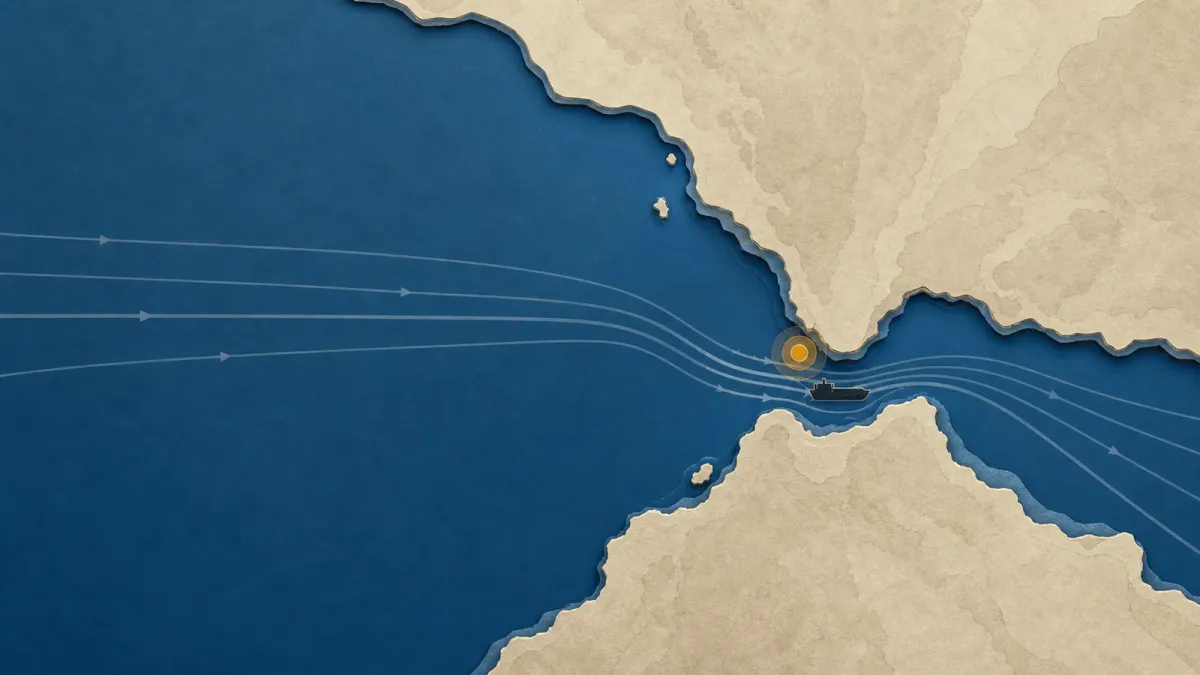
A tanker attack in the Strait of Hormuz early Tuesday, July 21, 2026, put oil-market risk back at the center of the U.S.-Iran conflict. The Associated Press reported that the crew abandoned the vessel after the strike, while U.S. forces carried out another round of strikes against Iranian military targets tied to maritime attacks.
The reason markets care is simple: Hormuz is not just another sea lane. The U.S. Energy Information Administration says the strait carried about 20 million barrels per day of oil in 2024, roughly one-fifth of global petroleum liquids consumption, and about one-fifth of global liquefied natural gas trade also moved through it.
That concentration means a single new attack can matter even when oil keeps trading. If shipowners, insurers or crews decide the route is too dangerous, fewer cargoes move on time, war-risk costs rise and buyers start bidding for replacement barrels or longer routes. Those costs can reach contracts before drivers notice them.
What changed
The latest attack adds to a pattern that has slowed traffic through the waterway while U.S. and Iranian forces trade strikes. AP reported that Brent crude traded above $88 a barrel Tuesday and that the U.S. average price for regular gasoline had climbed to about $4 a gallon.
MarketWatch reported Tuesday that Goldman Sachs analysts see a risk case in which Brent crude could rise above $120 a barrel if Gulf disruptions persist, although that is not the bank's base forecast. That distinction matters: markets are not only pricing what has happened, but also the chance that the route remains unreliable for months.
This is not the same as saying a shortage has already reached every refinery or gas station. It means the risk premium can build before the physical shortage is obvious, especially when buyers, shippers and insurers all have to make decisions before the next cargo moves. That timing matters for weekly fuel contracts.
Why Hormuz is hard to replace
There are some bypass options, including Saudi and UAE pipelines. But EIA has said most volumes moving through Hormuz have no easy alternative if the strait is closed, and the available pipeline capacity is limited compared with normal flows through the waterway.
That is why energy traders watch both the military headlines and the shipping details. A ceasefire signal can pull prices lower quickly, but another vessel strike, insurance jump or crew evacuation can reverse that optimism just as fast.
What to watch next
The next useful signals are not only political statements. Watch whether UK Maritime Trade Operations reports more incidents, whether shipping companies resume or suspend transits, whether Brent stays above recent ranges, whether war-risk premiums are reported by marine insurers, and whether gasoline prices keep following crude higher.
For consumers, the link is indirect but real. A tanker attack does not instantly set pump prices, but repeated disruption in a chokepoint that carries a large share of global oil can keep pressure on fuel, shipping and inflation expectations until traffic looks safer.


