
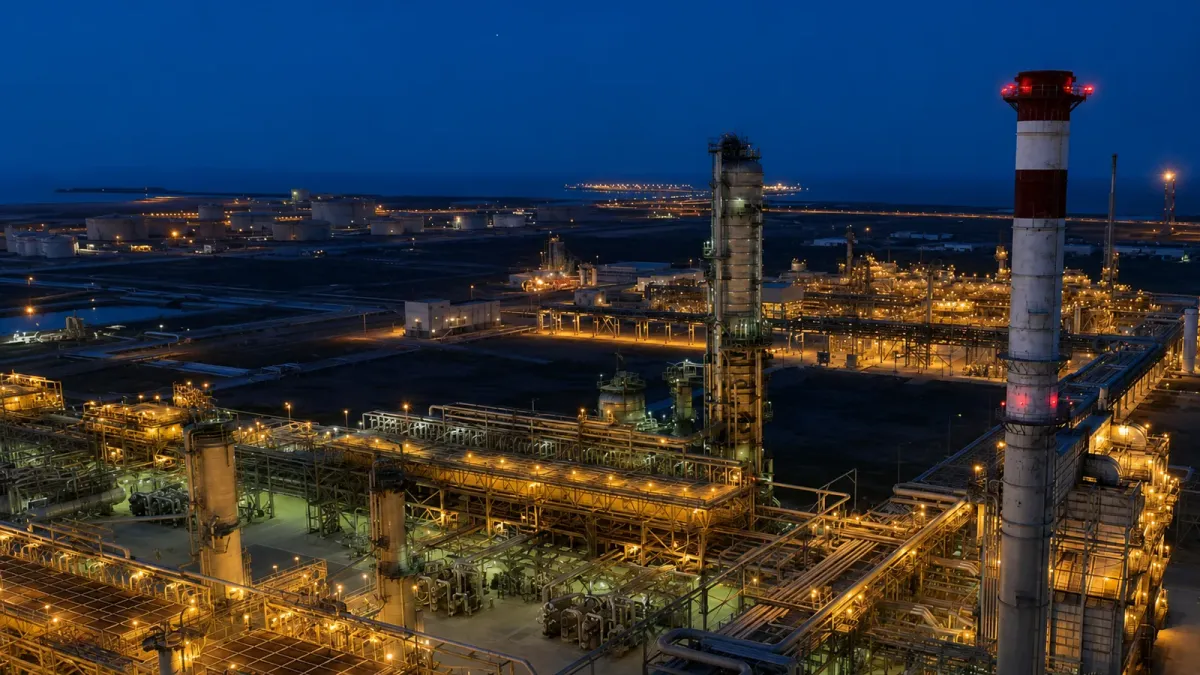
Houthi forces claimed attacks Sunday on a Saudi Aramco refinery in Jazan and on Yemen's Red Sea port of Mokha, adding a fresh infrastructure risk to the region's wider conflict.
Saudi Arabia's energy ministry said firefighting teams extinguished a dawn fire at one Aramco refinery facility in Jazan and reported no injuries. Houthi military spokesman Yahya Saree said the group targeted the refinery with a drone.
The separate Mokha attack was deadlier. AP reported that the strike damaged the government-held port, while Reuters-syndicated reports said missiles and drones were used and cited casualties among government forces and civilians.
What changed
The attacks matter because they connect two pressure points: Saudi energy infrastructure and Yemen's Red Sea ports. Jazan sits on Saudi Arabia's southwest coast, while Mokha has been renovated as an alternative port for Yemen's internationally recognized government.
The Houthis said the Jazan strike responded to Saudi drone activity over Yemen. Saudi officials confirmed the refinery fire but did not publicly assign a cause in the energy ministry statement cited by regional and wire reports.
At Mokha, the Houthis said they targeted military positions and weapons depots. Government-aligned sources cited by regional outlets said the port area was hit and that civilian casualties were among the wounded or killed.
Why it matters
The immediate market signal is not just whether one refinery fire was contained. The broader issue is whether Houthi forces are expanding attacks from maritime disruption toward a wider campaign against ports, oil facilities, and Saudi-linked logistics.
That risk lands at a sensitive moment. Red Sea and Gulf shipping are already under pressure from the Iran war, stalled Hormuz diplomacy, and repeated attacks on vessels and energy assets. Even contained strikes can raise insurance costs, slow routing decisions, and keep oil traders focused on regional escalation.
For ordinary readers, the consequence may show up indirectly rather than immediately. Shipping risk can affect fuel markets, imported goods, insurer behavior, and government pressure for military escorts or diplomatic deals. The first test is whether the incident stays contained or becomes part of a repeatable Houthi playbook.
The uncertainty is important. The refinery fire was reported as contained, and official Saudi statements cited in news reports did not describe a shutdown. The port attack, by contrast, points to a broader security problem for cargo routes serving Yemen's non-Houthi authorities.
What to watch next
Watch for three confirmations: whether Saudi authorities identify the cause of the Jazan fire, whether Aramco reports any operational disruption, and whether Yemen's government updates casualty and infrastructure-damage counts at Mokha.
A second question is whether the attacks draw a direct Saudi, U.S., or coalition response. If the strikes remain isolated, the market impact may be limited. If they become a pattern, the Red Sea risk premium could widen again.
Another signal is how shipping firms and energy buyers price the route. A contained refinery incident with no injuries is different from a broader threat to ports and oil infrastructure, but both can matter when regional confidence is already thin.


