
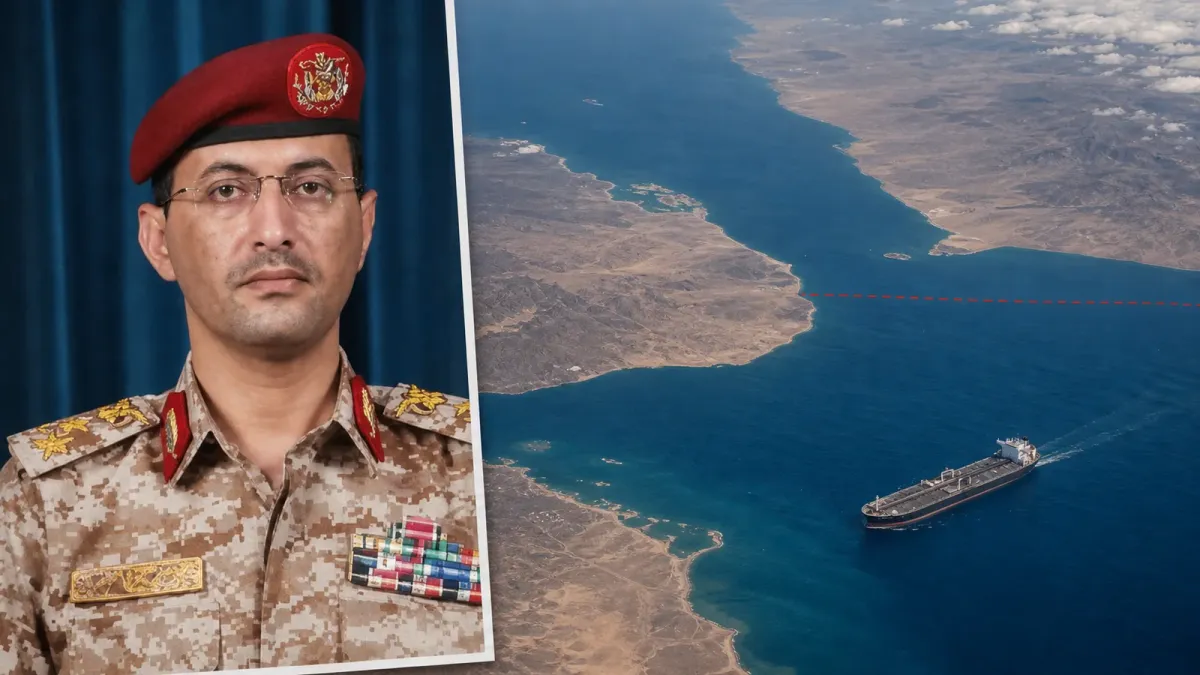
Yemen's Iran-aligned Houthi movement declared an immediate maritime embargo against Saudi Arabia on Monday, July 20, adding a new threat to Red Sea shipping as the kingdom relies more heavily on western export routes.
Houthi military spokesperson Yahya Saree announced the measure in a video statement and described it as retaliation for the recent strike on Sanaa International Airport. The Associated Press reported that Saree called it an equation of “an eye for an eye,” but did not explain which ships would be targeted, where the policy would apply or how it would be enforced.
That uncertainty is central to the risk. The announcement is a declared threat, not confirmation that Saudi ports are closed or that all commercial traffic has stopped. Shipping operators and energy markets will be watching for operational notices, vessel diversions or confirmed attacks.
What changed
The embargo declaration follows the sharpest Houthi-Saudi escalation in years. Last week, Sanaa airport and Saudi Arabia's Abha airport were struck during an exchange that threatened the truce that has largely limited cross-border fighting since 2022.
The Houthis blamed Saudi Arabia for the Sanaa airport strike. Yemen's internationally recognized government said it was responsible for the action, while Saudi officials had not publicly accepted responsibility in the reporting available Monday. That dispute remains unresolved.
The declaration also comes after a long Houthi campaign against commercial shipping in and around the Red Sea. A current U.S. Maritime Administration advisory says the group carried out more than 100 attacks on commercial vessels from November 2023 through October 2025, using missiles, drones, small boats and attempted boardings.
Why the Red Sea route matters now
Saudi Arabia's East-West Pipeline carries crude from production areas in the east to the Red Sea port of Yanbu, giving the kingdom an alternative to the Strait of Hormuz. That route has become more important amid disruption and military tension around Hormuz.
S&P Global reported on July 16 that South Korean and Japanese refiners planned to keep using Red Sea routes for Saudi crude. South Korea said 13 tankers bound for the country had safely transited the Red Sea since the current war began, and refiners were planning additional purchases from Yanbu.
A credible Houthi campaign against Saudi-linked shipping could raise war-risk insurance costs, trigger longer diversions around Africa and reduce confidence in a key alternative oil route. The size of any market effect will depend on whether the declaration becomes sustained military action and how shipping companies respond.
What remains unknown
The Houthis have not publicly defined what they mean by a maritime embargo. It is not yet clear whether the threat applies only to Saudi-owned or Saudi-flagged vessels, ships calling at Saudi ports, tankers carrying Saudi oil, or a broader group of commercial traffic.
There was also no immediate confirmation in the initial reports of a new attack carried out under the declaration. Readers should distinguish between the announcement and verified enforcement activity as the situation develops.
What happens next
The most important signals will be official navigation warnings, notices from maritime security agencies, changes to tanker routes and any response from Saudi authorities. An attack or confirmed interception would mark a material escalation; absent that, the declaration may function primarily as pressure in the renewed dispute over Yemen's airspace and airports.


