
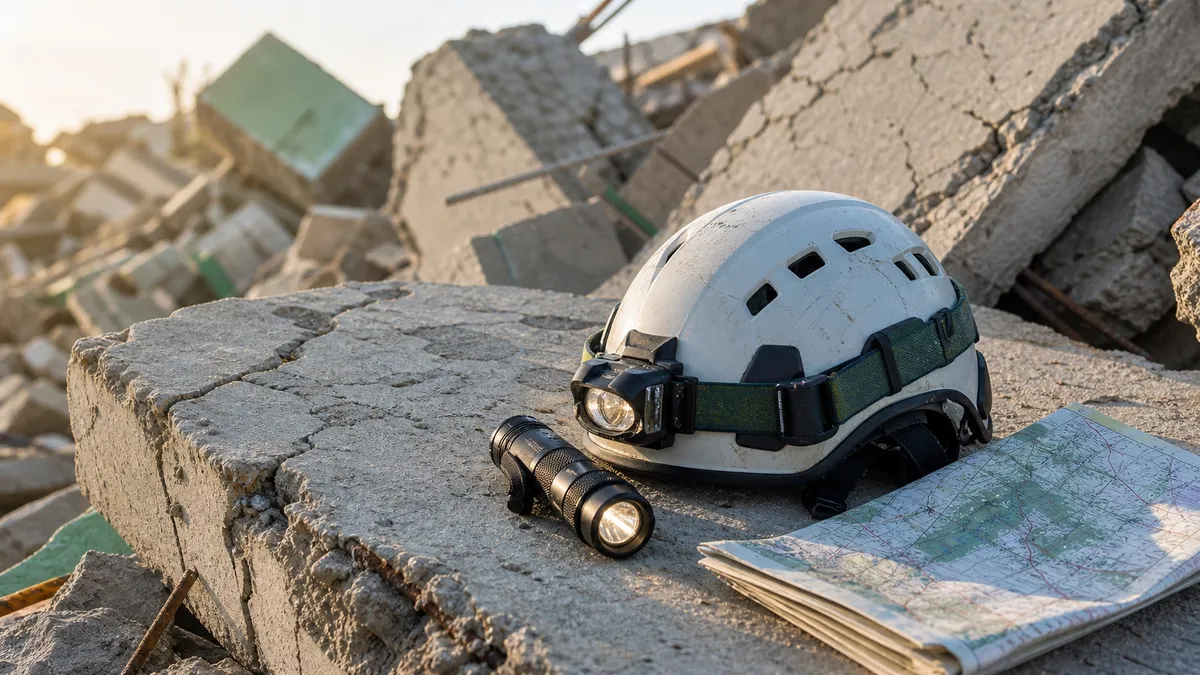
When a powerful earthquake brings down buildings, the question families ask first is brutally simple: how long can someone survive under rubble?
The answer is not a fixed number. Survival depends on whether the person has serious injuries, enough breathable air, protection from heat or cold, access to water, and whether rescuers can reach unstable debris without creating new collapses.
The question is newly relevant after the June 24, 2026, Venezuela earthquake sequence. The U.S. Geological Survey recorded a magnitude 7.2 foreshock followed 39 seconds later by a magnitude 7.5 mainshock, and the Associated Press reported that search teams were still racing to find survivors days later.
Rescue specialists often describe the first 24 to 72 hours as the most critical window, especially for people with crush injuries, bleeding, dehydration, or exposure. But survivors have occasionally been found later when they were protected in voids, had enough air, avoided severe bleeding, and did not become dangerously dehydrated.
That variability is why officials rarely treat a search as hopeless based only on the clock. Crews use listening devices, cameras, dogs, structural engineers, and controlled debris removal to look for survivable spaces. The work can be slow because heavy machinery may help clear debris, but it can also shift slabs onto trapped people.
What changes the odds
Injuries matter most. Someone pinned by a heavy beam, losing blood, or unable to breathe faces an immediate emergency. A person in a small open pocket with minor injuries has a better chance, especially if temperatures are moderate and dust does not block airways.
Water is another major factor. People can sometimes survive for days without food, but dehydration becomes dangerous much faster in heat, after blood loss, or when the person is trapped in a cramped position. Dust, smoke, gas leaks, and aftershocks can also turn a survivable space into a deadly one.
The structure itself matters, too. Reinforced concrete, soft-story buildings, stairwells, and furniture can create very different spaces after collapse. Rescuers are looking for voids large enough to preserve breathing room, but every site is different and aftershocks can quickly change the risk for both trapped people and crews.
What people can do before a quake
The most useful actions happen before the shaking starts. Ready.gov recommends securing heavy furniture, practicing a family communication plan, and keeping emergency supplies accessible. The CDC and USGS advise people indoors to drop, cover, and hold on, protecting the head and neck rather than running through falling debris.
After shaking stops, people who are trapped should cover their mouth if possible, avoid shouting continuously, and tap on a pipe, wall, or hard surface to help rescuers locate them. People outside the debris should call emergency services, stay clear of unstable structures, and leave technical rescue work to trained crews.
The grim truth is that no checklist can guarantee survival in a collapsed building. But the science behind rescue timing points to the same practical lesson: preparation before a quake and disciplined search work afterward can keep the survival window open longer.


