
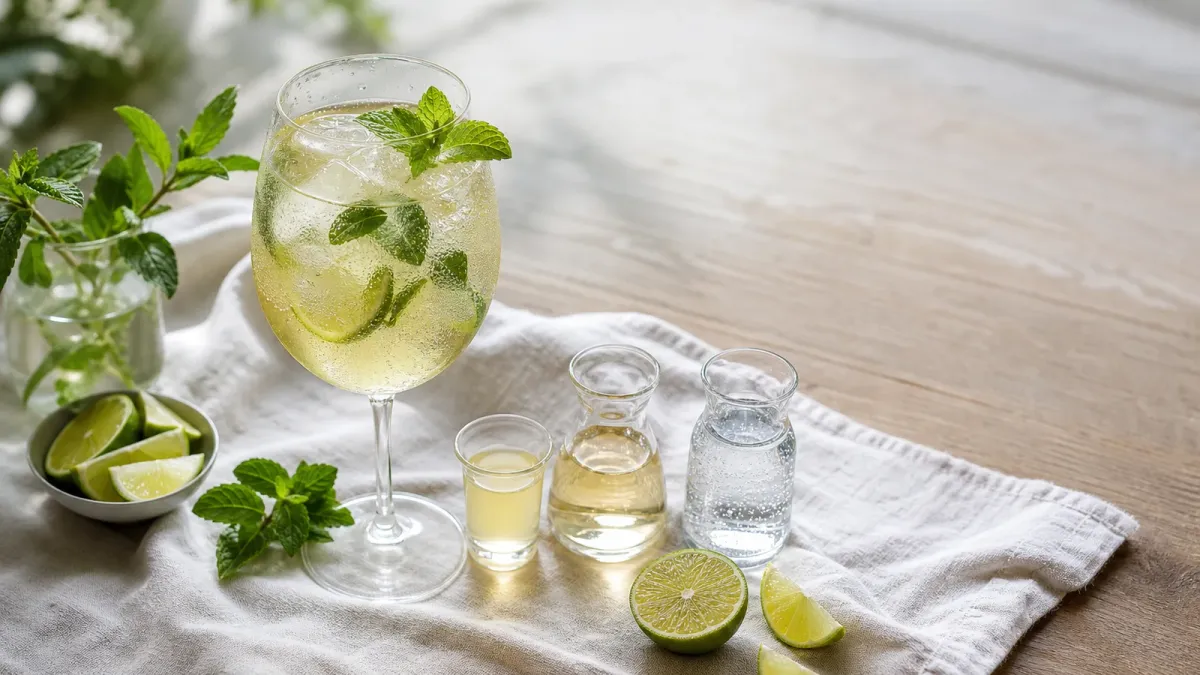
The Hugo spritz is getting a fresh summer search bump because it answers a simple hosting question: what can you pour that feels lighter than an Aperol spritz but still looks and tastes like a real aperitivo?
Google's Summergeist report says searches for "how to make a hugo spritz at home" rose 2,200% over the past month, while spritz questions more broadly are breaking out again for summer 2026. The appeal is practical. A Hugo uses sparkling wine, elderflower, soda water, mint and lime, so the drink is floral and fizzy instead of bitter-orange and bright red.
The short answer: build it cold, keep the elderflower measured, and use soda water as the pressure valve. Too much liqueur or cordial turns the drink syrupy. Too little citrus or mint makes it taste flat.
What goes in a Hugo spritz
A standard single drink starts with a large wine glass filled with ice. Add elderflower liqueur or elderflower cordial, pour in chilled sparkling wine, top with sparkling water, then finish with fresh mint and a lime wedge. St-Germain's published Hugo spritz recipe uses 1 1/2 ounces of elderflower liqueur, 2 ounces of sparkling wine and 2 ounces of sparkling water, with lime and mint as garnish.
If you want an easy house ratio, think one part elderflower, two parts sparkling wine and two parts sparkling water. Use prosecco if you want the classic light Italian feel. Use cava, cremant or another dry sparkling wine if that is what you have. The important detail is dryness: a sweeter bottle plus elderflower can make the drink taste heavy quickly.
The same logic works if you are serving a mixed group. Put the wine, soda, citrus and mint out separately, then let each glass get its own final splash. That keeps the bubbles lively and makes it easier to serve lighter pours without calling attention to anyone's choice.
How to keep it balanced
Start with less elderflower than you think you need, then adjust after the first sip. Clap or gently press the mint before adding it so the aroma comes forward without shredding leaves into the glass. Squeeze the lime only lightly unless your sparkling wine is very fruity.
For a lower-alcohol version, cut the sparkling wine and increase the soda water. For a no-alcohol version, use elderflower cordial, sparkling water and lime, then add a splash of white grape juice or nonalcoholic sparkling wine if you want more body.
What to watch
The drink scales well for a small pitcher, but add the sparkling water last so it does not go flat before serving. Keep extra mint, lime and soda water on the table so guests can make the drink brighter or lighter without adding more alcohol.
If you are serving alcohol, keep pours measured, offer water and food alongside the spritzes, and plan rides before the first round. The Hugo's light taste is part of the appeal, but it is still an alcoholic drink when made with sparkling wine and liqueur.


