
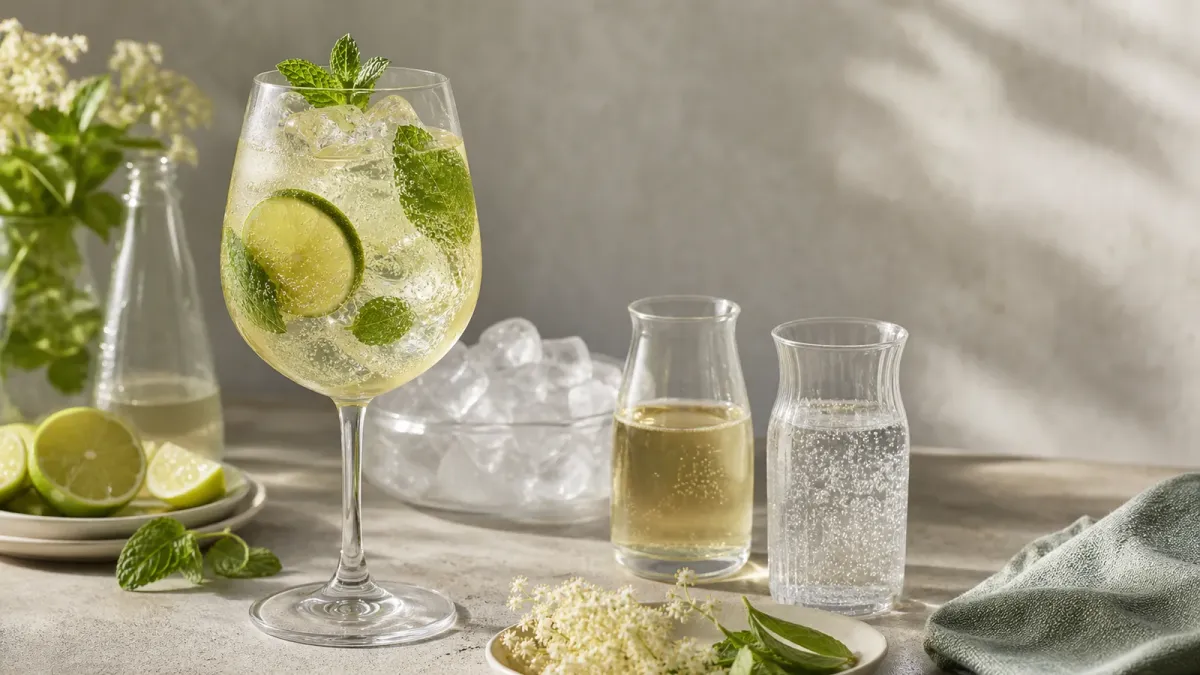
The Hugo spritz is having a summer-search moment. Google’s Summergeist 2026 report said the query “how to make a hugo spritz at home” spiked 2,200% over the past month, which helps explain why the elderflower drink keeps showing up on menus, shopping lists, and party plans.
The appeal is straightforward: it is lighter and more floral than an Aperol spritz, it does not need a shaker, and it can be built directly in the glass. That also means small choices matter. Too much liqueur makes it syrupy; too little ice makes it flat before the second sip.
Here is the simple version to know before you start mixing.
The short answer
A Hugo spritz is usually made with elderflower liqueur or syrup, sparkling wine, sparkling water or club soda, fresh mint, citrus, and plenty of ice. St-Germain’s published build uses 1 1/2 ounces of elderflower liqueur, 2 ounces of sparkling wine, 2 ounces of sparkling water, plus mint and lime. Liquor.com’s version leans drier with more prosecco and less elderflower, which is useful if you prefer a less sweet drink.
How to make one at home
Fill a large wine glass with ice. Add elderflower liqueur first, then pour in chilled prosecco or another dry sparkling wine. Top with chilled sparkling water and stir gently once or twice so the bubbles stay lively.
Finish with a mint sprig and a lime or lemon wheel. If the mint smells muted, clap it lightly between your hands before adding it. Do not pulverize the leaves, because bruised mint can turn bitter and leave small pieces in the glass.
What to check
Start with the sweetness level. Elderflower liqueur adds alcohol and sugar, while elderflower syrup adds sweetness without alcohol. If you use syrup, add a little less at first and let the sparkling wine and soda carry more of the drink.
Use a dry sparkling wine rather than a sweet one. The drink already has floral sweetness, so a drier bottle keeps the finish crisp. Chill every liquid before mixing; warm sparkling wine loses bubbles quickly once it hits ice.
For a pitcher, keep the ratio simple but hold back the soda until serving. Mix the elderflower and sparkling wine over ice, pour into glasses, then top each glass with sparkling water so the last drink does not taste dull.
Common mistakes
The easiest mistake is treating the drink like a heavy cocktail instead of a spritz. Use enough ice to keep it cold, pour slowly to preserve carbonation, and avoid muddling citrus into the glass unless you want extra bitterness from the peel.
If you are making an alcohol-free version, use elderflower syrup, sparkling water, mint, citrus, and a splash of nonalcoholic sparkling wine or white-grape juice. Keep the sweet ingredient small and add more bubbles than juice so the drink still tastes crisp.
Why it matters
The Hugo spritz is less a complicated cocktail than a summer template. Once you understand the balance, you can make it sweeter, drier, lower-alcohol, or alcohol-free without losing the point: cold bubbles, elderflower aroma, mint, citrus, and a clean finish.


