
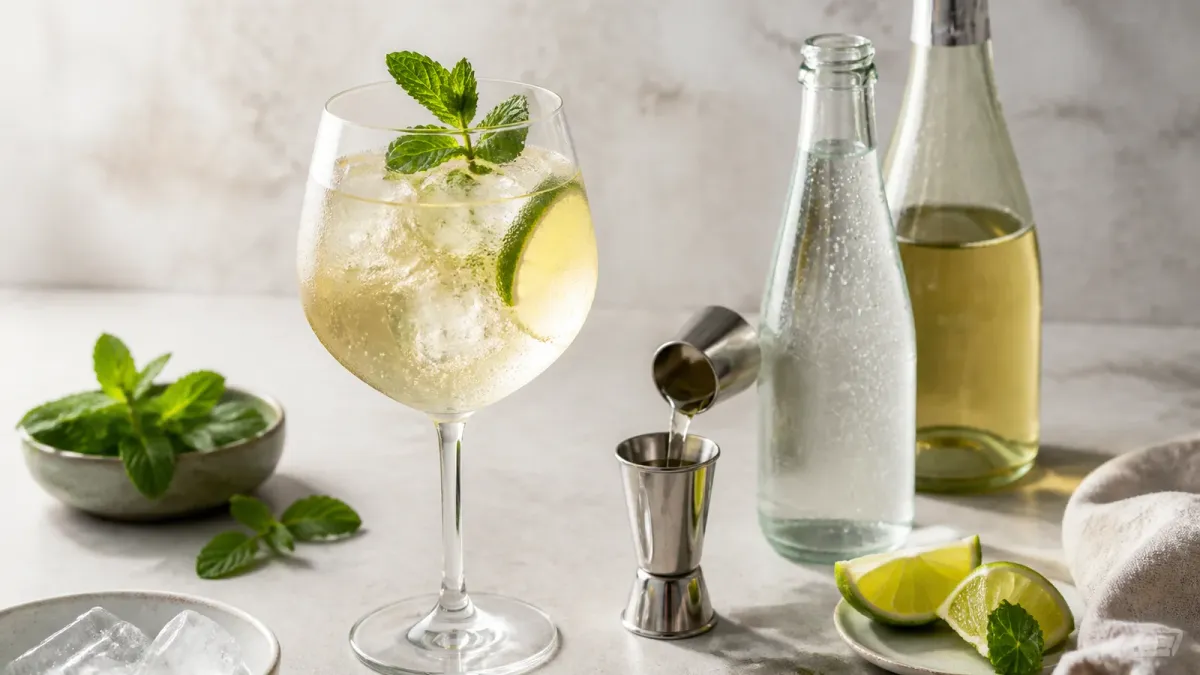
The Hugo Spritz is back in the summer rotation because it solves a specific party problem: it feels festive without the bitter bite or heavier pour of some other spritzes. Google's June 23, 2026 Summergeist report said searches for "how to make a hugo spritz at home" spiked 2,200% over the previous month, which is a good sign that many people are seeing the drink on menus and trying to recreate it.
The short version: a Hugo Spritz is a chilled mix of elderflower liqueur or syrup, sparkling wine, sparkling water, mint and lime over ice. It should taste floral, bright and lightly fizzy, not syrupy.
Here is the easy home build for one glass: add ice to a large wine glass, pour in 1 1/2 ounces elderflower liqueur, 2 ounces sparkling wine and 2 ounces sparkling water, then stir gently. Finish with a mint sprig and a lime wedge. Those proportions match the straightforward build published by St-Germain, but the drink is forgiving enough to adjust.
The short answer
If you want the safest first attempt, keep the ratio close to one part elderflower, one to two parts sparkling wine and one to two parts sparkling water. Use more sparkling water for a lighter drink, more wine for a drier and more aperitif-style glass, or a smaller elderflower pour if your liqueur is very sweet.
What to buy
You do not need a full bar setup. The useful checklist is simple: a bottle of prosecco or another dry sparkling wine, elderflower liqueur or elderflower syrup, plain sparkling water, fresh mint, limes and plenty of ice. A large wine glass works because the mint, citrus and ice need room.
The drink is often linked to South Tyrol in northern Italy, where bartender Roland Gruber is widely credited with creating the Hugo in the mid-2000s as a lighter alternative to the Aperol Spritz. That origin story matters less than the structure: floral sweetness, dry bubbles and a clean herbal garnish.
Common mistakes
Do not muddle the mint hard. A light slap or gentle stir releases aroma without turning the drink grassy. Do not use warm ingredients, because the ice will melt fast and flatten the glass. Do not skip the sparkling water unless you want a sweeter, stronger cocktail.
If you are making a batch, mix the elderflower and chilled wine first, then add sparkling water, ice and garnish glass by glass. That keeps the bubbles from disappearing before guests pick up a drink.
Zero-proof option
For a nonalcoholic Hugo-style spritz, use elderflower syrup, lime, mint and sparkling water. If you want more body, add a splash of nonalcoholic sparkling wine or a dry tonic. Keep the syrup modest and build around ice, bubbles and fresh garnish.
For an alcoholic version, serve it only where alcohol is appropriate, keep pours measured, and offer the zero-proof build beside it. The same mint, lime and ice make both versions feel intentional.
Bottom line: the Hugo Spritz is popular because it is easy to tune. Start with the classic, taste before adding more elderflower, and let the bubbles and mint do most of the work.


