
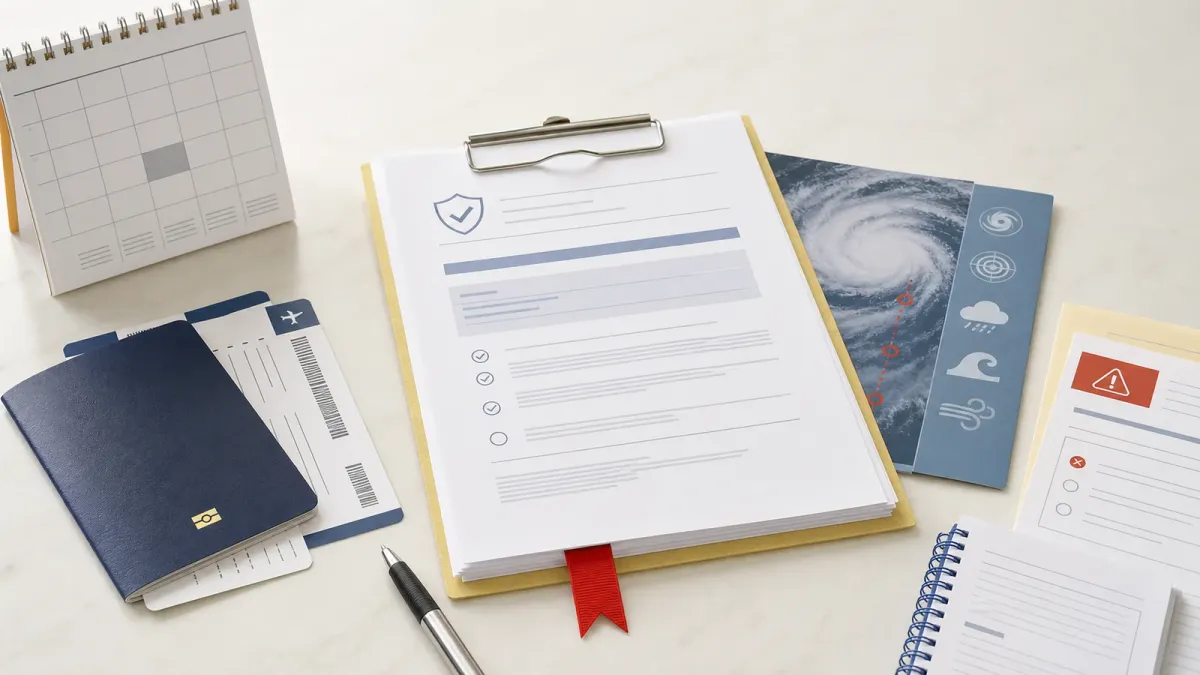
Tropical Storm Bertha is not just a weather story for the Gulf Coast. It is also a reminder for summer travelers that hurricane-season travel insurance is mostly a before-the-problem product, not a last-minute escape hatch.
The National Hurricane Center said at 7 a.m. CDT on Thursday, July 23, 2026, that Bertha was moving near the Louisiana coast with 45 mph maximum sustained winds and tropical storm warnings in effect from the Terrebonne/Lafourche Parish line in Louisiana to Sargent, Texas. NOAA's seasonal outlook still favors a below-normal Atlantic hurricane season, but even a quiet season can disrupt flights, cruises, beach rentals and prepaid tours.
The short rule: if a trip depends on the Gulf, Caribbean, Atlantic beaches or a cruise route during hurricane season, read the insurance terms before a storm has a name. Once a storm is named or otherwise forecast clearly enough to become a known event, new coverage often will not pay for losses tied to that specific storm.
Do this first
Buy coverage soon after your first nonrefundable trip payment if you want the broadest chance of weather-related protection. Several travel insurers and comparison marketplaces describe severe-weather benefits as time-sensitive because the event generally must be unforeseen when the policy is purchased.
That does not mean every traveler needs a policy. It means the decision has a deadline. A refundable hotel, a flexible airline ticket and a trip you could easily postpone may not need the same protection as a prepaid cruise, resort package or vacation rental during peak storm months.
What usually has to happen
Standard travel insurance typically does not reimburse a cancellation simply because a forecast looks uncomfortable. Policies often require a covered reason, such as a carrier cancellation, a long covered delay, a mandatory evacuation, a hurricane warning for the destination, damage that makes lodging uninhabitable, or a complete shutdown of essential travel services. The exact trigger and waiting period vary by plan.
That is where many buyers get surprised. A storm being nearby is not always enough. A resort pool closing, a rainy forecast or worry about possible travel trouble may not qualify unless the policy has optional broader benefits such as cancel-for-any-reason coverage, and those upgrades usually have their own purchase windows, reimbursement limits and exclusions.
Check these details before you pay
- Named-storm language: Look for wording that excludes storms named before the policy purchase date.
- Hurricane-warning trigger: Some plans tie cancellation coverage to an official warning for your home or destination.
- Delay minimum: Travel delay benefits may require a delay lasting a stated number of hours before reimbursement starts.
- Evacuation and lodging rules: Check whether mandatory evacuation, hotel closure, home damage or uninhabitable lodging is covered.
- Refund overlap: Insurance usually reimburses only covered nonrefundable costs after refunds, credits or supplier obligations are considered.
Keep receipts, booking confirmations, airline notices, hotel messages, evacuation orders and official weather advisories. If a claim becomes necessary, written proof matters more than screenshots of a general forecast.

Do not confuse insurance with airline refund rights
Private travel insurance and U.S. airline refund rules solve different problems. The Department of Transportation says passengers are entitled to a ticket refund when an airline cancels a flight, regardless of the reason, if the passenger chooses not to travel or accept credits or other compensation. DOT rules also cover significant delays or schedule changes when the passenger declines the alternative.
That right does not automatically cover every prepaid hotel night, cruise day, tour deposit or meal during a weather delay. Travel insurance may help with some of those costs if the policy terms are met, but it is not a substitute for checking what the airline, cruise line, hotel or tour company already owes you.
Common mistakes
The first mistake is waiting until a storm is already on the map. By then, storm-specific coverage may be closed. The second is buying the cheapest policy without checking whether severe weather, hurricanes, missed connections and trip interruption are included. The third is canceling too early, before the policy's covered trigger has happened.
If you are unsure, call the insurer or agent before you cancel. Ask one narrow question: what event would make this specific trip cancellation, interruption or delay claim eligible under this policy? Write down the answer, the date and the representative's name if one is provided.
Bottom line
For hurricane-season travel, the best insurance decision happens while the trip still looks boring. Buy early if you need protection, match the policy to the nonrefundable money at risk, and do not assume that a named storm, a scary forecast or a voluntary change of plans is automatically covered.


