
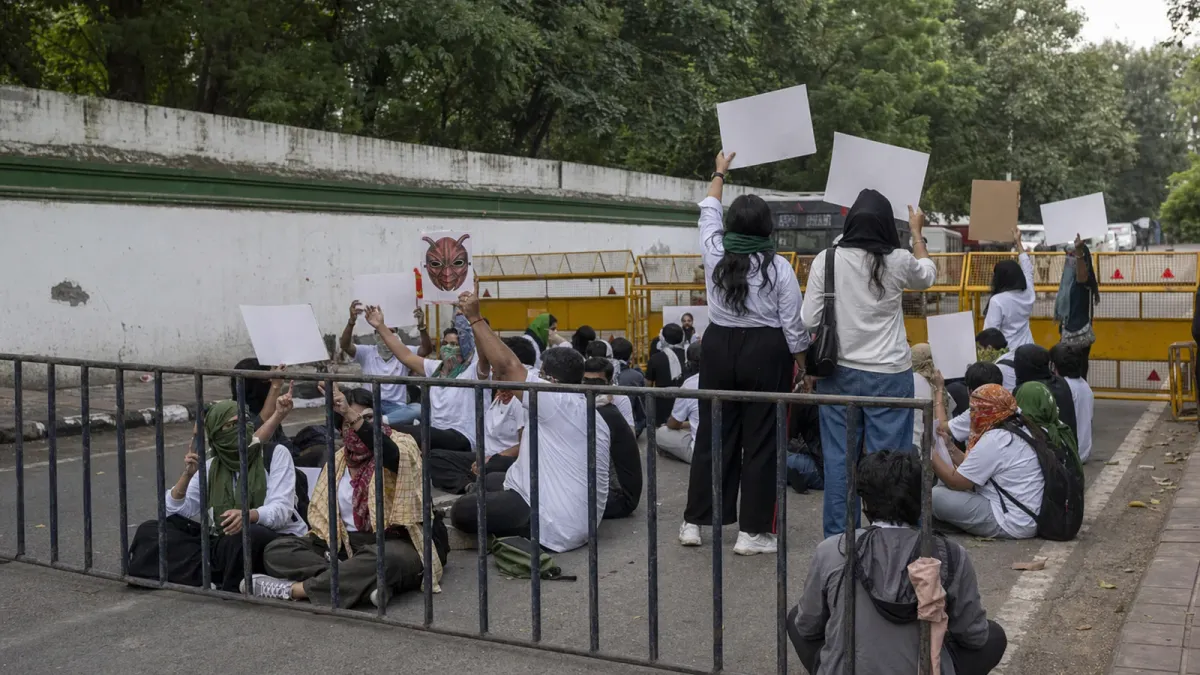
India's youth-led Cockroach Janta Party protest remained camped at Jantar Mantar in New Delhi on Tuesday, July 21, 2026, after leaders said they would keep demanding education-system accountability but would not immediately attempt another march toward Parliament.
The shift came a day after police used batons and tear gas to stop demonstrators who were trying to reach Parliament on the opening day of its monsoon session. Protesters accuse police of excessive force; Delhi Police and government allies say the march was unauthorized and became unruly.
The practical change is that the confrontation has moved from a street-march test to a political pressure test. Protest leaders are trying to keep a national youth movement alive, while the government faces questions over exam integrity, protest policing and whether talks with the group will produce more than a pause.
What changed
Movement leaders told reporters Tuesday that they would continue the campaign but avoid another march through New Delhi because they feared more young supporters would be hurt. Al Jazeera reported that CJP founder Abhijeet Dipke said the group would not march again for now because police would hurt the youth again.
AP reported that hundreds of supporters remained at the protest site after Monday's crackdown, and that the government had made its first outreach to movement leaders. Local reports said J.P. Nadda, a senior figure in the governing BJP, met CJP representatives, though protesters said they wanted concrete action rather than a symbolic meeting.
Amnesty International said July 20 images and reports from Jantar Mantar raised serious concerns about peaceful dissent, citing alleged baton use, tear gas, barriers, suspended metro service and mobile internet restrictions. The rights group called for allegations of unlawful conduct to be investigated independently. Delhi Police has disputed violence claims in some local reporting and said crowd controls were needed around Parliament.
What protesters want
The movement's central demand is the resignation of Union Education Minister Dharmendra Pradhan over alleged failures tied to national examination paper leaks and the stress they have placed on students. Amnesty said protesters are also seeking accountability over alleged NEET-UG paper leaks that affected millions of students, as well as compensation for families of students who died by suicide after exam-related distress.
The movement began as a satirical response to remarks comparing some unemployed young people to cockroaches, then grew into a broader youth protest over education, jobs and government accountability. ABC News Australia reported that thousands marched under the Cockroach Janta Party banner and that Reuters journalists saw tear gas fired near Parliament, while some protesters were also reported to have thrown stones.
What we do not know yet
Casualty and detention counts remain contested. Some local reports cited dozens detained and injuries on both sides, while protest groups and rights advocates focused on alleged police excesses. The clearest confirmed point is that both sides are now using Tuesday's aftermath to argue over legitimacy: whether the protest was suppressed or whether authorities were enforcing public-order limits.
What happens next
The next test is whether government outreach leads to a formal response on exams, compensation demands or the education minister's future. If talks stall, the movement may remain a sit-in rather than a march, but its political reach has already widened as opposition figures, including Rahul Gandhi, have tried to align themselves with the students' demands.
For readers outside India, the story matters because it shows how exam credibility, youth unemployment and online organizing can turn a narrow education scandal into a national legitimacy fight. The immediate question is not only whether protesters return to the streets, but whether the government can offer a remedy that students see as more than crowd control.


