
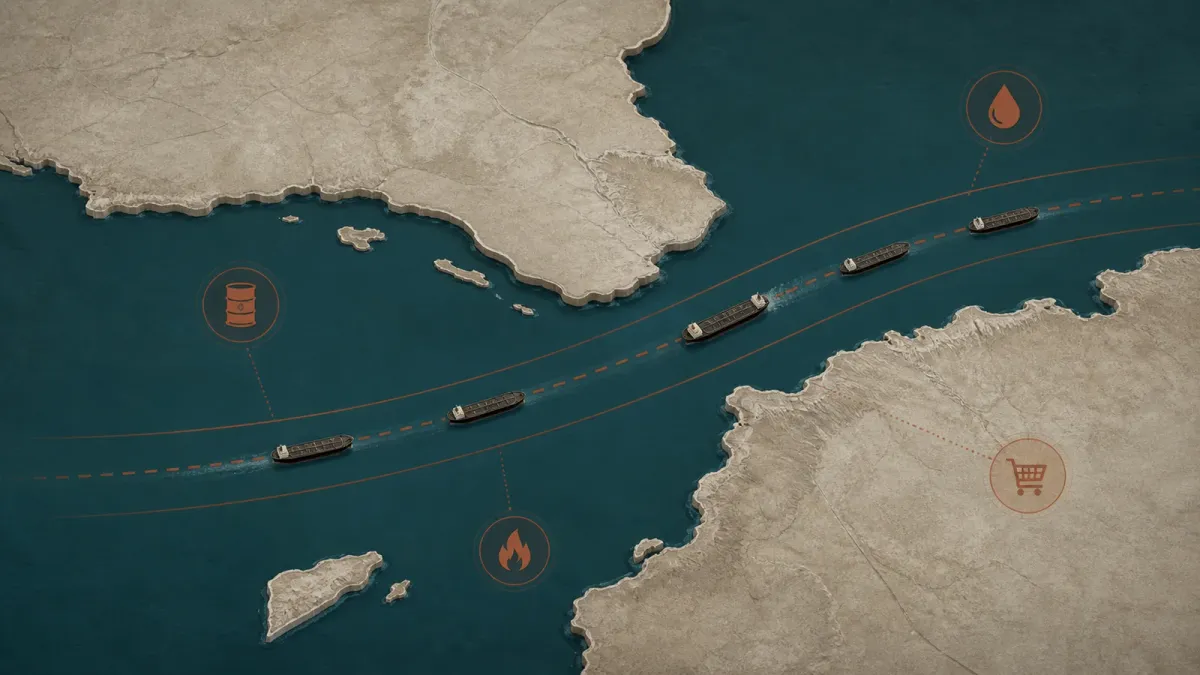
Iran's latest conditions for fully reopening the Strait of Hormuz are putting oil back at the center of this week's market story, just as investors wait for fresh U.S. inflation data.
The short version: talks with Oman may still create limited shipping lanes, but Iranian officials are tying a fuller reopening to demands that include an end to the U.S. naval blockade, sanctions relief, troop withdrawals, compensation for war damage and the release of frozen Iranian assets, according to reports from AP, Axios, Fox News and Investopedia.
That matters because Hormuz is one of the world's most important oil transit points. Even partial uncertainty can move crude prices, which then feeds into transportation costs, company margins and the inflation expectations investors bring into Federal Reserve week.
What changed
AP reported Monday, August 10, 2026, that Iran would not reopen the strait without U.S. concessions. Axios reported that President Donald Trump said the United States is "low-keying it" with Iran and is leaning on economic pressure rather than an immediate return to major combat operations.
Fox News, citing Reuters and Iranian state media, reported that Iran's foreign minister said talks with Oman over new maritime routes were in the final stages, while also saying negotiations with the United States cannot resume until additional conditions are met.
Markets noticed. Investopedia reported Monday morning that WTI crude was up 1.6% at just under $80 a barrel, while MarketWatch said U.S. stock futures were little changed as investors weighed more Iran uncertainty before the week's inflation reports. The move is not a panic spike, but it is enough to make energy a live variable again after stocks ended last week with a strong rally.
Why investors and consumers care
The direct question is not only whether ships can move through the Gulf. It is whether traders believe enough oil can move reliably enough to keep gasoline, diesel, freight and airline-fuel expectations from climbing again.
A temporary Oman route could reduce the worst supply fears. But Iran's added conditions make the timing harder to price. That is why a political statement about sanctions and military posture can quickly become a market story about crude benchmarks and inflation risk.
The consumer link is indirect but real. Higher crude does not instantly reset every pump price, and local gasoline prices depend on refining, inventories, taxes and distribution. Still, sustained oil pressure can show up in travel costs, delivery expenses and companies' inflation outlooks.
The important reader test is duration. A one-day move can fade quickly; a longer disruption can change how businesses hedge fuel, how traders price inflation and how households judge summer travel costs.
What to watch next
The first signal is whether the Oman arrangement is formally announced and whether shipping volumes actually increase. The second is whether Washington treats Iran's added demands as a bargaining position, a nonstarter or a reason to tighten pressure.
For households, the practical marker is simpler: watch oil and gasoline expectations alongside Wednesday's consumer price index and Thursday's producer price index. If energy prices keep rising while inflation data runs hot, the market's rate-cut hopes could get more fragile.


