
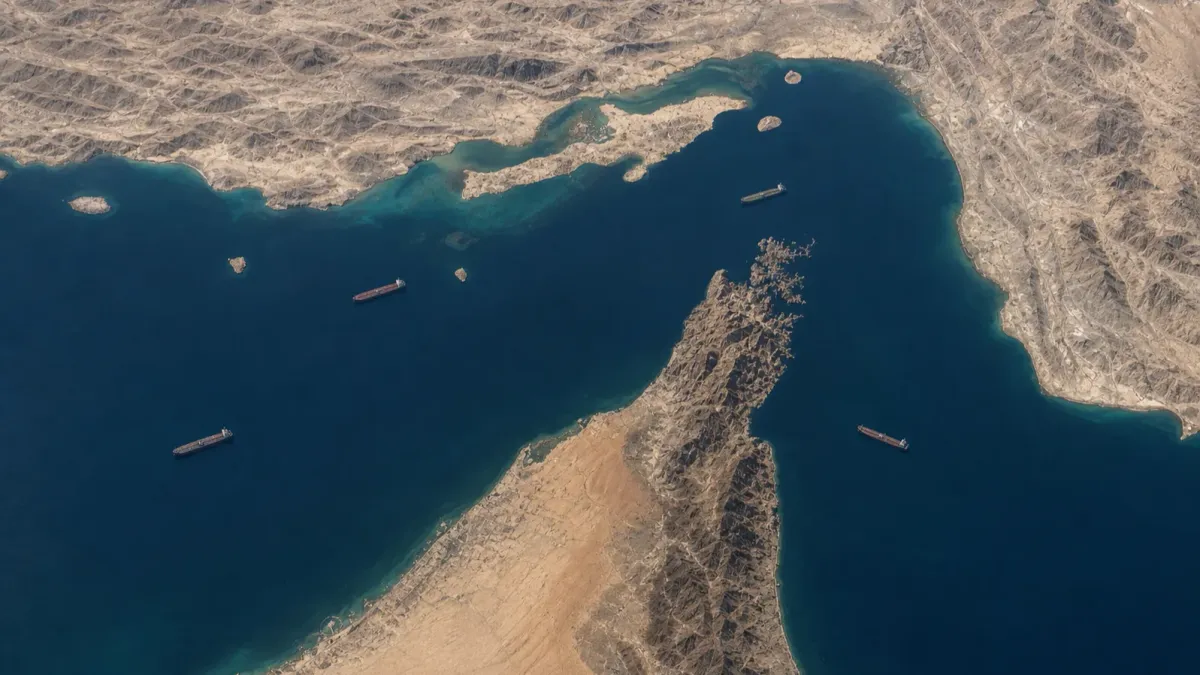
Iran is preparing a list of conditions for reopening the Strait of Hormuz after new talks with Qatar, while Iran and Oman discuss temporary shipping lanes through the waterway. The short answer is that diplomacy has produced a framework, but commercial traffic is still far below normal and the parties do not agree on what “open” means.
The distinction matters globally. Before the Iran war, roughly one-fifth of the world’s oil supply moved through the narrow passage between Iran and Oman. A channel can be physically navigable while still functioning as a high-risk bottleneck if crews, owners and insurers do not believe ships can pass without attack, seizure or political permission.
What the proposed plan would do
Iranian officials say a potential agreement with Oman would route commercial vessels entering the Persian Gulf through Iranian waters. Outbound traffic would use waters controlled partly by Iran and partly by Oman. The temporary arrangement would exclude military vessels, according to comments by Iranian Deputy Foreign Minister Kazem Gharibabadi reported by the Associated Press.
Iran and Oman would then have 30 to 60 days to discuss a permanent navigation plan. Qatar’s prime minister pressed Iranian leaders in Tehran on Thursday to restore freedom of navigation and support a route that would let ships pass safely while mines are cleared. Iran described those discussions as creative but has not yet published its full conditions.
Previous Iranian demands have included ending the U.S. naval blockade of Iranian ports, removing sanctions and providing compensation. Washington has rejected parts of the evolving arrangement and says U.S. forces have cleared mines from the main lane. Iran’s Revolutionary Guard disputes the U.S. claim that the strait is open and says vessels still require Iranian permission.
The traffic numbers show the gap
Preliminary shipping data cited by Reuters recorded only seven commodity vessels crossing the strait on Thursday, Aug. 27. That was down from 17 a day earlier and below the recent 10-day average of 15. Normal prewar traffic was far higher, so a handful of transits does not demonstrate that the route has returned to routine commercial use.
The security risk is not theoretical. The United Kingdom Maritime Trade Operations office said a tanker was hit by an unknown projectile Tuesday in waters between Iran and Oman, causing a fire. The crew was reported safe and no environmental damage was reported. The attacker had not been publicly identified.
Why reopening requires more than mine clearing
Shipping companies make decisions based on the entire risk chain: verified navigation routes, naval rules, insurance coverage, crew safety, port access and the chance of secondary sanctions. A military statement that a lane has been cleared solves only one part of that equation.
The proposal also contains a basic political conflict. Iran wants a formal role in controlling traffic through waters beside its coast and seeks to exclude military ships. The United States wants freedom of navigation for both commercial and military vessels and has used naval escorts to move tankers. Oman and Qatar are trying to bridge those positions without becoming parties to the war.
What to watch next
Four signals would show whether the strait is genuinely normalizing: publication of Iran’s conditions, a written Iran–Oman traffic agreement, independently verified mine-clearing and a sustained rise in commercial transits. Shipping insurers and major energy exporters will provide another practical test through the routes they approve and the premiums they charge.
Until those pieces align, “open” is a political claim rather than a settled operating condition. The current talks are significant because they create a path toward reopening—but the vessel count shows how much confidence still has to be rebuilt.


