

The Pentagon's warning sounds contradictory: Defense Secretary Pete Hegseth says the U.S. Department of Defense faces critical funding shortfalls, while senators say roughly $75 billion from a previous $150 billion defense package remains unspent. The contradiction is real only if every defense dollar can be used for every defense bill. It cannot.
At a Senate Appropriations Committee hearing on Tuesday, July 21, 2026, Hegseth estimated that the U.S. war with Iran has cost $37.5 billion so far. He defended a $67.1 billion Pentagon portion of the White House's broader $87.6 billion supplemental request, saying that without new money the department could struggle to pay service members, replace equipment and munitions, and sustain operations.
The immediate dispute is therefore not simply whether the Pentagon has money. It is whether the right accounts have enough legally usable budget authority, at the right time, for the costs the war is generating—and whether the administration has provided Congress enough evidence to approve more.
The short answer
An unspent balance is not the same thing as spare cash. Federal appropriations are divided by purpose, time and amount. Money Congress approved for one procurement program, construction project or multiyear technology investment cannot automatically be moved into military pay, fuel, maintenance or a different weapons line.
The Government Accountability Office's appropriations guidance says agencies must use funds for the purpose Congress provided. The Defense Department can reprogram some money within an account, but transfers between accounts require legal authority and can trigger congressional review. Hegseth's own written testimony illustrates the constraint: the department is asking not only for new funding but also for an additional $6 billion in transfer authority so it can shift money among munitions as contracts and timelines become clearer.
What the $67.1 billion request would cover
The White House's June 24 request is much larger than the $37.5 billion running cost estimate because it mixes reimbursement for recent operations with replacement stocks and future capacity. Its public table assigns $17.3 billion to operational costs, $21 billion to munitions, $1.7 billion to readiness, $1.5 billion to fuel, $2.4 billion to drones, $5.1 billion to cybersecurity and autonomy, $4 billion to airborne tracking and a space-data backbone, and $12.1 billion to classified programs.
Hegseth grouped the same request into two broad buckets. He described $21.3 billion for current readiness and operating needs—including military pay, training shortfalls, damaged equipment and fuel—and $45.9 billion to accelerate munitions production and other capabilities. That is why subtracting the $37.5 billion cost estimate from the $67.1 billion request does not reveal an unexplained $29.6 billion surplus. The numbers measure different things.
Why the $75 billion challenge still matters
Sen. Jeanne Shaheen and other Democrats pressed Hegseth on why the Pentagon needs more when it has not spent about half of the earlier $150 billion package. Hegseth said the remaining money is expected to be used by September 30, the end of the fiscal year. Sen. Patty Murray argued that the department should first solve cash-flow problems inside its existing budget and provide clearer cost estimates.
Those questions do not disappear because appropriations are restricted. Congress still needs an account-by-account execution picture: how much of the $75 billion is already obligated by contract, how much remains unobligated, when each balance expires, which purposes it can legally support, and what the department proposes to defer if it moves money. "Unspent" can include funds committed to signed contracts but not yet paid out; it can also include unobligated money that is legally available only for a particular program.
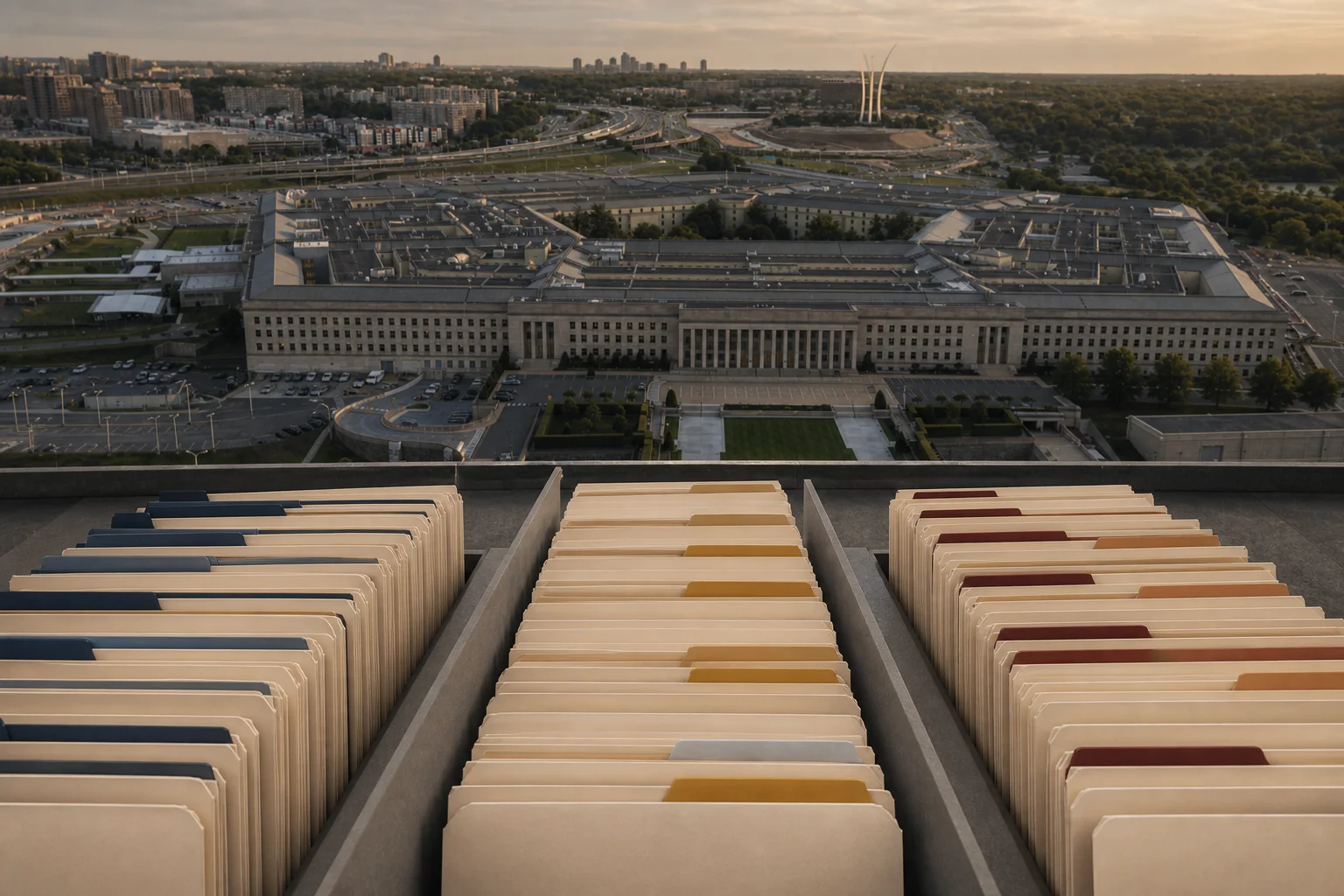
The Washington Post reported that the funding squeeze is already contributing to limits on training and facility maintenance, citing current and former officials. If confirmed, that is the practical consequence of bridging a war from existing accounts: readiness work elsewhere can be delayed even while the department's total ledger still shows a large balance.
What Congress should demand next
First, lawmakers need a reconciled cost table that separates expenses already incurred from costs projected through September 30. Hegseth told senators the $37.5 billion estimate includes some expected spending through the fiscal year's end, which makes it less useful as a clean snapshot unless the Pentagon publishes the cutoff date and assumptions.
Second, Congress should require the Pentagon to distinguish four categories: current operations, replacement of equipment already lost or used, expansion of industrial capacity, and unrelated or longer-term priorities. A supplemental can legitimately include more than reimbursement, but combining those categories makes it harder to judge which needs are urgent and which belong in the regular fiscal 2027 budget.
Third, any new transfer authority should come with reporting requirements. The department says flexibility is necessary because munitions contracts and production schedules change. Congress can grant that flexibility while still requiring notice of where money moved, what was delayed and whether the transfer repaired a war-driven shortfall or financed a new priority.
What happens next
House Republicans are pursuing a broader $95 billion budget package that would include defense funding alongside farm aid and proposed election-law changes. The process remains politically difficult, and the Senate is also debating war powers and the administration's Iran strategy.
The bottom line is narrower than either side's slogan. A large unspent balance does not prove the Pentagon can cover every Iran-war bill, and a shortfall in selected accounts does not prove that Congress should approve the full request. The decisive evidence is the account-level ledger the public has not yet seen.


