
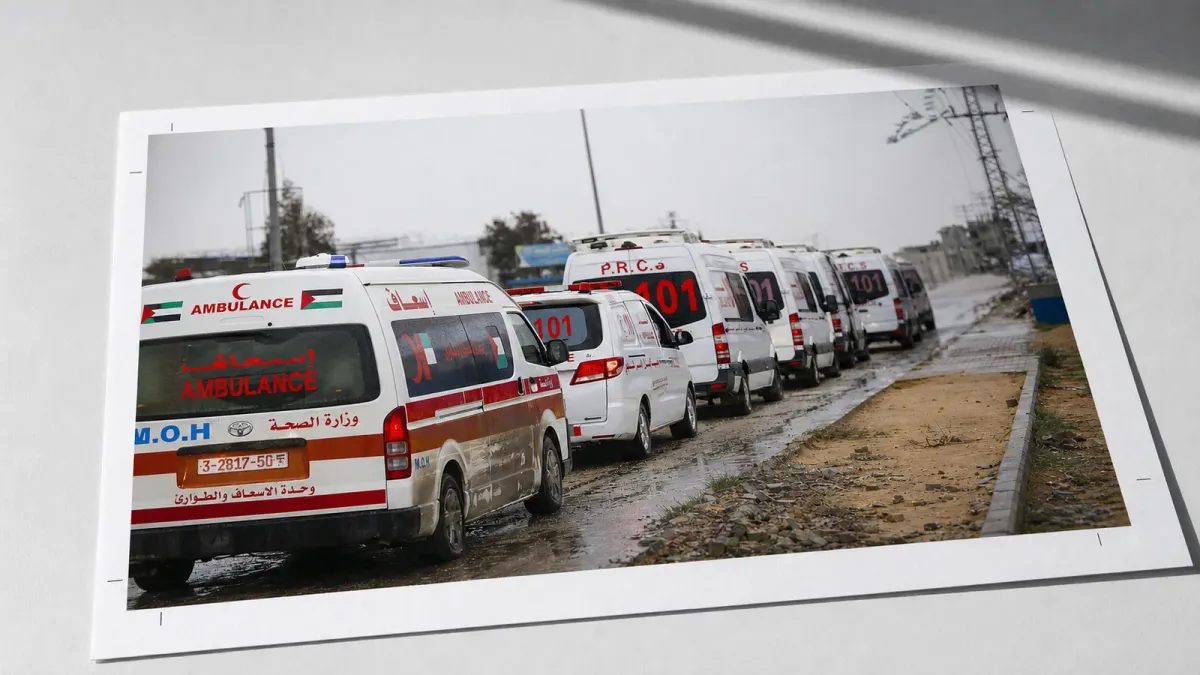
Israel's military announced on Wednesday, August 19, that it is opening its first criminal investigations into troop conduct during the Gaza war. The cases concern the killing of five-year-old Hind Rajab and relatives traveling with her in Gaza City, and the separate killing of 15 Palestinian medics and emergency responders in Rafah.
The decision moves two internationally scrutinized incidents beyond internal military review and into criminal investigation. It is a significant procedural change, but it is not a finding of guilt, an indictment or a promise that anyone will be charged.
The military said it had reviewed 150 incidents and reached decisions in five cases. It declined to open criminal investigations into three other attacks that killed workers from World Central Kitchen and Doctors Without Borders, a limit that drew renewed demands for independent scrutiny.
What the military decided
According to the Associated Press, the military acknowledged that Israeli troops fired at the car carrying Hind and her relatives in January 2024. Hind remained alive inside the vehicle and spoke by phone with the Palestinian Red Crescent while rescuers sought access to reach her. She, her relatives and two paramedics sent in an ambulance were found dead 12 days later.
The military also acknowledged that troops fired toward the ambulance. It said apparent failures in coordinating the ambulance's movement warranted a criminal investigation by the Military Police Criminal Investigation Division.
The second investigation concerns the March 2025 killing of 15 Palestinian Red Crescent and Civil Defense responders near Rafah. Israeli troops fired first on an ambulance and then on other marked emergency vehicles that came to find the missing crew, according to video evidence and the sole survivor cited by the AP. Troops later buried the bodies and damaged vehicles; rescue teams recovered them about a week later.
Israel's initial account said the vehicles approached suspiciously without emergency lights. The military changed that account after recovered footage showed the vehicles moving with lights flashing and their markings visible. A deputy commander was previously directed to step down over the incident.
Why the investigations matter
A criminal investigation permits military police to gather evidence and question personnel for possible offenses. The military advocate general can then decide whether the evidence supports charges, disciplinary action or closure. Opening a case therefore creates a path toward individual accountability, but the outcome remains uncertain.
The timing also matters. Hind's death became one of the most widely recognized cases involving a Palestinian child during the war, while the paramedic killings intensified concern over the protection of medical workers under international humanitarian law. Independent United Nations experts previously said Hind's killing might constitute a war crime.
Hind's grandmother and Palestinian Red Crescent representatives told the AP that an internal military process was insufficient and called for an international investigation. Rights advocates have long argued that Israel's system rarely produces criminal accountability for soldiers accused of harming Palestinians. Israel says its legal system can investigate violations by its forces.
Which cases will not receive criminal probes
The military decided against criminal investigations into the April 2024 strikes that killed seven World Central Kitchen workers traveling in a coordinated convoy. It also declined criminal action in two incidents that killed four Doctors Without Borders staff members.
World Central Kitchen rejected the military's explanation and renewed its call for an independent investigation. The military said commanders had mistakenly identified people near the convoy as armed Hamas operatives and concluded that the decisions did not create reasonable suspicion of criminal misconduct.
What happens next
Investigators must now determine who authorized or carried out the fire, what information troops had, whether coordination procedures were followed and whether the conduct violated military or criminal law. No timetable for completing either investigation was announced.
The immediate test is whether the inquiries produce transparent findings and consequences rather than ending with closed files. Until investigators finish their work and prosecutors decide what to do, the announcement should be understood as the opening of an accountability process—not its conclusion.


