
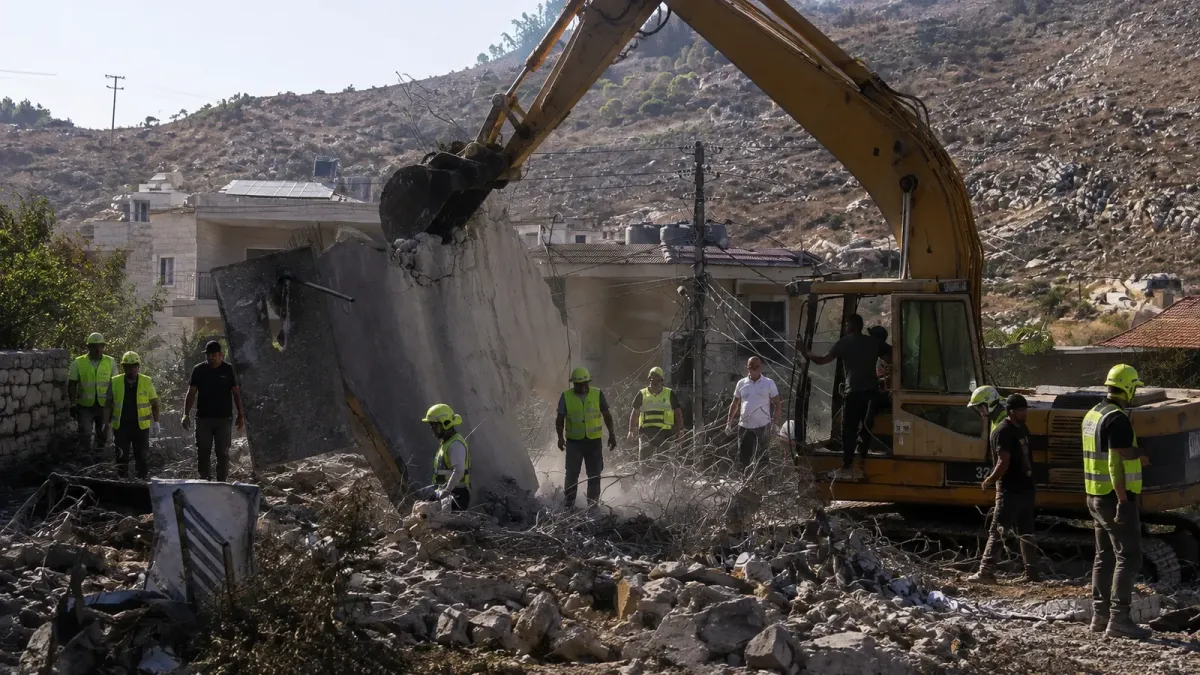
Israeli airstrikes killed at least 12 people in the southern Lebanese town of Kfar Rumman early Monday, September 7, according to Lebanon’s Health Ministry. The dead included two children, four women and a paramedic, making Monday one of the deadliest days of Israeli bombardment in Lebanon in recent weeks.
One strike hit a residential building and killed 11 people, the ministry said. Eight others were wounded, including three children and a paramedic. A second strike hit a vehicle, killing a paramedic with the Lebanese Islamic Risala Scout Association and wounding two colleagues.
The attacks followed several days of intensifying fire despite a U.S.-brokered truce reached in June. Israel said Monday’s strikes were retaliation for two Hezbollah drone attacks aimed at Israeli troops in Lebanon and that it targeted people moving weapons into Kfar Rumman. Hezbollah did not immediately claim the drone attacks or publicly respond to the latest Israeli account.
What changed
The immediate change is the pace and toll of the violence. Israeli strikes killed at least seven people in southern Lebanon on Sunday, according to the Associated Press, and Lebanese officials said an empty hospital was also leveled. The Kfar Rumman deaths brought the two-day toll sharply higher and pushed the fighting beyond isolated exchanges.
Lebanese authorities have described the new attacks as a dangerous escalation. Residents who had begun returning and rebuilding after the June agreement now face renewed uncertainty about whether the ceasefire framework can hold. Israel has said it remains in operational control of the strategic Ali Taher hill near Nabatiyeh, an area overlooking villages and roads in the south.
The casualty figures and military claims come from different parties to the conflict. Lebanon’s Health Ministry reported the deaths and injuries. The Israeli military supplied its account of the alleged weapons transfer and drone attacks. Independent news organizations reported both statements, but the precise military circumstances around the targeted sites have not been independently established.
Why the truce is under pressure
The June framework was intended to halt the fighting and begin a process under which Israeli forces would withdraw from positions in southern Lebanon as Hezbollah was disarmed in designated areas. Progress has been limited, and each side has accused the other of violating the arrangement.
That leaves a narrow margin for error. Repeated drone attacks, retaliatory strikes and control of high ground can quickly create a cycle in which each new action is presented as a response to the last. Civilian deaths and strikes on medical workers add pressure on Lebanon’s government and on foreign mediators to clarify whether the agreement still has an enforceable path.
What happens next
The next test is whether the attacks continue beyond the current wave and whether U.S. or regional mediators announce a renewed mechanism for enforcing the June deal. Watch for any formal Hezbollah claim, further Israeli evacuation orders, Lebanese government action around the pilot disarmament zones, and public statements from the ceasefire’s sponsors.
For now, the confirmed fact is a sharp rise in casualties in Kfar Rumman. The larger question—whether this is a contained retaliation or the opening of another sustained campaign—remains unresolved.


