
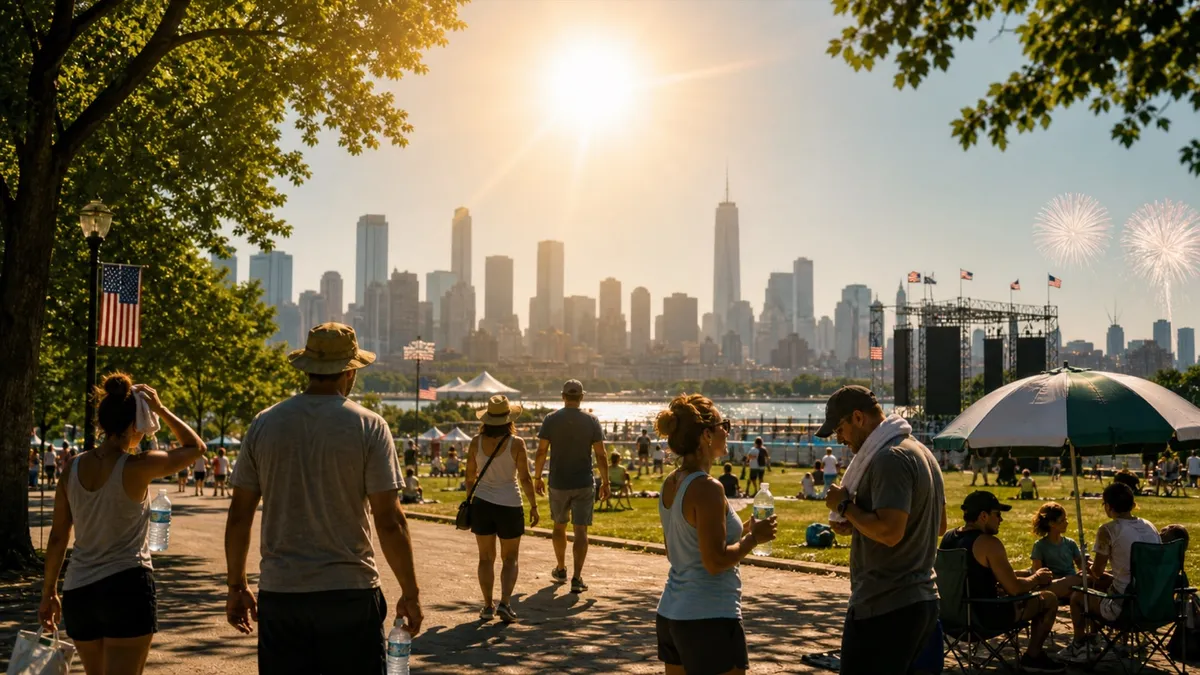
Extreme heat and severe thunderstorm risk are reshaping July Fourth celebrations across parts of the eastern United States, forcing organizers to delay, cancel, or modify outdoor events on one of the busiest public-gathering days of the year.
The National Weather Service issued an Extreme Heat Warning for Washington, D.C., and surrounding parts of Maryland and Virginia through Saturday evening, warning that heat index values could reach 110 to 115 degrees. The agency said heat-related illnesses increase significantly during extreme heat and high humidity events.
Washington also entered the evening with multiple hazards in effect, including a Severe Thunderstorm Watch and a forecast high near 103 degrees. The combination means people planning fireworks, parades, concerts, cookouts, and travel are dealing with both heat stress during the day and possible storm disruptions later.
The holiday complications are not limited to the capital region. NOAA warned ahead of the weekend that temperatures would run 10 to 20 degrees above average across the eastern third of the country on Friday and Saturday, before the hottest air begins to ease. ABC News reported that more than 140 million Americans remained under heat alerts Saturday afternoon, while severe storm watches stretched from parts of the Midwest into the Northeast.
In Washington, NBC4 reported that several regional parades were canceled and that the Salute to America viewing zone near the Washington Monument was scheduled to open later in the day to reduce prolonged heat exposure. Local governments also pointed residents and visitors toward libraries, community centers, and other cooling locations.
Why the holiday timing matters
Heat risk rises quickly at large outdoor events because shade, seating, water access, and transportation can become bottlenecks. A forecast that might be manageable for a short errand can become dangerous when people stand for hours on pavement or wait in security lines before a parade, concert, or fireworks show.
The storm risk adds another planning layer. Evening thunderstorms can bring damaging wind, lightning, and brief heavy rain, all of which are especially disruptive for fireworks displays and temporary event structures. People attending outdoor events should check official local alerts before leaving, identify indoor cooling options nearby, and make a plan to leave quickly if lightning approaches.
What officials are urging
Public health and weather officials are emphasizing the basics: drink water before feeling thirsty, take frequent cooling breaks, avoid strenuous activity during peak heat, and check on older adults, children, outdoor workers, and people without reliable air conditioning. Pets should also stay off hot pavement and have access to water and shade.
For travelers, the safest plan is flexible. Some events may continue, but start times, viewing zones, transit operations, and road closures can change when heat or storms intensify. The key message for the holiday evening is simple: celebrate, but treat the weather as part of the event plan.


