
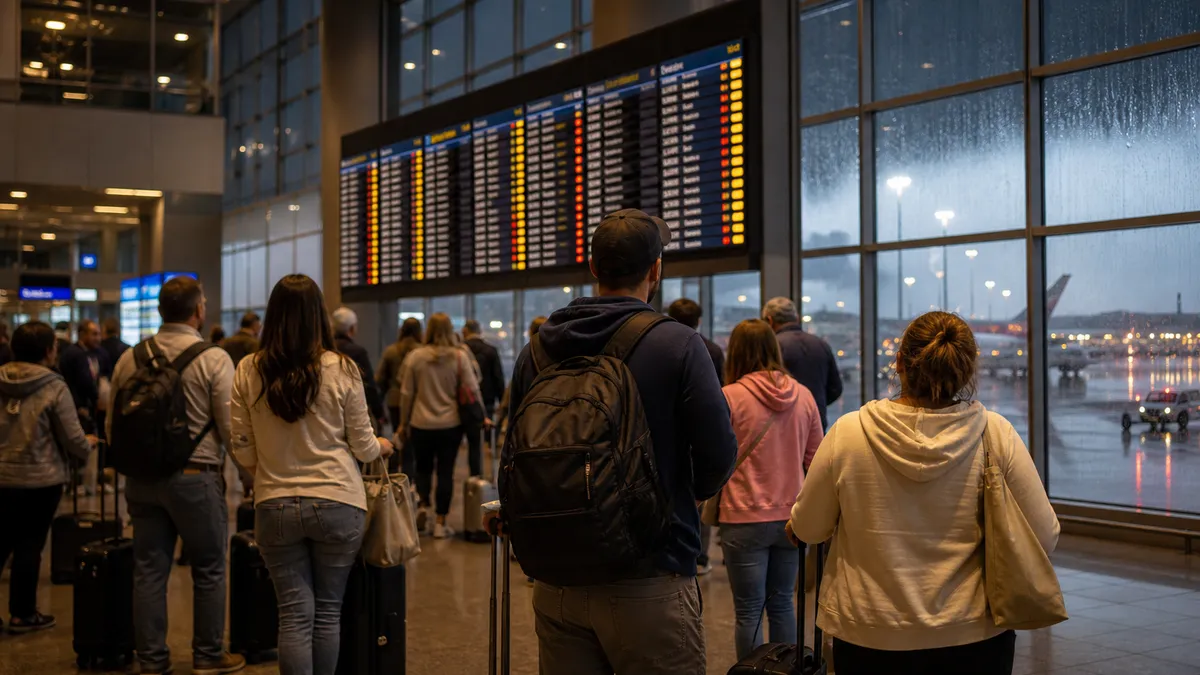
Holiday travelers are moving through one of the busiest Independence Day periods on record, and the main advice for Saturday night and Sunday is simple: check live conditions before leaving.
The Transportation Security Administration said it expected to screen nearly 18.7 million people at U.S. airport checkpoints from Tuesday, June 30, through Monday, July 6, with the heaviest day forecast for Thursday, July 2. AAA separately projected 72.2 million Americans would travel at least 50 miles from home between Saturday, June 27, and Sunday, July 5, including 61.4 million by car.
That volume leaves less room for bad weather, road congestion or airport restrictions to absorb delays. The Federal Aviation Administration's National Airspace System dashboard remains the best first stop for broad airport delay programs, while travelers should also check their airline app before heading to the terminal.
What travelers should check first
For flights, confirm both the departure airport and the aircraft's inbound flight when an airline app shows that detail. A plane that is still delayed in another city can matter more than the printed departure time. If a flight is canceled, rebooking quickly through the app can be faster than waiting in a customer-service line.
For drivers, the key question is whether the trip can move outside the worst weather or traffic window. AAA's forecast shows that driving accounts for most holiday travel this year, so even a short thunderstorm or crash can spread delays across already crowded corridors. Build in extra fuel, water and charging time, especially on routes that cross major metro areas or shore destinations.
Weather is the other moving piece. National Weather Service offices in parts of the Mid-Atlantic warned on July 4 that evening storms could bring damaging wind, frequent lightning and flash-flooding concerns. Those conditions can slow airport ground operations and make highway travel harder even when the worst storms are local.
The practical plan is to avoid assuming that a trip is normal just because it is short. Check the airline, FAA airport status, local weather alerts and state traffic maps shortly before departure. Keep medication, chargers and a change of clothes in a carry-on rather than a checked bag. If a delay becomes likely, make the rebooking or hotel decision early, before available seats and rooms disappear.
This is not a reason to cancel every trip. It is a reason to treat live information as part of the itinerary, because record volume means small disruptions can compound quickly.


