
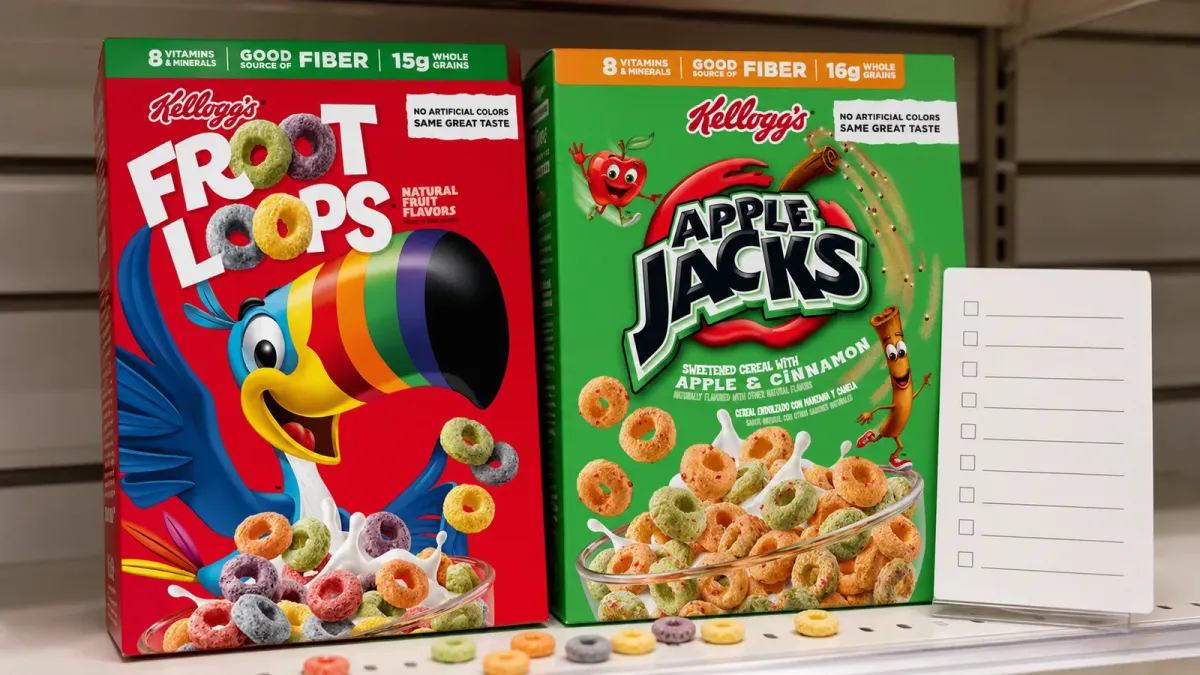
WK Kellogg is moving up the deadline for one of the most visible changes in the breakfast aisle: the company says its full cereal portfolio, including Froot Loops and Apple Jacks, will be made without artificial colors by the end of 2026.
The company announced the accelerated timetable on August 6, saying it now plans to finish the manufacturing transition one year earlier than the end-of-2027 schedule it had previously put in front of shoppers, regulators and retailers.
The practical point for families is narrower than the bright boxes suggest. A cereal can drop certified artificial colors and still be a sugary, highly processed food, so the label test is not only whether the colors come from fruit, vegetable or plant-based sources. It is whether the full ingredient list, nutrition panel and serving size fit what the buyer actually wants.
What changed
WK Kellogg said it has identified natural color sources for every color used across its cereal lineup and has invested in manufacturing changes to make the switch at scale. The company said the portfolio will use colors from natural sources, including fruit and vegetable juices and other plant-based ingredients.
That matters because the most recognizable cereals in the announcement are built around color. Froot Loops and Apple Jacks are not side brands in this debate; they are the products shoppers are most likely to picture when the artificial-dye question comes up.
The company also says the cereals are expected to keep the taste and visual familiarity shoppers know. That is the business challenge: change the ingredient source without making the product look like a different cereal on the shelf.
Why the deadline moved up
The announcement lands in a broader shift by food makers and retailers away from certified synthetic dyes. The Food and Drug Administration has been tracking industry pledges to remove petroleum-based food dyes, and its public tracker lists commitments from major food manufacturers, retailers and trade groups.
On the FDA tracker, WK Kellogg had been listed with commitments that included no new products with certified color additives beginning in January 2026, removing certified colors from K-12 cereals served in schools by the 2026-2027 school year, and eliminating certified color additives from existing food products by the end of 2027.
The new company announcement tightens the retail cereal timetable to the end of 2026. That puts WK Kellogg closer to other aisle-wide moves already underway, including retailer and manufacturer plans to remove synthetic colors from selected products or portfolios on their own schedules.
What shoppers should check
The first check is the date. Products already in pantries or already on shelves may not match the new formula immediately. A company manufacturing deadline is not the same as a day when every old box disappears from every store.
The second check is the actual ingredient panel. A package may advertise no artificial colors, natural colors or simplified ingredients, but the buyer still has to compare added sugar, fiber, sodium, serving size and any preservatives or flavors that matter to that household.
The third check is the reason for buying. A parent trying to avoid certified synthetic colors has a different decision than a shopper looking for a high-fiber breakfast or a cereal with less added sugar. The color change answers one question, not all of them.
Why it matters beyond Kellogg
The cereal aisle has become a public test of how fast packaged-food companies can reformulate familiar products under pressure from consumers, retailers and regulators. Artificial colors are easy for shoppers to recognize as a headline issue, but hard for companies to replace if customers expect the same look, taste and price.
The shift also shows why food-label promises can be useful but incomplete. A single ingredient change can be real and still not settle the bigger nutrition question. A shopper who treats the new color source as one data point will make a better decision than a shopper who treats it as a blanket health claim.
For WK Kellogg, the end-of-2026 deadline gives the company a clearer answer to critics and a simpler message for families: the bright colors are supposed to remain, but the source behind them is changing.
What happens next
The next visible step is the rollout. Shoppers should expect updated recipes to move through manufacturing and retail distribution over time, not arrive everywhere at once.
By early 2027, the more useful comparison will be on the shelf: which cereal boxes actually carry the updated ingredient lists, how clearly the changes are labeled, and whether shoppers see the reformulation as a meaningful improvement or just another packaging claim.


