
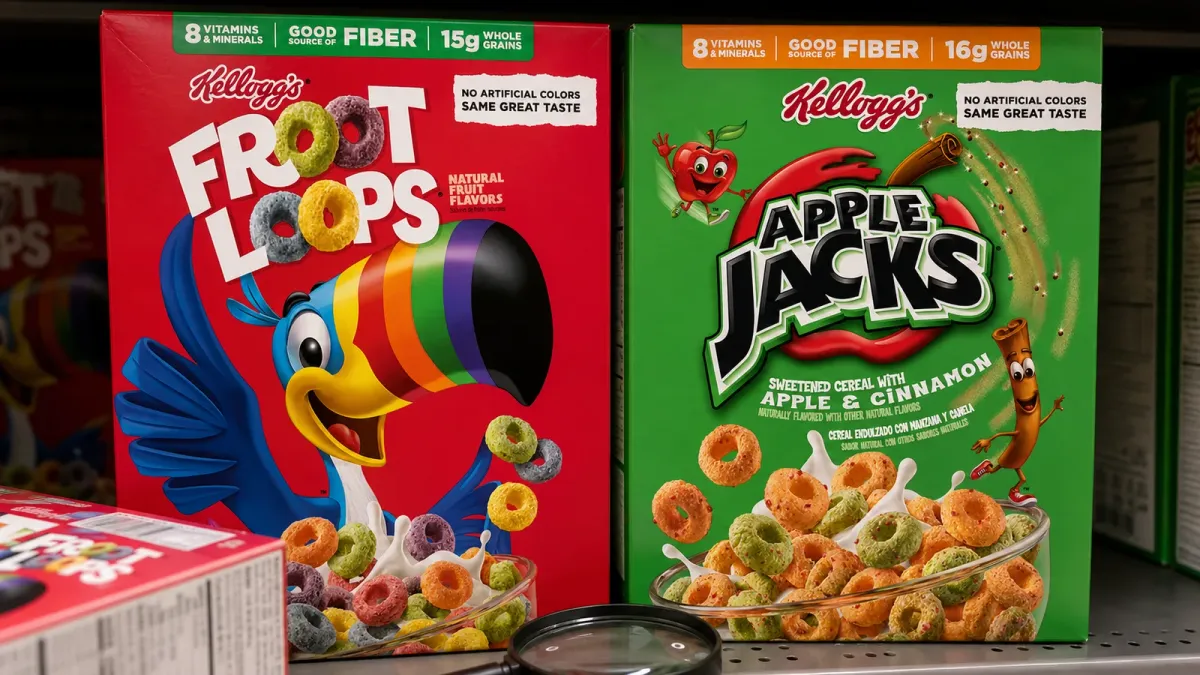
WK Kellogg is moving one of the cereal aisle's most visible ingredient debates from promise to packaging. The company said on Aug. 6, 2026, that all of its cereal manufacturing will eliminate artificial colors by the end of 2026, a year earlier than its previous target.
The change covers Kellogg's Froot Loops, Kellogg's Apple Jacks and the company's wider U.S. cereal portfolio. WK Kellogg says the products will keep their familiar colors by using natural sources such as fruit and vegetable juices and other plant-based ingredients.
The useful takeaway for shoppers is narrower than the headline. A box that drops artificial colors may answer one ingredient concern, but it does not automatically become lower in sugar, higher in fiber, cheaper, or better for every household.
The short answer
If artificial colors are the ingredient you are trying to avoid, start checking for the new packages later this year and compare the ingredient list against the older version. If your main concern is sugar, calories, allergens, price, or how often cereal replaces a more filling breakfast, the color change is only one line on the label.
WK Kellogg said production with the new recipes will begin later in 2026 and that cereal will ship to retailers before year-end. That means shoppers may see old and new packages side by side for a while, depending on store inventory and product rotation.
The company also said it is ahead of schedule in removing BHT, an artificial preservative, from the small amount of cereal packaging that still contains it. It did not give the same precise consumer-facing timeline for every BHT package that it gave for artificial colors.
What changes on the box
The visible change is the source of the color. WK Kellogg says the red, orange, yellow, green, purple and blue colors in products such as Froot Loops will come from natural sources rather than certified artificial colors. Fox Business, citing the company announcement, reported that Apple Jacks is part of the same transition.
The company is positioning the move as part of its SPOONS on-pack nutrition guide and a broader promise to make ingredient choices easier to understand. It also says it has reformulated foods served in schools to remove artificial colors and stopped launching new products with artificial colors starting in January 2026.
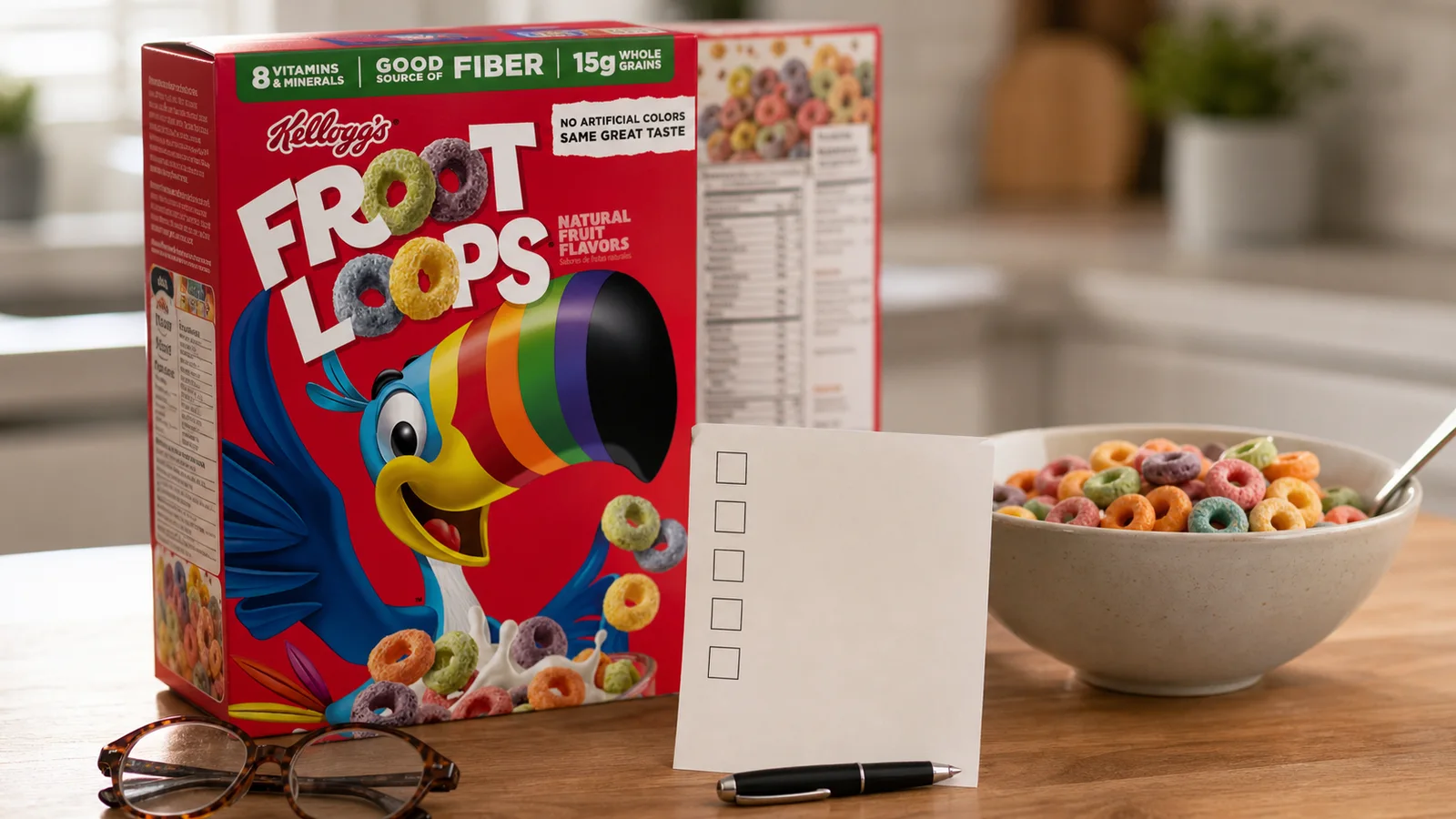
For shoppers, the practical test is not whether the package looks brighter or more muted. It is whether the ingredient statement no longer lists certified synthetic colors such as Red 40, Yellow 5, Yellow 6, Blue 1 or similar color additives, and whether the rest of the nutrition facts still fit the reason you buy the cereal.
Why this is happening now
The timing reflects more than one company's marketing decision. The FDA has been tracking industry pledges to remove petroleum-based food dyes and has separately revoked authorization for FD&C Red No. 3 in food, with food manufacturers given until Jan. 15, 2027, to reformulate products that use it.
AP reported that WK Kellogg has faced pressure for years from consumer advocates and regulators, including a 2024 petition campaign and a 2025 agreement with Texas Attorney General Ken Paxton that called for removing certain dyes by the end of 2027. Retailers have also pushed the aisle. AP noted that Target said earlier in 2026 that it would stop selling cereals with artificial colors, while Walmart has said it will remove artificial colors from store brands by January 2027.
That matters because ingredient changes often arrive through a mix of consumer demand, retailer requirements, state pressure and federal policy. A brand may move before a national ban applies to every comparable product because retailers and shoppers are already changing the economics.
What shoppers should not assume
Natural color does not mean the product is automatically a health food. A cereal can use plant-based colors and still be sweetened, highly processed, expensive compared with store brands, or less filling than a breakfast with more protein and less added sugar.
Parents and caregivers should also avoid treating the new package as a medical answer. If a child has allergies, digestive symptoms, attention concerns, or a medically advised diet, the better next step is to compare labels carefully and follow guidance from a qualified clinician rather than relying on a front-of-box claim.
The useful move is simple: check the ingredient list, check added sugars, check fiber and serving size, then decide whether the new recipe solves the problem you actually had. For many households, the artificial-color change will be welcome. It just should not be the only reason a cereal earns a spot in the pantry.
What to watch next
Watch for the first reformulated boxes, store shelf timing and whether the promised taste-and-color continuity holds up once shoppers are buying the new recipes at scale. Also watch competitors, because a visible move by Froot Loops and Apple Jacks raises the pressure on other brightly colored cereals to explain their own timelines.
The bottom line: WK Kellogg's 2026 deadline gives shoppers a concrete label change to look for. Use it as a starting signal, then read the rest of the box before deciding whether the new version is meaningfully better for your household.


