
A reported Iranian attack on July 17 damaged a Kuwaiti power generation and water desalination plant, according to Kuwaiti authorities and regional reports, putting one of the Gulf's most basic civilian systems back in focus: the machinery that turns seawater into drinking water.
The immediate picture is still limited. Kuwait's Ministry of Electricity, Water and Renewable Energy said through official channels cited by local and regional outlets that the strike damaged parts of a plant, sparked a fire, affected many electricity generation units and forced emergency response plans. Fire teams brought the fire under control, and technical crews were assessing damage and trying to restore affected units.
The Associated Press reported that the damaged facility was one of Kuwait's key drinking-water sources and that authorities activated contingency plans. No broad nationwide water shutdown has been confirmed, which matters: the risk is not just one damaged building, but how quickly pressure can spread when power and desalination are tied together.
What changed
Kuwait relies heavily on desalination because natural freshwater is scarce. AP reported that about 90% of the country's drinking water comes from desalination, while Oman gets roughly 86% and Saudi Arabia about 70% from the same basic process.
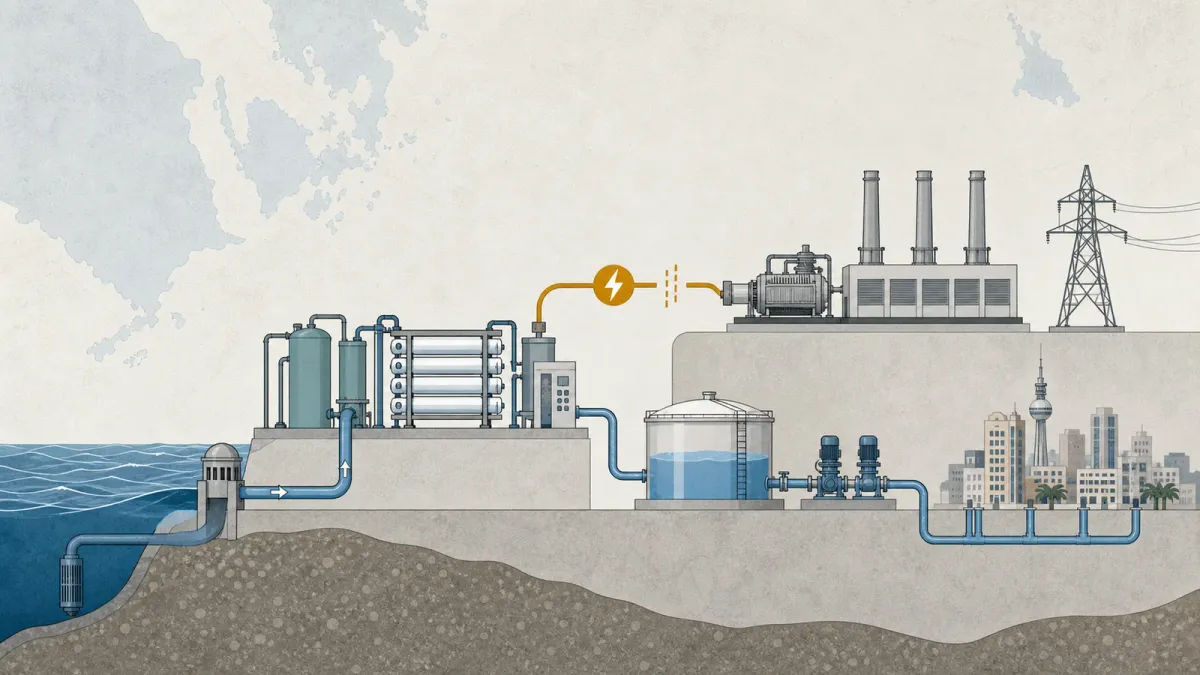
That makes the Gulf unusually dependent on coastal industrial systems. Desalination plants need seawater intake, filtration or thermal treatment, pumps, membranes or distillation equipment, storage, and steady power. Many plants are built with power stations as co-generation facilities, so damage to the electrical side can also slow water production.
The July 17 strike is also not an isolated warning. Kuwait's own ministry archive says several power generation and water desalination plants were among vital facilities targeted in earlier hostile Iranian drone attacks in April 2026. AP also noted previous claims and attacks involving desalination infrastructure elsewhere in the Gulf region.
Why it matters
For readers outside the Middle East, the Iran conflict is often framed through oil prices and shipping lanes. Water infrastructure is a quieter but more immediate civilian concern. Gulf cities, hotels, hospitals and industry are built around reliable desalination. If a major plant loses power, intake systems, or treatment capacity for long enough, backup storage can become the difference between disruption and crisis.
A 2010 U.S. intelligence analysis cited by AP warned that concentrated Gulf desalination capacity could be vulnerable to sabotage or military action. The warning is getting renewed attention because the current conflict is reaching ports, power assets and coastal infrastructure rather than staying confined to military sites.
What to watch next
The practical questions are whether Kuwait reports lasting service disruptions, how quickly damaged units return, and whether other Gulf governments add visible protection around plants, intakes and power links. A second signal is energy markets: further attacks on coastal infrastructure would make the conflict harder to treat as only an oil-shipping problem.
For now, the most useful takeaway is narrow but important. Kuwait has not confirmed a nationwide water outage, but the attack shows why desalination plants are not background infrastructure in the Gulf. They are essential civilian lifelines, and they sit close to the same coastline where the war's shipping and energy risks are unfolding.


