
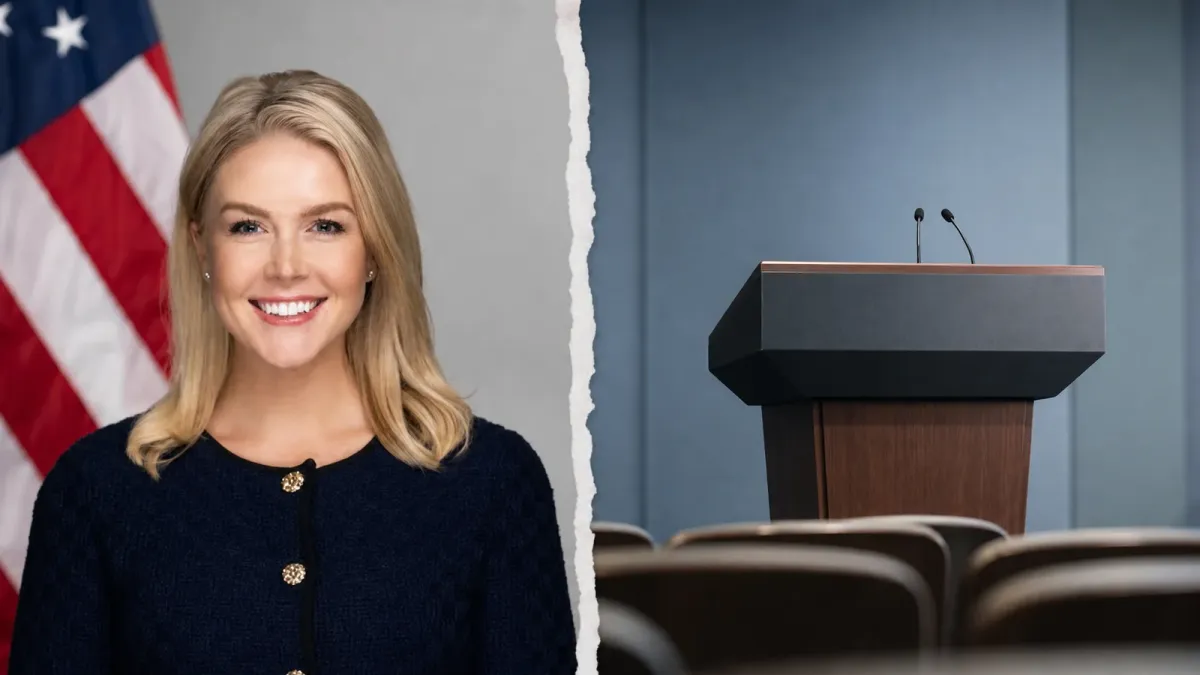
White House press secretary Karoline Leavitt will leave the administration at the end of August 2026 and continue advising President Donald Trump from outside the government. The announcement creates an immediate transition question for one of the administration's most visible public-facing jobs: Trump had not named a successor as of early Friday, August 14.
Leavitt said the demands of the role were no longer compatible with the time and attention she wanted to give her two young children. Trump said she would remain a top outside adviser and an influential Republican voice ahead of the 2026 midterm elections. That means her departure is a change in job and access, not necessarily a break with the president or his political operation.
What changed
Leavitt, 28, became the youngest White House press secretary in U.S. history when Trump returned to office in January 2025. She had previously worked in the first Trump administration, served as a communications aide to Rep. Elise Stefanik, ran for Congress in New Hampshire in 2022 and became a spokesperson for Trump's 2024 campaign.
Her departure comes only months after she returned to the briefing room following the birth of her daughter in May. In her public statement, Leavitt described the decision as difficult and tied it directly to her family responsibilities. The Associated Press and Axios separately reported that she will remain connected to Trump as an outside adviser.
The shift matters because the press secretary is more than the person who conducts televised briefings. The office helps coordinate the administration's daily message, responds to fast-moving news, speaks for the president and often becomes a central combatant in disputes with the media. A replacement will inherit that role during a midterm election year and an active period of foreign-policy, economic and legal news.
What remains unresolved
The White House has not publicly identified who will take over. That leaves open whether Trump will promote someone already inside the communications operation, choose a familiar political surrogate or restructure the role. Until an appointment is announced, speculation about individual candidates remains only speculation.
The timeline also matters. An end-of-month exit gives the administration roughly two weeks to designate a replacement, define an interim arrangement or allow another official to handle briefings temporarily. The public signal to watch is a formal White House announcement, not unnamed-source chatter or viral posts claiming to explain Leavitt's motives.
What happens next
Leavitt is expected to stay in the job through the end of August while the White House prepares the handoff. Any successor will immediately face two tests: whether the administration maintains its current briefing cadence and whether the new spokesperson has direct authority to speak for Trump across rapidly changing issues.
Her outside-adviser role will also clarify over time. Trump described it in political terms connected to the Republican Party and the midterms, but neither he nor Leavitt laid out a formal portfolio. For now, the confirmed facts are narrow: she is leaving the government role, she says family obligations drove the decision, she plans to remain aligned with Trump, and the White House has not named the next press secretary.


