
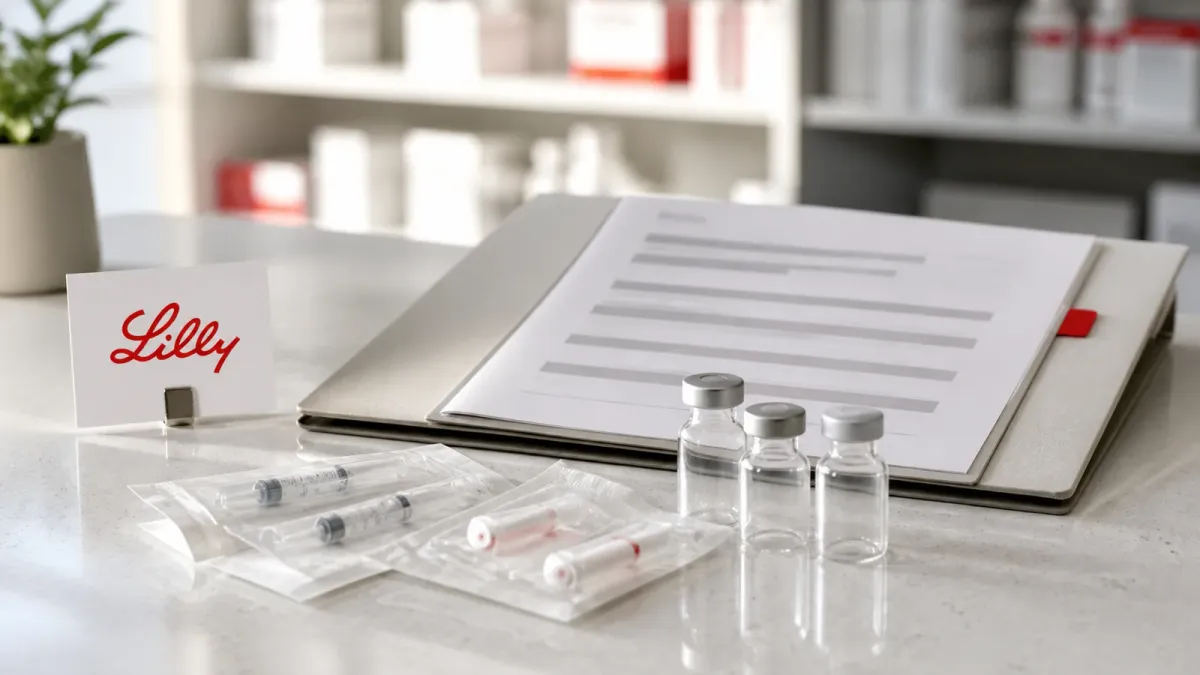
Eli Lilly is escalating its fight over retatrutide, the experimental obesity drug already drawing black-market demand before any Food and Drug Administration approval. The company said on August 12, 2026, that it filed six new lawsuits against U.S. entities it accuses of selling unapproved retatrutide products.
The practical point for patients is narrower than the hype: retatrutide is still investigational. FDA says retatrutide and cagrilintide cannot be used in compounding under federal law and have not been found safe and effective for any condition.
What changed
Lilly said the new lawsuits target sellers offering black-market products while the company also asks social media and e-commerce platforms, credit card companies, payment processors, shipping carriers, regulators and law enforcement to help cut off the trade.
BioPharma Dive and CBS News also reported the six-lawsuit push, framing it as part of a broader crackdown on vendors that claim to offer versions of Lilly's still-unapproved weight-loss medicine.
The FDA warning context matters because many of these products are marketed with language such as research use or not for human consumption, even when regulators say the surrounding claims and sales practices show they are intended for human use. The labels can sound technical, but the legal question is still whether the product is approved and lawfully dispensed.
Why the risk is different
Compounded drugs are not FDA-approved, and FDA says it does not review compounded drugs for safety, effectiveness or quality before they are marketed. For retatrutide specifically, the agency says the ingredient cannot legally be used in compounding and is not a component of any FDA-approved drug.
That makes the usual bargain-hunting logic dangerous. A cheaper online injection may not be a lower-cost version of the same medicine. It may have the wrong ingredient, the wrong dose, no active ingredient, too much active ingredient, poor storage, contamination risk or no real medical supervision.
What to check
For consumers, the safest rule is simple: do not treat a retatrutide offer as legitimate just because it uses clinical-trial language, peptide language or a medical-spa setting. FDA advises patients to use prescription medicines through licensed care and state-licensed pharmacies, and to be wary of sellers that skip screening, promise deep discounts or send products with unclear labels or instructions.
People already using any unapproved GLP-1 product should talk with a licensed health professional rather than adjust doses based on online advice. If there is a serious reaction or suspected product-quality problem, FDA directs patients and clinicians to report it through MedWatch.
What happens next
The lawsuits do not mean retatrutide is approved, and they do not settle whether the named defendants will be liable. They do show that the market for next-generation obesity drugs has moved faster than the legal and safety guardrails around it.
Lilly has been expected to seek FDA approval for retatrutide after completing late-stage data work. Until regulators act, the important distinction for patients is not whether the name sounds familiar. It is whether the product is approved, prescribed for that patient and dispensed through a legitimate pharmacy.


