
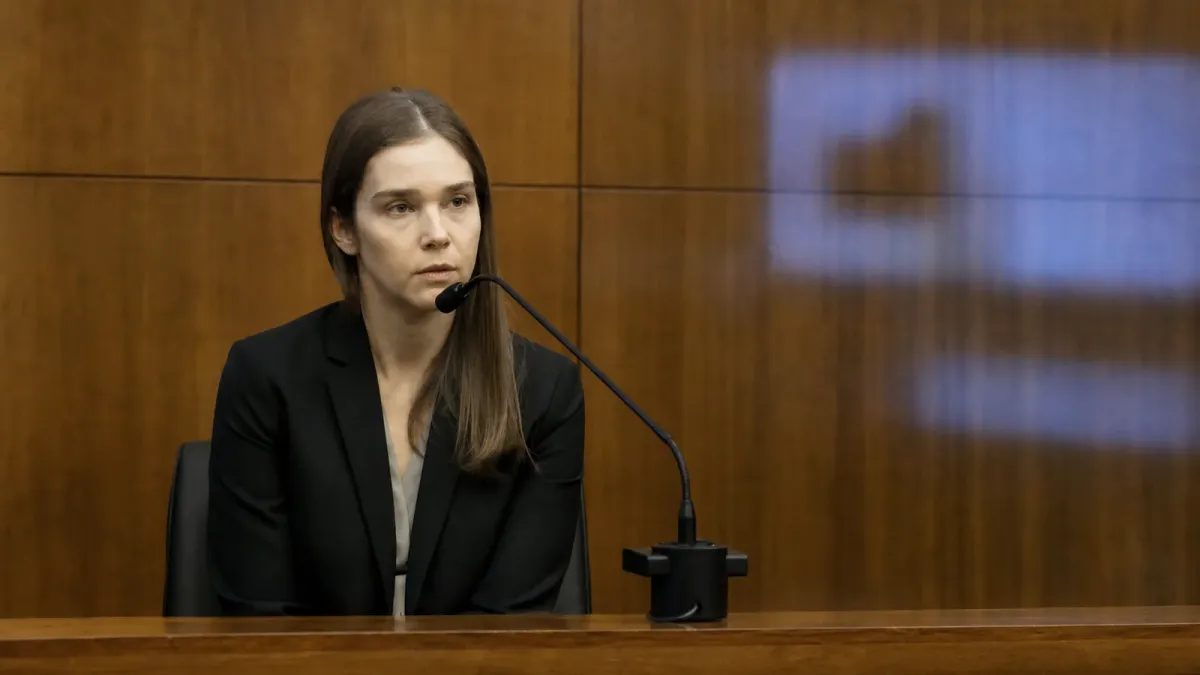
Psychiatrist Jennifer Tufts completed two days of testimony Monday, August 10, after Lindsay Clancy’s defense challenged the care Tufts provided in the months before Clancy killed her three children at the family’s Duxbury, Massachusetts, home.
Defense attorney Kevin Reddington questioned Tufts about her experience with postpregnancy conditions, the length and remote format of appointments, her clinical records and a series of medication changes. Tufts rejected the suggestion that her treatment had been negligent, according to The Associated Press.
What changed in court
The cross-examination shifted the trial’s focus from whether Clancy killed 5-year-old Cora, 3-year-old Dawson and 8-month-old Callan—a fact her lawyers do not dispute—to what her treatment history may show about her mental state and legal responsibility on January 24, 2023.
Reddington highlighted approximately 25-minute video appointments, limited time for talk therapy and computerized forms Tufts used to record observations. He also reviewed medication decisions made as Clancy reported symptoms, side effects and worries that medication might be worsening her condition.
Tufts testified that Clancy had at times described feeling close to suicidal, hopeless or as if she were going to die. Tufts said Clancy denied having a suicide plan, thoughts of harming others or hallucinations. She also said Clancy never told her about thoughts of harming the children and that such a disclosure would have caused serious concern.
On Friday, Tufts had described a virtual appointment held one day before the killings. She said Clancy appeared depressed, lacked motivation and reported bouts of intense anxiety, but did not report hearing voices or planning to harm herself or the children.
Why the testimony matters
The prosecution says Clancy acted intentionally and was criminally responsible. The defense argues that severe mental illness, including postpartum psychosis, left her without criminal responsibility. The testimony about what Clancy reported—and what clinicians observed—is likely to be weighed alongside later expert opinions and other evidence.
Under Massachusetts model homicide instructions, the Commonwealth must prove criminal responsibility beyond a reasonable doubt. A person is not criminally responsible if a mental disease or defect left them without substantial capacity to appreciate the criminality or wrongfulness of their conduct, or to conform their conduct to the law. That is a legal standard, not simply a medical diagnosis.
The criminal testimony also overlaps with separate civil litigation. Clancy and her former husband have accused Tufts and other providers of mishandling Clancy’s care. Those allegations remain pending and are distinct from the jury’s task in the murder trial.
What happens next
After Tufts left the stand, prosecutors began questioning Julie Paul, a psychiatric nurse practitioner and nurse midwife who briefly treated Clancy in November 2022. Paul testified that Clancy did not tell her about hallucinations or thoughts of harming herself or the children. Reddington was expected to question Paul on Tuesday, August 11.
Clancy, 35, has pleaded not guilty to three counts of first-degree murder. If convicted, she faces life in prison without parole. If found not guilty because of a lack of criminal responsibility, she would be committed to a state mental health facility. The trial is continuing in Plymouth Superior Court.


