
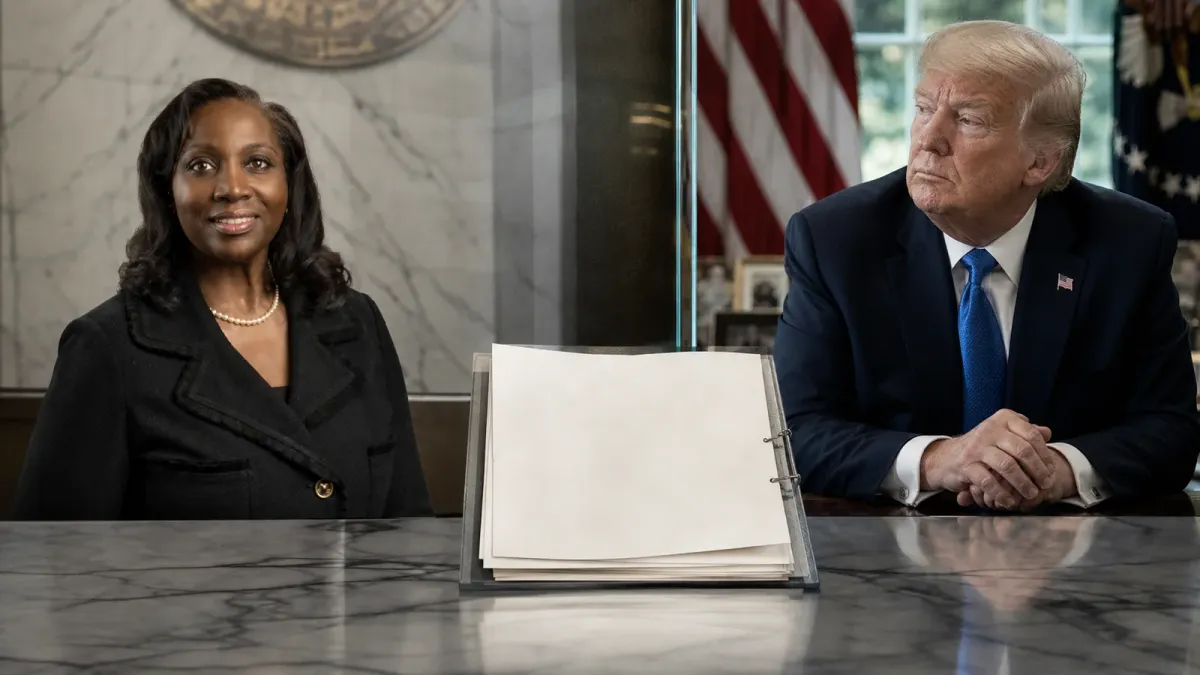
Federal Reserve Governor Lisa Cook now has a three-week clock running on one of the most important questions in markets: how much pressure can the White House put on an independent central bank before the courts step in again?
President Donald Trump's team has sent Cook a new notice saying he is considering removing her from the Fed's Board of Governors over mortgage-fraud allegations she denies. Fox Business reported on August 7, 2026 that White House Personnel Office Director Dan Scavino's letter asked Cook to respond within 21 days.
The move matters beyond one seat on the Fed board. Investors, borrowers and businesses rely on the Fed to set interest-rate policy based on inflation, employment and financial conditions, not presidential preference. A renewed removal fight can therefore become a confidence test for the Fed even before any final legal ruling.
What changed
The administration's earlier attempt to fire Cook was blocked while litigation continued. On June 29, 2026, the Supreme Court denied the government's request to let the removal take effect and said Cook was entitled to notice and some opportunity to respond before termination.
The new notice appears designed to answer that procedural problem. Reuters-syndicated coverage reported that the White House demanded Cook respond to the allegations within three weeks, while Cook's lawyer called the claims baseless and said there was no valid cause for removal.
That makes the current dispute different from a routine personnel fight. The legal question is not only whether the allegations are true, but whether they meet the Federal Reserve Act's standard for removing a governor who otherwise serves a fixed term.
The legal line

Federal Reserve governors serve staggered 14-year terms and may be removed only for cause. The Supreme Court's June opinion said that standard cannot be treated as if the president may remove a Fed governor at will, but it also did not decide whether the facts alleged against Cook would ultimately qualify as cause.
The court emphasized that Cook needed a chance to answer the charges before a final decision. That is why the 21-day window is the center of the story now. If Cook responds and Trump still tries to remove her, the fight could return quickly to the lower courts and potentially back to the Supreme Court.
Cook's term is scheduled to run until 2038. That long horizon is part of the Fed's design: governors are meant to outlast election cycles so monetary policy does not swing with short-term political demands.
For readers, the distinction is practical. A normal political argument over rates can be noisy but familiar; an active removal fight raises the separate question of whether future Fed votes might be shaped by fear of retaliation rather than the economic data in front of policymakers.
Why markets care
The Fed's credibility affects borrowing costs across the economy. Mortgage rates, credit-card rates, business loans, bond yields and stock valuations all move in part on expectations for future Fed decisions.
A president can nominate Fed governors and a Fed chair when seats open. The harder question is whether a president can force a sitting governor out after a policy dispute or contested accusation. Even temporary uncertainty can matter if traders believe the board's future votes may become more politically aligned.
That does not mean markets will react dramatically to every legal filing. The immediate question for investors is narrower: whether the dispute changes expectations for rate cuts, rate hikes or the composition of the voting board before the next policy meetings.
The cleanest signal may come from Treasury yields and Fed-funds futures. If those markets barely move, traders may be treating the case as a slow legal dispute. If they start repricing policy expectations around court deadlines, the Cook fight will have become a market event in its own right.
What to watch next
The next checkpoint is Cook's response deadline, roughly three weeks from the White House letter described in the August 7 reports. Any response could challenge both the factual allegations and the legal standard for removal.
After that, watch for a formal removal decision, new emergency court filings, statements from the Fed, and any sign that bond markets are pricing in a more politically exposed central bank. The practical market signal is not the allegation itself; it is whether the Fed's independence looks more or less durable after the next court round.


