
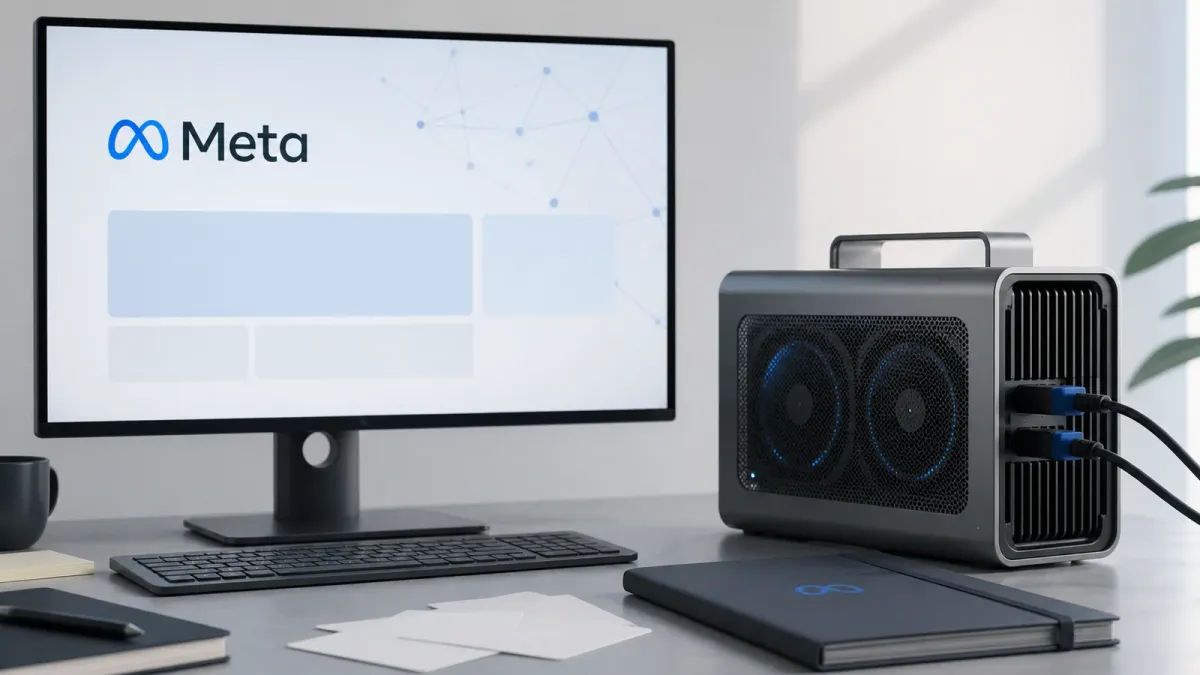
Meta released Muse Glimmer on August 10, 2026, pitching the 30-billion-parameter model as a way to run AI agents locally on a Mac, PC or workstation instead of sending every task to a cloud service.
The practical test is not whether the model sounds impressive in a launch post. It is whether developers and power users can get useful coding, document, screenshot and tool-use workflows running on hardware they control, with enough speed and reliability to make local AI feel less like a hobby project and more like an everyday option.
Meta said it is releasing Muse Glimmer's weights under an Apache 2.0 license and making it available through Hugging Face and developer documentation. The company describes the model as optimized for always-on local agent workflows, including function calling, coding, long-context work, multimodal input and failure recovery.
What changed
Muse Glimmer is smaller than frontier cloud models, but Meta is framing that as the point. The model is designed to fit into local hardware constraints by using quantization that shrinks the language model to less than 20 GB, leaving room for working memory, image perception and a small draft model that helps speed up responses.
Meta's research post says the system was trained through several stages, including distillation from Muse Spark, agent-heavy data, supervised fine-tuning, on-policy distillation and reinforcement learning across general, reasoning, coding and agentic tasks. Meta says it evaluated Muse Glimmer under its Advanced AI Scaling Framework before the open-weight release.
NVIDIA also published developer guidance for running local agentic workflows with Muse Glimmer, while Hugging Face said it shipped day-zero support across tools such as transformers, llama.cpp, vLLM and inference endpoints. That matters because a local model is only useful if developers can actually install it, test it and connect it to the software stacks they already use.
Why readers should care
For everyday users, the release points to a bigger choice in AI: cloud convenience versus local control. A cloud assistant can be easier to start using, but a local agent may appeal to people working with sensitive files, private notes, code repositories, internal documents or travel and household records they do not want to send through a remote service for every task.
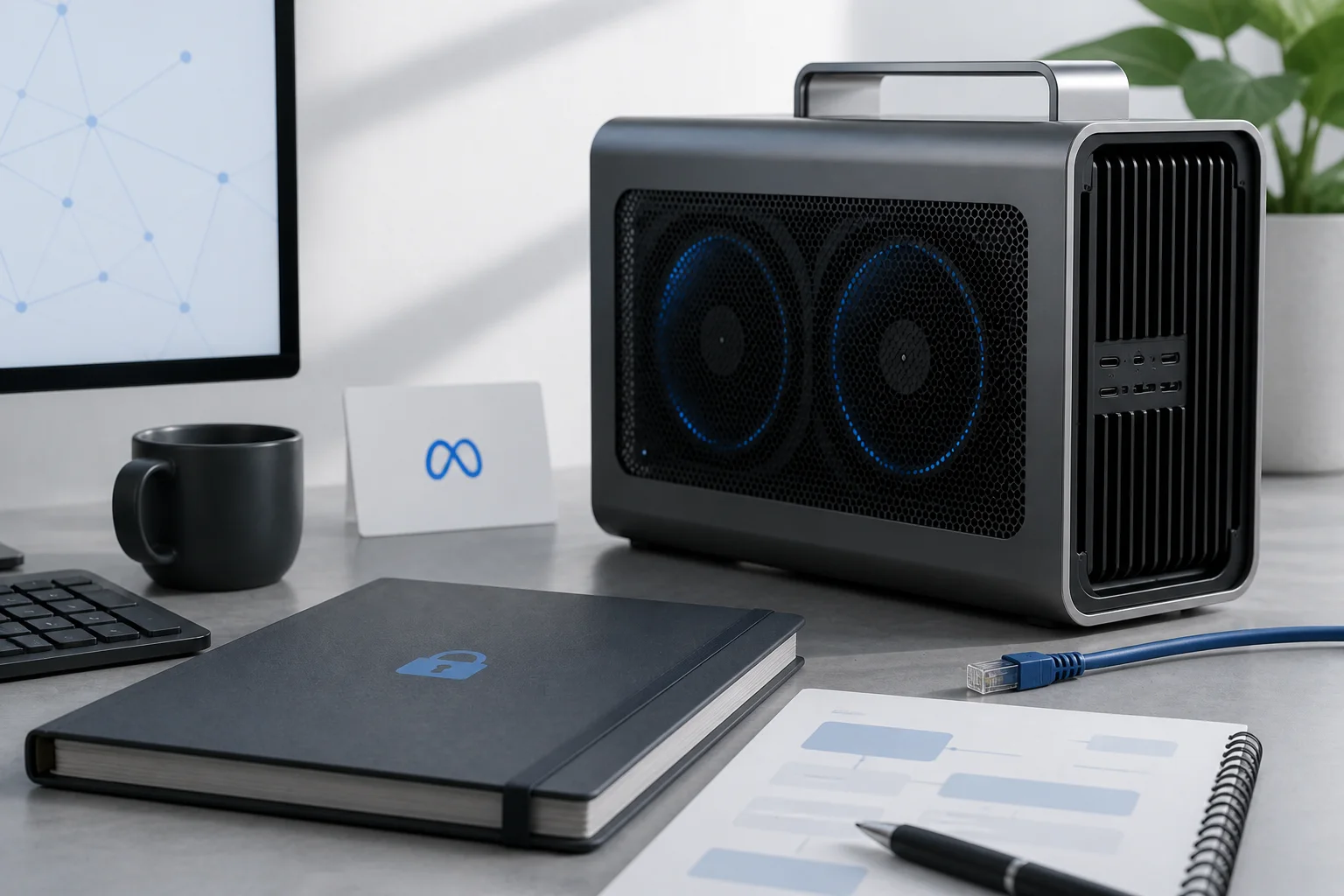
Local AI is not automatically private or safe. Users still have to trust the software they install, the apps an agent can access and the permissions they grant. But running more of the work on a personal machine can reduce dependence on a remote provider and make it easier to disconnect a workflow from the internet when the task allows it.
The hardware tradeoff is real. Meta's own post discusses memory envelopes around 24 GB or 32 GB for the local setup it describes. That puts the most capable experience closer to higher-end laptops, desktops and GPUs than to ordinary entry-level machines. For many people, a browser-based assistant will remain simpler.
The bigger AI fight
The launch arrived with a broader essay from Mark Zuckerberg arguing that advanced AI should be broadly distributed instead of controlled by a small number of companies or governments. The Associated Press reported that Zuckerberg also said Meta would provide developers access to Muse Spark 1.2, a more powerful model, while critics warned that rapid open release can carry safety and misuse risks.
That tension is why Muse Glimmer is more than a developer download. Open-weight models can widen access, lower costs and let independent researchers inspect behavior. They can also make powerful capabilities easier to adapt in ways the original developer cannot fully control.
The best near-term use case may be less dramatic than the superintelligence debate: a local assistant that reads a folder, checks a spreadsheet, writes code, reviews screenshots or runs a repeated workflow without constantly waiting on a cloud round trip. If Muse Glimmer makes those tasks easier on consumer hardware, Meta will have strengthened the case that open-weight AI can compete on usefulness, not just ideology.
What to watch next
Watch how quickly the promised integrations become stable in common tools, whether independent benchmarkers confirm Meta's agentic and coding claims, and whether developers find practical limits in latency, memory use, multimodal reliability or tool-call accuracy.
The release also puts pressure on rival AI labs and policymakers. If local open-weight models keep improving, the next AI divide may not be open versus closed in the abstract. It may be whether users can choose where their agent runs, what data it can touch and who gets to see the work it performs.


