
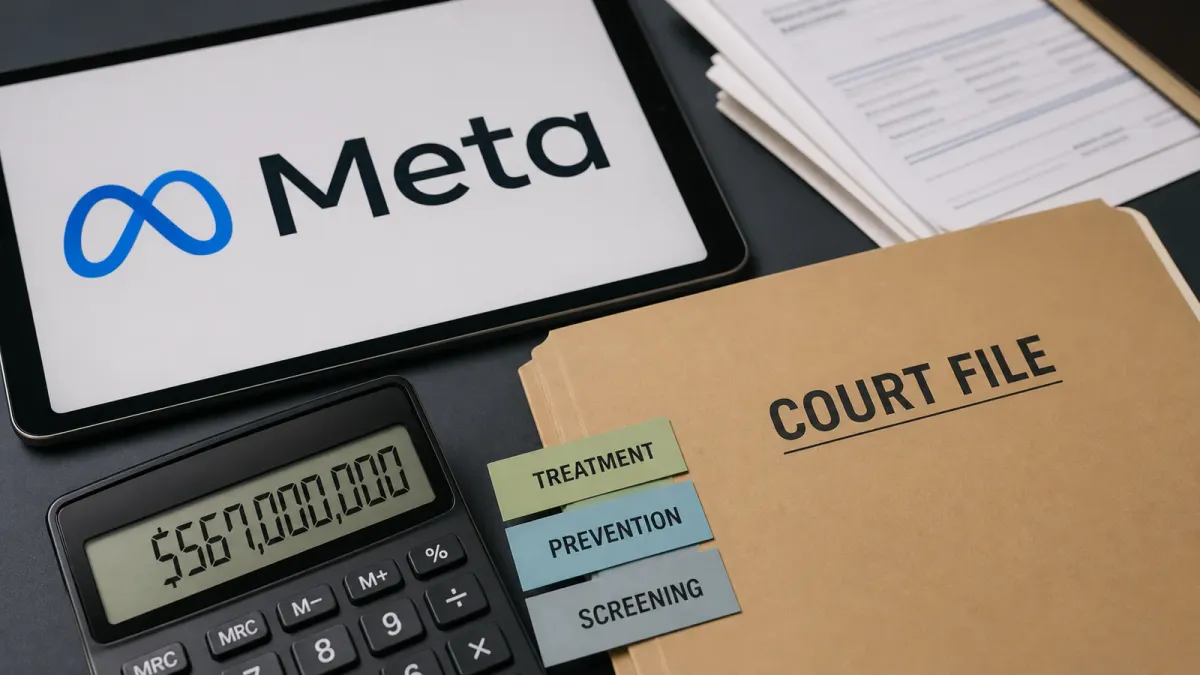
A New Mexico judge has ordered Meta to create a $567 million fund to address youth mental-health and child-safety harms linked to Facebook and Instagram, adding a major new remedy to a case the company lost earlier this year.
The order, issued Thursday, August 6, 2026, requires the Facebook and Instagram parent to pay for treatment, prevention, screening, awareness, coordination and oversight programs in New Mexico. Meta says it disagrees with the ruling and plans to appeal.
What changed
The ruling comes in the remedies phase of a case brought by New Mexico officials against Meta. A March jury had already ordered $375 million in civil penalties after finding against the company. The new order brings the state-level financial exposure in the case to roughly $942 million before appeals.
According to Associated Press reporting, Judge Bryan Biedscheid directed that about $420 million of the new fund go toward treatment services for young people. The remaining money is expected to support awareness, prevention, screening, referral coordination and administration over a five-year period.
The order also points toward product changes for Facebook and Instagram users in New Mexico. Reported remedies include clearer safety banners and informational screens, continued improvements to Meta's age-assurance tools, a school or child-safety reporting portal for possible under-13 accounts, and twice-yearly compliance reporting.
Why it matters
The ruling is important because it treats youth harm from social platforms as something that may require a public-health-style remedy, not only a one-time penalty. That distinction matters for parents, schools, state officials and technology companies watching similar lawsuits around the country.
The New Mexico case has focused on allegations that Meta's design choices and enforcement failures exposed children to mental-health risks and unsafe interactions. Meta disputes that framing, says it works to protect teens online and argues that the claims misrepresent the facts.
For users outside New Mexico, nothing changes automatically today. The order is tied to a state case, and Meta's appeal could delay or reshape the remedies. But the ruling gives other states, plaintiffs and regulators a detailed example of what a court-ordered platform remedy could look like if similar claims survive trial.
What families should watch
Parents and guardians should watch for three practical questions as the case moves forward. First, whether any safety prompts, age checks or teen-account changes appear only in New Mexico or become broader product defaults. Second, whether the appeals process pauses the order. Third, whether other state cases seek similar funds or specific design changes.
The case does not mean every social-media risk can be solved by one court order. Age verification can raise privacy questions, and platform restrictions can be difficult to enforce when children misstate their age or use shared devices. The judge's reported order reflects those constraints by emphasizing age-assurance improvements and school reporting rather than one simple identity check.
For families, the immediate takeaway is more concrete: review teen privacy settings, notification timing, direct-message permissions and time limits now instead of waiting for legal remedies to arrive. A court order may shape platform defaults later, but household rules and account settings are still the first line of defense today.
What happens next
Meta's expected appeal is the next major step. The company is also facing other lawsuits over youth safety and alleged addictive design, including broader litigation involving multiple states.
If the New Mexico order survives, it could become one of the clearest court-tested road maps yet for forcing a major social platform to pay for downstream harms and change child-safety practices. If it is narrowed or overturned, regulators and plaintiffs may have to rethink how far public-nuisance and consumer-protection theories can reach into social-media design.


