
Meta’s advertising engine delivered another quarter of rapid growth, but the cost of its AI expansion showed up with unusual force. The company reported $60.80 billion in second-quarter revenue on July 29, up 28% from a year earlier, while costs and expenses climbed 55% to $42.03 billion.
The short answer is that Meta is still growing quickly, yet much less of that growth reached the bottom line. Operating income fell 8% to $18.78 billion, net income dropped 14% to $15.85 billion, and diluted earnings per share declined 13% to $6.18.
The quarter sharpens the central question around Meta’s AI strategy: can stronger ads and new products eventually produce enough cash to justify an infrastructure buildout that is consuming nearly everything the business generated after operations?
The numbers
Meta said ad impressions across Facebook, Instagram and its other Family of Apps services rose 14% from a year earlier, while the average price per ad increased 12%. Advertising revenue reached $59.36 billion, accounting for nearly 98% of total revenue.
Daily use also continued to expand. Meta averaged 3.60 billion daily active people across its apps in June, up 3% year over year. That reach, combined with higher ad volume and pricing, explains why the core business kept growing even as profit moved in the opposite direction.
Not all of the expense jump came from recurring infrastructure costs. Meta recorded $2.40 billion in charges tied to legal proceedings and $1.18 billion in severance expenses related to a May workforce reduction. Research and development spending nevertheless rose to $21.66 billion from $12.94 billion a year earlier, a 67% increase.
Why investors care
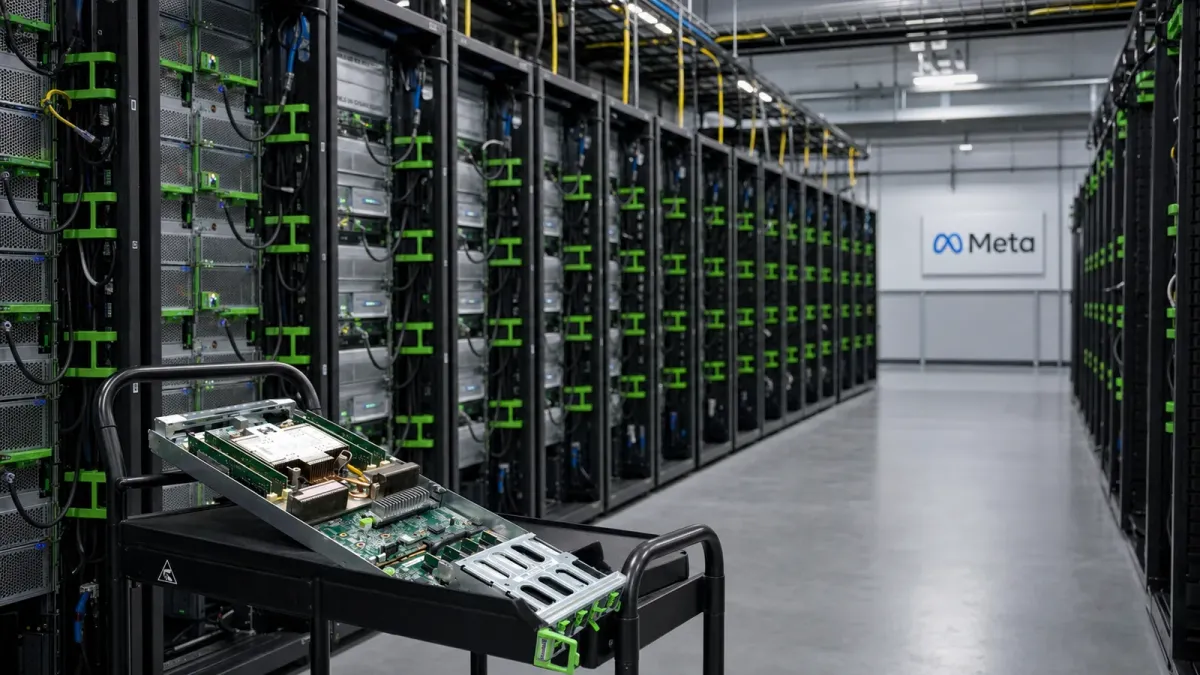
Capital expenditures reached $31.08 billion for the quarter, up from $17.01 billion a year earlier. After purchases of property and equipment and finance-lease payments, free cash flow fell to just $784 million from $8.55 billion. Operating cash flow itself remained strong at $31.86 billion, which means the collapse in free cash flow was primarily a result of the spending required to build capacity.
Meta narrowed its full-year capital-spending forecast to $130 billion to $145 billion, lifting the lower end from its previous $125 billion estimate. The company also raised the low end of its full-year expense outlook and now expects $165 billion to $169 billion, partly to reflect the legal charges.
The caveat
The quarter contains costs that may not repeat at the same level. Removing the legal and severance charges would improve the comparison, although it would not erase the sharp rise in research, infrastructure and depreciation-related spending. Meta still expects 2026 operating income to exceed its 2025 result.
Reality Labs remained a smaller but persistent drain, producing $431 million in revenue and a $4.62 billion operating loss. The much larger Family of Apps segment generated $60.37 billion in revenue and $23.39 billion in operating income.
What to watch next
Meta forecast third-quarter revenue of $61 billion to $64 billion, with currency expected to reduce year-over-year growth by about one percentage point. Investors will now focus on management’s explanation of how quickly its AI infrastructure can improve advertising, consumer products and new enterprise offerings—and whether future quarters can convert more of that growth back into free cash flow.


