
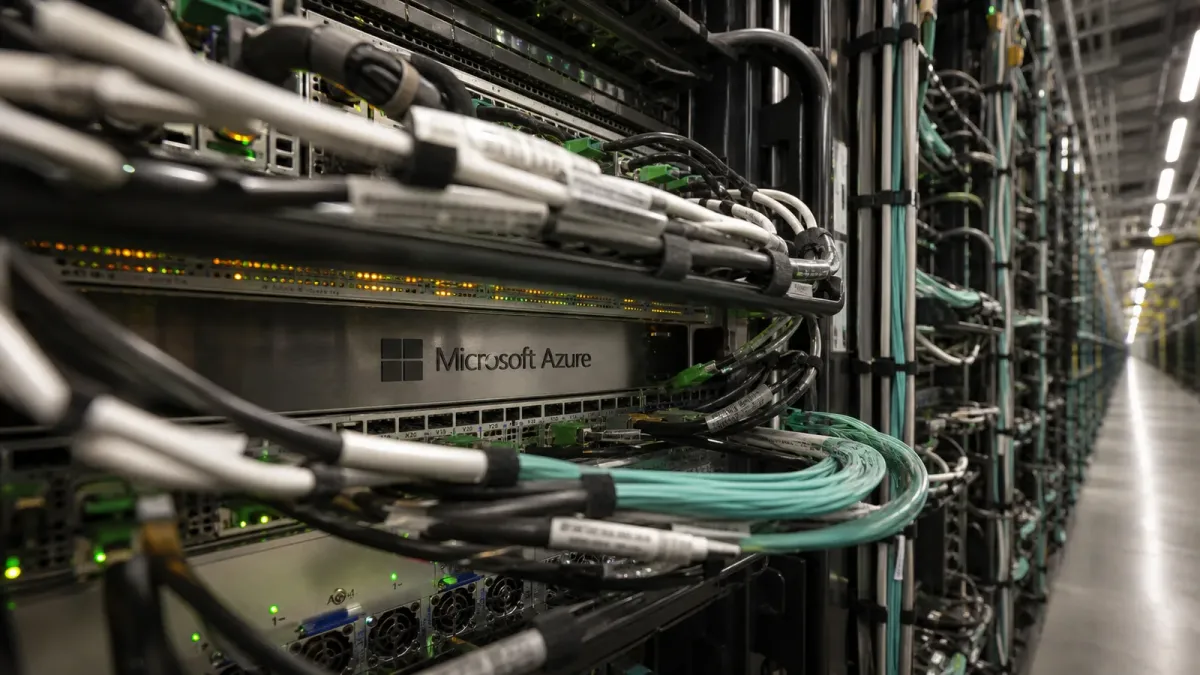
Microsoft shares closed at $393.82 on July 17, 2026, giving the company a market value of about $2.93 trillion. That price looks reasonable only if the company converts its enormous artificial-intelligence infrastructure program into durable cash-flow growth. A conservative discounted-cash-flow model lands well below the market; an aggressive model still leaves meaningful upside.
The business is performing strongly. In its fiscal third quarter ended March 31, Microsoft reported $82.9 billion of revenue, up 18%, and $38.4 billion of operating income, up 20%. Its AI business passed a $37 billion annual revenue run rate, while Microsoft Cloud revenue reached $54.5 billion and grew 29%.
The valuation tension is cash conversion. Microsoft produced $46.7 billion of operating cash flow in the quarter, but spent $30.9 billion on property and equipment. That left quarterly free cash flow of $15.8 billion. The stock is not obviously cheap at today’s price, but the answer changes sharply depending on how quickly that infrastructure starts earning attractive returns.
The short answer
Using $72.9 billion of trailing free cash flow, $38.0 billion of net cash and 7.429 billion shares, the three scenarios produce estimated values of about $201, $326 and $519 per share. The $326 base case is roughly 17% below the July 17 close; the $519 bull case is about 32% above it.
That makes Microsoft look fully valued rather than plainly overvalued. The current price sits between the base and bull cases, which means investors are already paying for a large portion of the expected AI payoff. A strong company can still be a demanding stock when the market price embeds years of successful execution.
The numbers behind the model
Microsoft’s latest full-year filing covers fiscal 2025, while its latest quarterly filing covers the first nine months of fiscal 2026. Combining those periods produces trailing-12-month revenue of about $318.3 billion and operating income of $149.0 billion.
Trailing operating cash flow was about $170.1 billion. Capital spending was about $97.2 billion, so free cash flow—defined here as operating cash flow minus property-and-equipment additions—was $72.9 billion. This measure is deliberately strict: it treats all current infrastructure spending as a cash cost even though some assets may support revenue for many years.
At March 31, Microsoft held $78.3 billion in cash and short-term investments and $40.3 billion of current and long-term debt, for net cash of roughly $38.0 billion. The model adds that net cash after valuing future free cash flow, then divides by 7.429 billion shares outstanding.
Three valuation scenarios
- Bear case: $201 per share. Free cash flow grows 8% annually for five years, then 5% for the next five. A 9.5% discount rate and 2.5% terminal growth rate reflect greater competition, slower AI monetization and continued capital intensity.
- Base case: $326 per share. Free cash flow grows 12% for five years and 8% for the following five. An 8.5% discount rate and 3% terminal growth rate assume Microsoft preserves its cloud and productivity advantages while AI returns arrive gradually.
- Bull case: $519 per share. Free cash flow grows 16% for five years, then 10% for five more. A 7.8% discount rate and 3.5% terminal growth rate require unusually durable growth, strong pricing power and efficient use of the new capacity.
Discounted-cash-flow models are sensitive to small changes in long-term growth and discount rates. These values are decision ranges, not precise targets. The bull case is possible, but it asks Microsoft to compound free cash flow from a depressed, investment-heavy base while maintaining a premium risk profile.
The AI capital-spending question
Capital expenditure is the central variable. During the first nine months of fiscal 2026, additions to property and equipment reached $80.1 billion, up from $47.5 billion a year earlier. Management said on April 29 that it expected about $190 billion of calendar-2026 capital expenditure, including roughly $25 billion tied to higher component prices.
Microsoft also said about two-thirds of third-quarter capital expenditure went to shorter-lived assets, primarily GPUs and CPUs. That matters because rapid depreciation or technological obsolescence could keep replacement spending high. The remaining spending was for longer-lived assets such as datacenter sites and infrastructure.
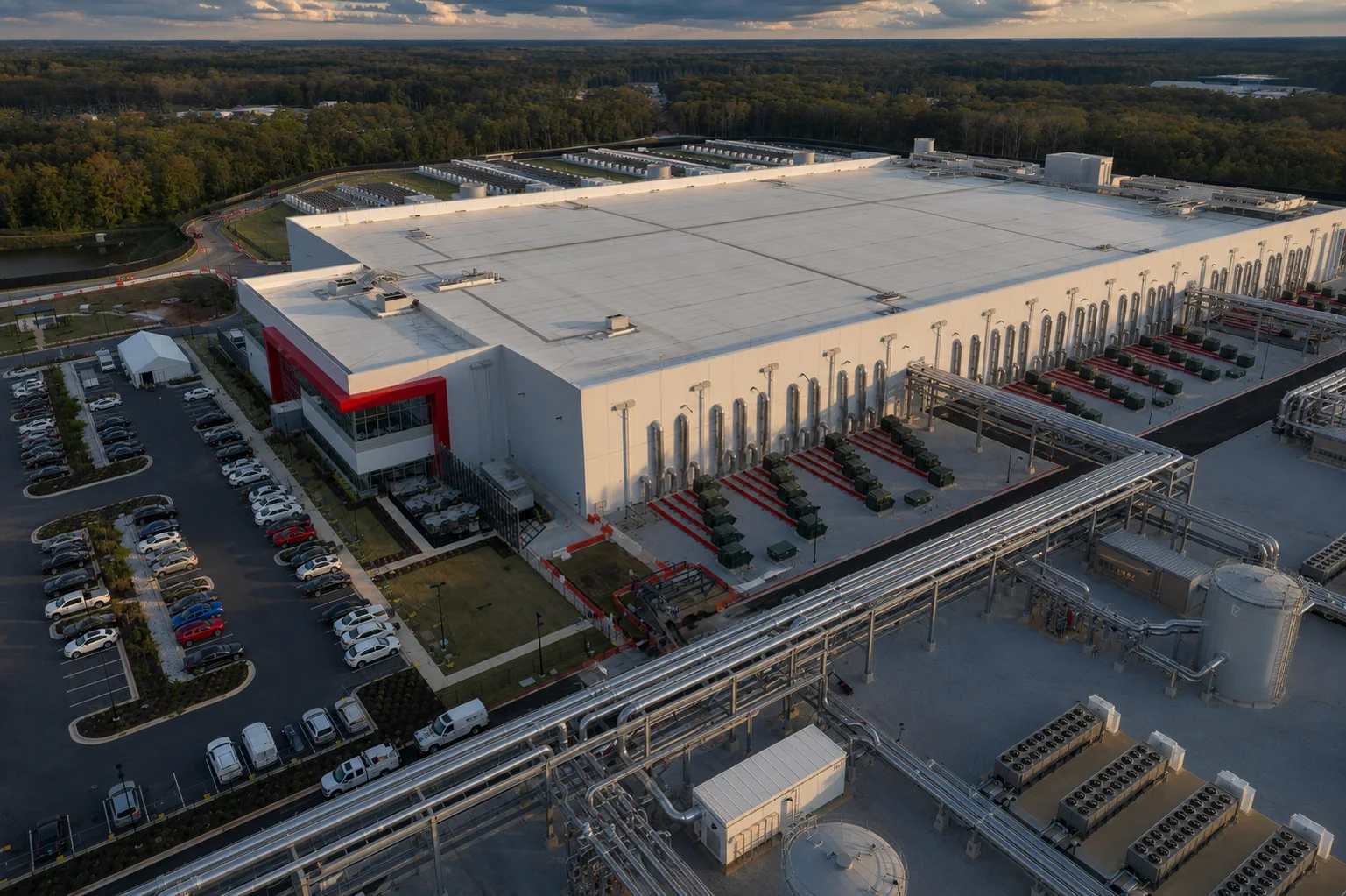
The case for accepting that bill is visible in demand. Microsoft said its overall AI footprint was on track to double in two years, while capacity would remain constrained at least through 2026. If customers absorb the new supply and Azure, Microsoft 365 Copilot and other AI products produce recurring high-margin revenue, today’s free cash flow may understate normalized earning power.
The caveat is that revenue growth alone does not guarantee attractive returns. Company gross margin was 68% in the March quarter, and Microsoft Cloud gross margin was 66%, both pressured by AI infrastructure and usage costs. Investors need operating profit and cash flow to rise faster than the capital base over time.
An earnings cross-check
Microsoft generated about $16.79 of trailing diluted earnings per share, putting the stock at roughly 23.5 times trailing earnings. If earnings grow 12% over the next year, a simple 23-to-25-times range would imply roughly $432 to $470 per share.
That cross-check is more optimistic than the base cash-flow model because accounting earnings do not subtract the full cost of current capital expenditure immediately. The gap between the two methods is the heart of the debate: either current AI spending is a temporary buildout that will generate years of cash, or Microsoft has entered a permanently more capital-intensive phase.
Risks that can change the valuation
- AI returns: Demand may be strong, but pricing, utilization and infrastructure costs determine whether that demand becomes free cash flow.
- Competition: Amazon, Google, Oracle and specialized AI providers can pressure cloud pricing and customer share.
- Product concentration: Azure and Microsoft 365 drive much of the premium valuation, while the relationship with OpenAI creates both strategic upside and counterparty complexity.
- Regulation: Antitrust, privacy, copyright and AI-safety rules could raise costs or limit bundling advantages.
- Valuation sensitivity: A higher required return or lower terminal growth rate can reduce estimated value even if the underlying business keeps growing.
What to watch next
Microsoft is scheduled to report fiscal fourth-quarter and full-year 2026 results after the market closes on July 29, 2026. The most important figures will be Azure growth, capital expenditure, cloud gross margin, free cash flow and management’s fiscal 2027 outlook.
The bottom line: Microsoft remains one of the world’s strongest software and cloud franchises, but $393.82 already assumes substantial success. The base case suggests little margin of safety; the bull case works if AI spending becomes a powerful cash-flow engine. Investors should update the model after the July 29 results rather than treating any single estimate as permanent. This analysis is general information, not personalized investment advice.


