
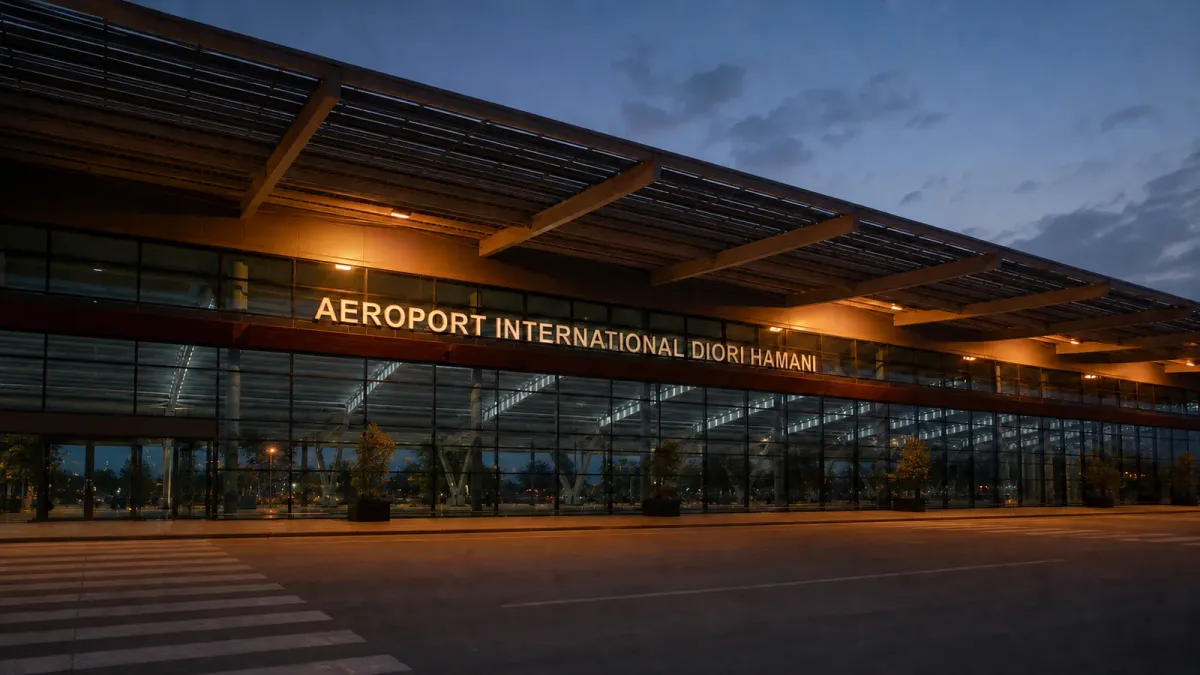
Mutinous soldiers attacked the military air base at Niger’s main airport and fired near the presidential district in Niamey early Saturday, Aug. 29, according to four sources cited by Reuters. The confrontation poses a serious new challenge to the military government that seized power in 2023.
Associated Press and Reuters witnesses reported sustained gunfire and explosions overnight at Diori Hamani International Airport, which includes the strategic Base 101, and in the Plateau district, where the presidential palace and key state institutions are located. Niger’s ruling military council said defense and security forces had been mobilized and urged the public to remain calm and vigilant.
What changed
The first reports did not establish who was responsible. A security source initially described the attackers to Reuters as terrorists. Later, four sources said mutinous soldiers had launched the assault. Those accounts point to an internal military revolt, but officials had not publicly identified the organizers or explained their demands at the time of publication.
State radio and television went off air during the morning before the government issued its appeal for calm, Reuters reported. A member of Niger’s consultative council said security forces had regained control of Base 101, while another security source said some attackers had been neutralized and others were fleeing. Reuters said it could not independently verify those claims, and one witness heard more gunfire and heavy explosions after an initial assertion that the situation was under control.
What is confirmed—and what is not
Two details are clear across the reporting: the airport complex and the presidency perimeter were both targeted, and security forces deployed in response. There was no verified casualty count, no public confirmation that the country’s top leaders were harmed, and no independently established account of who controlled every affected site.
That uncertainty is important. Niger has experienced both jihadist attacks and military seizures of power, and assigning responsibility too early could turn an active security crisis into misinformation. The airport complex has faced major unrest three times this year. An al-Qaida affiliate claimed a June attack, and Islamic State’s Sahel branch targeted the same area earlier in 2026.
Why the unrest matters beyond Niamey
Niger is a central member of the Alliance of Sahel States with Mali and Burkina Faso. All three are led by military governments that broke with the regional ECOWAS bloc and moved away from Western security partnerships while deepening ties with Russia. Their leaders have argued that military rule would improve security against Islamist insurgencies. Repeated attacks in the capital now put that claim under pressure.
The country also holds important uranium, oil and gold resources. Niger had supplied about 15% of the uranium used by France’s Orano when operations were at full capacity, according to Reuters. The military government has seized Orano-linked assets and recently reassigned former uranium permits to state-backed companies. Political instability could complicate those disputes, although there was no immediate report of damage to mining operations.
What happens next
The immediate questions are whether the military chain of command remains intact, whether the mutineers retain support inside other units, and whether commercial flights or government services can resume safely. Independent confirmation of casualties, arrests and control of the airport will also matter.
Until authorities provide evidence, claims about a coup, foreign involvement or jihadist responsibility should be treated as unverified. The confirmed story is already consequential: armed personnel reached two of Niger’s most protected sites and forced the junta to mount a capital-wide security response.


