
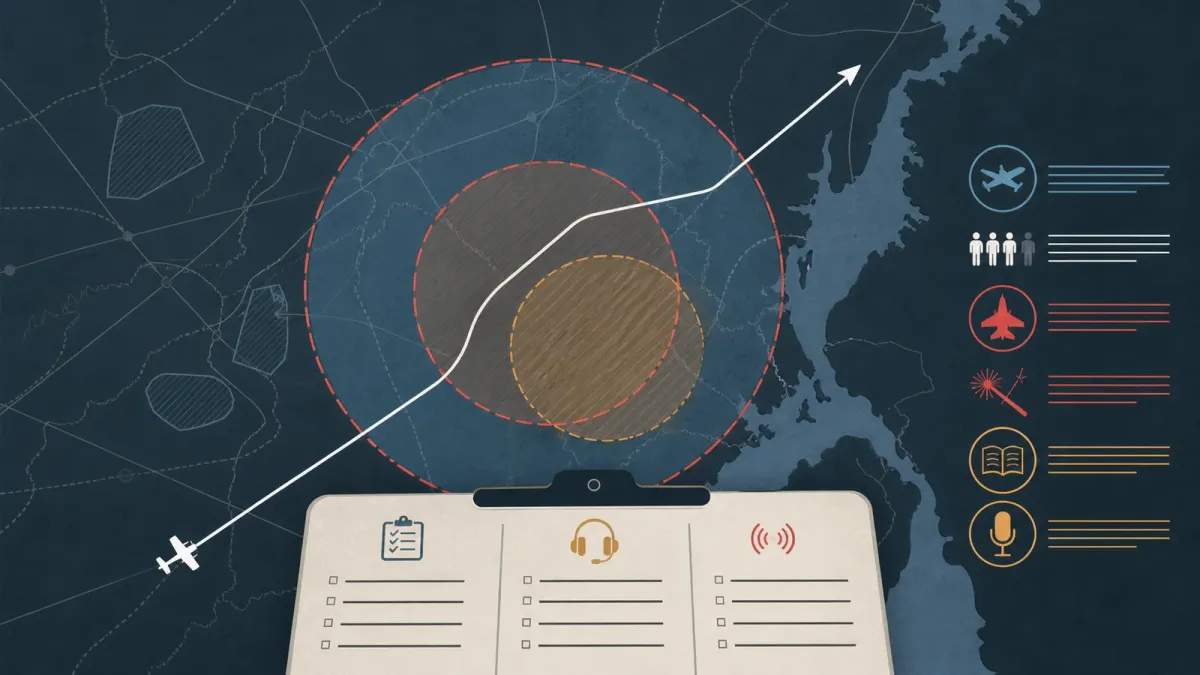
NORAD fighter jets intercepted multiple general aviation aircraft over northern New Jersey on Sunday, July 19, 2026, after pilots entered temporary flight restriction airspace near Bedminster and East Rutherford.
The command said more than 10 general aviation aircraft entered the restricted area, three required F-16 intercepts, and flares were used in two of those intercepts to get pilots' attention. NORAD said all aircraft were safely escorted out of the area.
What changed
The July 19 restrictions were active during an unusually crowded security weekend in the region. East Rutherford hosted the World Cup final at MetLife Stadium, while FAA safety notices and aviation groups had warned pilots to expect temporary flight restrictions around World Cup venues and VIP movement in the New York-New Jersey area.
The FAA's World Cup safety plan says pilots should expect TFRs around all tournament stadiums on match days. It also tells private pilots to check NOTAMs frequently because TFR details are published by FDC NOTAMs and can affect local airport access, training flights, glider operations and drone flights.
What a TFR means
A temporary flight restriction is a short-term airspace limit used for security, disaster response, major events, presidential travel and other sensitive situations. It does not mean every flight in a broad region stops, but it can sharply limit who may enter a defined area, at what altitude and under what authorization.
For drone operators, World Cup restrictions are stricter than a normal airspace check. The FAA says unauthorized drone flights in World Cup no-drone zones can bring civil penalties, criminal fines, confiscation and possible federal charges.
If a military aircraft intercepts you
NORAD's instruction is direct: if intercepted, a pilot should immediately tune to 121.5 or 243.0 and turn around to reverse course until receiving additional instructions on one of those frequencies.
That is the practical takeaway from Sunday's incident. Before flying near a major stadium, VIP movement, wildfire, disaster zone or large public event, pilots should check current NOTAMs, the FAA TFR site and local air traffic procedures shortly before departure, not just during early planning.
What happens next
NORAD did not report injuries or damage from the July 19 intercepts. The event is still a reminder that high-profile sports weekends can create real-time aviation restrictions that are easy to miss if pilots rely on old route planning or assume familiar airspace is open.


