
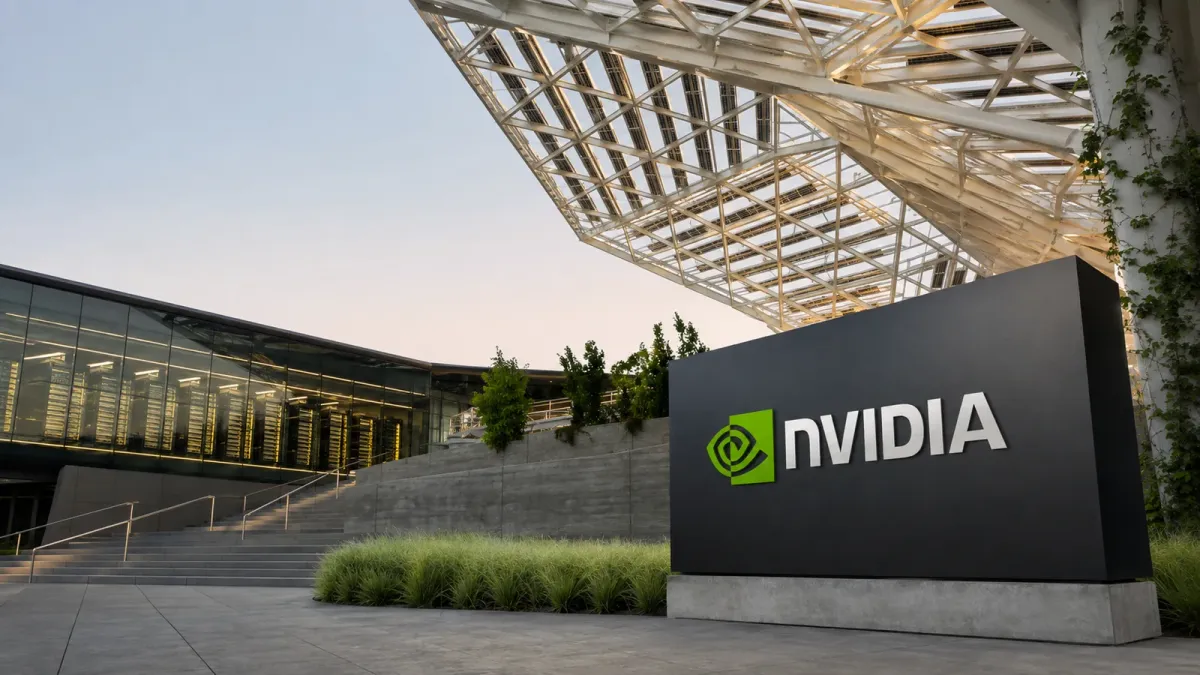
Nvidia at $230 is undeniably expensive in absolute terms. At the September 4 close of $230.36, the chipmaker was worth roughly $5.56 trillion. Yet the more useful number is not the market capitalization by itself. Based on Nvidia's latest quarter, the shares traded at about 26 times annualized non-GAAP earnings—a rich multiple, but not an irrational one for a company whose revenue more than doubled from a year earlier.
That distinction matters because the stock inspires two equally lazy arguments. Bulls point to artificial intelligence demand and assume the price can keep climbing. Bears point to the trillion-dollar valuation and assume a collapse is inevitable. Both skip the real question: how much earnings power can Nvidia sustain once the current buildout matures?
The honest answer is a range, not a price target. Using recent earnings as a starting point and a broad 22-to-30-times multiple produces a rough value band of about $195 to $266 a share. That is scenario analysis, not a forecast or a recommendation. It says Nvidia around $230 looks fairly valued if today's earnings are durable, cheap if growth keeps surprising, and vulnerable if margins or demand normalize faster than expected.
The earnings behind the multiple
Nvidia's second-quarter fiscal 2027 results were powerful enough to make the valuation math look almost ordinary. Revenue reached $96.22 billion, up 106% from a year earlier. Data Center revenue was $89.02 billion, up 117%, while GAAP gross margin held at 75%. The company earned $2.46 per diluted share under GAAP and $2.22 on a non-GAAP basis.
Annualizing that $2.22 quarterly figure gives $8.88 a share. Dividing the September 4 closing price by that number yields roughly 25.9 times earnings. This is intentionally simple: one quarter multiplied by four is not a substitute for a full forecast. It is useful because it reveals what the market is already asking investors to believe. The stock does not require another doubling merely to justify its current price; it requires exceptionally high earnings to persist.
Management's near-term outlook supports that possibility. Nvidia guided to $108 billion in third-quarter revenue, plus or minus 2%, and said the forecast assumes no Data Center compute revenue from China. That exclusion makes the guide more informative. Near-term growth is being underwritten by demand outside a market that once represented meaningful upside.
The cash generation is equally important. Nvidia's quarterly filing shows $74.42 billion of operating cash flow in the first half of the fiscal year. The company also returned $26 billion to shareholders during the second quarter and ended it with roughly $99 billion of remaining share-repurchase authorization. A valuation premium is easier to defend when accounting profits are turning into cash at this scale.
Why the range is so wide
A 22-to-30-times range is deliberately broad because small changes in the multiple produce enormous changes in market value. At 22 times annualized recent earnings, Nvidia would be worth about $195 a share. At 26 times, the result is near $231. At 30 times, it is about $266. The middle of the range sits almost exactly where the stock traded on September 4.
Those scenarios do not estimate next year's earnings. They show the price investors might pay if the latest quarterly run rate were sustainable. The bull case is stronger than this static calculation: if revenue reaches management's guide and margins remain near current levels, earnings could rise and make $230 look cheaper. The bear case is equally straightforward: if the current quarter is close to peak profitability, annualizing it overstates normalized earnings and gives a false sense of comfort.
The risks hiding inside the growth
The first risk is concentration. Nvidia disclosed that one direct customer represented 16% of quarterly revenue. Demand can be real and still be fragile when a small group of hyperscalers drives a large share of purchases. A budget pause by one major buyer can matter even if long-run AI adoption remains intact.
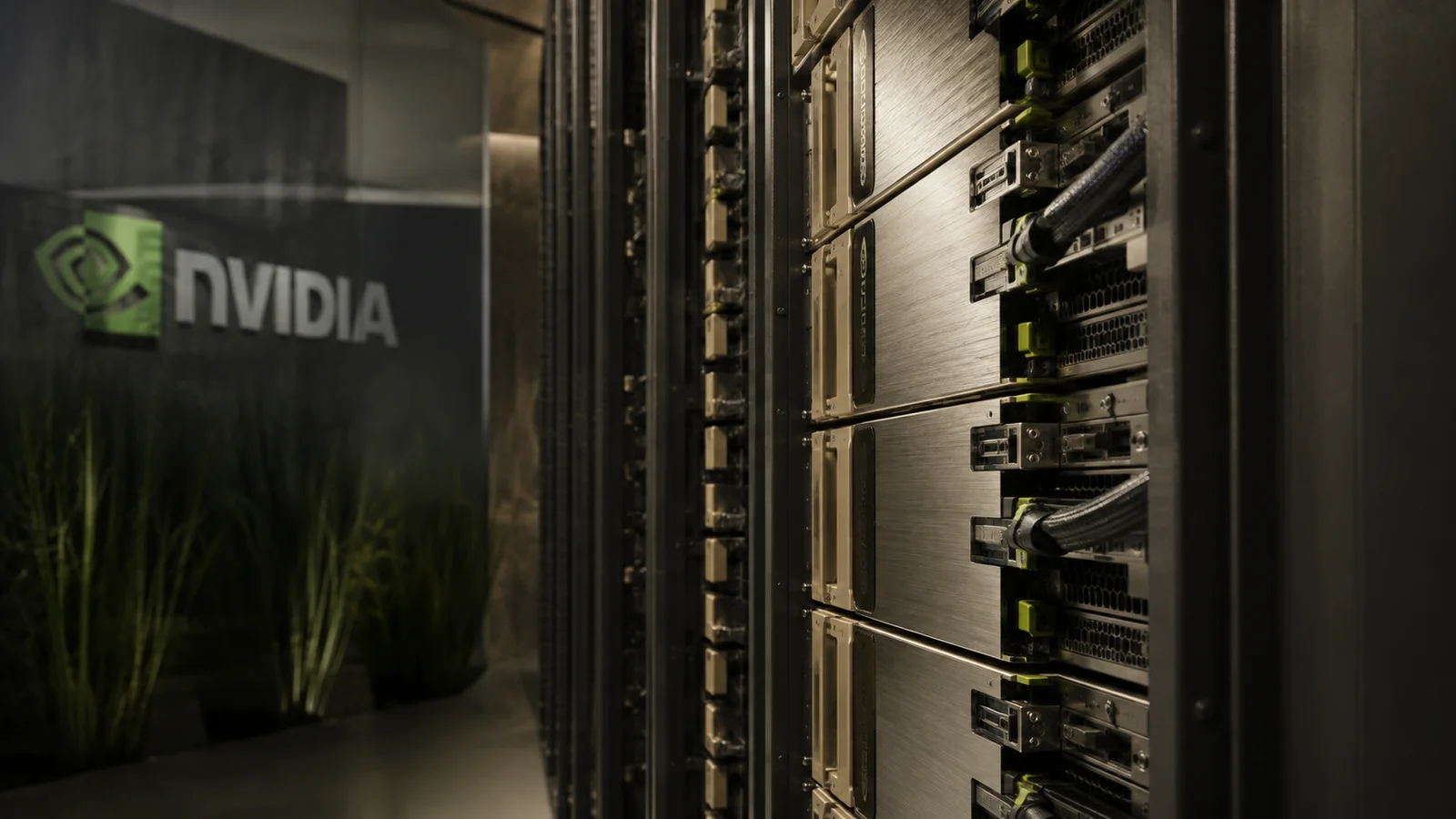
The second risk is the capital required to support the boom. Supply and capacity commitments rose by $119 billion in six months to $279 billion. Nvidia has also made up to $105 billion of capped guarantees connected with infrastructure involving SB Energy and OpenAI, while its AI cloud commitments totaled $36 billion. These arrangements may secure demand and supply, but they also knit Nvidia more tightly into the financing of the ecosystem buying its chips.
The third risk is geopolitical. Nvidia said China Hopper shipments were less than 1% of Data Center revenue in the quarter, and its next-quarter outlook assumes no China Data Center compute revenue. That limits the immediate downside embedded in guidance, but it does not eliminate the strategic cost of losing access to a large market or the possibility of broader export restrictions.
What investors should watch next
Four indicators will tell the story more clearly than daily price moves. First, compare revenue growth with the growth of supply commitments; capacity should turn into sales rather than inventory or costly obligations. Second, watch gross margin. A sustained move below the current mid-70% level would weaken the earnings base supporting the multiple. Third, track customer concentration and capital-spending plans at the largest cloud companies. Finally, separate genuine end-user demand from spending that depends on supplier financing, guarantees, or circular commercial relationships.
At $230, Nvidia offers neither an obvious bargain nor an obvious bubble. The latest numbers support the price, but only if extraordinary execution becomes ordinary. That is the uncomfortable middle ground the market often ignores: a great company can be fairly valued, and a sane multiple can still carry serious downside when it rests on historically unusual profits.


