
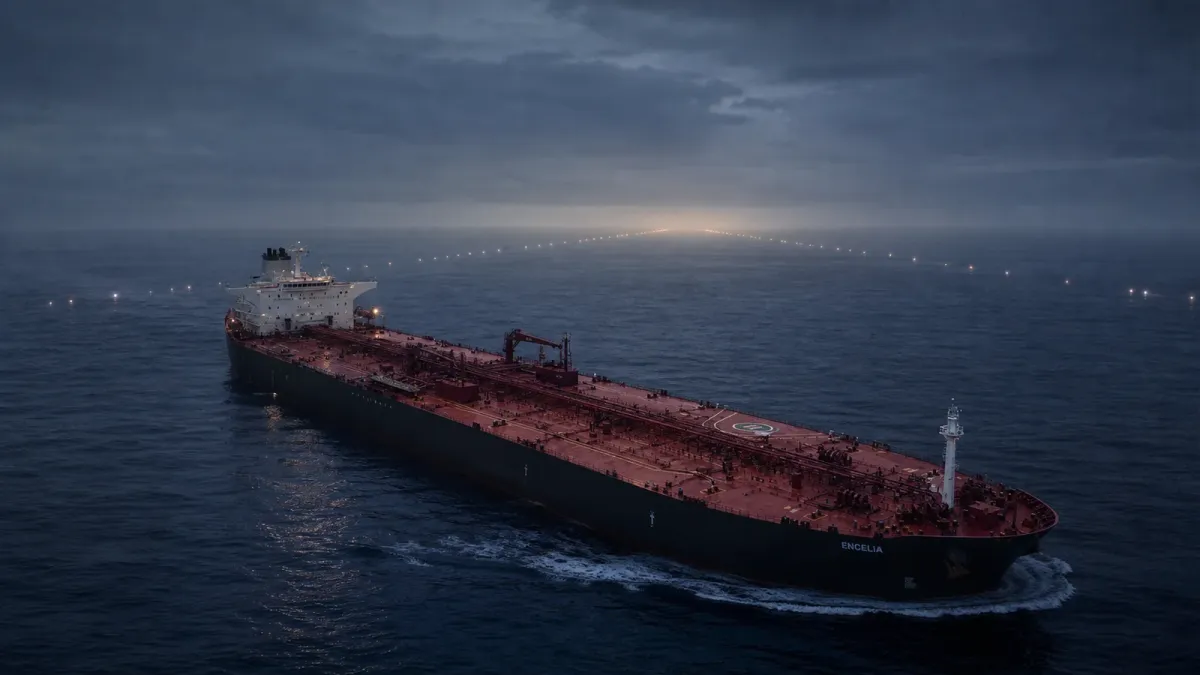
Brent crude reached $100 a barrel on Thursday, July 23, as markets reacted to a confirmed strike on one Saudi-flagged tanker and an unverified claim that a second tanker had also been hit in the Red Sea.
The front-month Brent contract touched a session high of $100 before easing to $99.89, delayed TradingView data showed shortly after 9 a.m. Eastern time. Investing.com had quoted the September contract at $99.88, up $5.81 or 6.18% from Wednesday's $94.07 close, at 9:07 a.m. Prices had been near $96 when the first reports emerged, making the $100 test the day's material new development.
The move puts two crucial oil routes—the Strait of Hormuz and the Bab el-Mandeb Strait—at the center of the market's risk calculation. Saudi Arabia has been sending millions of barrels a day west by pipeline to Yanbu to reduce exposure to the constrained Strait of Hormuz. The tanker attack now raises questions about the Red Sea outlet used by that backup route.
What is confirmed
The United Kingdom Maritime Trade Operations said a tanker was struck by an unknown projectile about 70 nautical miles southwest of Al Shuqaiq, Saudi Arabia. Saudi state media said the attack caused a fire at the bow of the Saudi-flagged Encelia, but all crew members were safe. No casualties or environmental impact had been reported.
Yemen's Iran-aligned Houthi movement claimed attacks on two Saudi tankers, the Encelia and the Layla, as part of a declared blockade of Saudi shipping. Reuters said it could not independently confirm the claimed attack on the Layla. The distinction matters: one tanker strike is supported by maritime and Saudi reporting; the second remains an allegation.
Why the $100 test matters
The rally reflects the probability of wider disruption, not evidence that all Saudi exports have stopped. Ships carrying Saudi oil toward Asian customers normally leave the Red Sea through Bab el-Mandeb. If operators decide that route is too dangerous, some vessels could turn north toward the Suez Canal and take a much longer route around Africa, adding time, fuel use and insurance costs.
The Red Sea risk is arriving while traffic through Hormuz remains severely constrained. In peacetime, about one-fifth of the world's traded oil and gas moved through that strait, according to the Associated Press. Traders are therefore pricing not only how much crude is produced, but whether it can reach buyers safely and on schedule.
The caveat
Futures can move sharply around a symbolic threshold and reverse just as quickly. The verified Encelia incident had not produced reported deaths, the full damage assessment was not public, and the Layla claim was still unconfirmed. A sustained move above $100 would depend on what happens next to shipping, loadings and the broader conflict—not on the round number alone.
U.S. inventory data also offered a counterweight. The Energy Information Administration reported an unexpected increase in domestic crude stocks last week. That could limit the rally if shipping conditions stabilize, but it may not erase the geopolitical premium while both Middle East routes face disruption risk.
What to watch next
The clearest signals are whether Brent trades and holds above $100, whether the Encelia can resume operations, whether the Layla claim is verified, and whether more tankers reverse course near Bab el-Mandeb. Saudi loadings at Yanbu will show whether the kingdom's western export route continues to function normally.
For consumers, touching $100 in futures does not guarantee an immediate jump at every gasoline pump. Crude is only one part of retail fuel costs, and changes usually reach motorists with a lag. But sustained shipping delays, higher insurance premiums and longer voyages could keep pressure on fuel prices even without a direct loss of production.


