
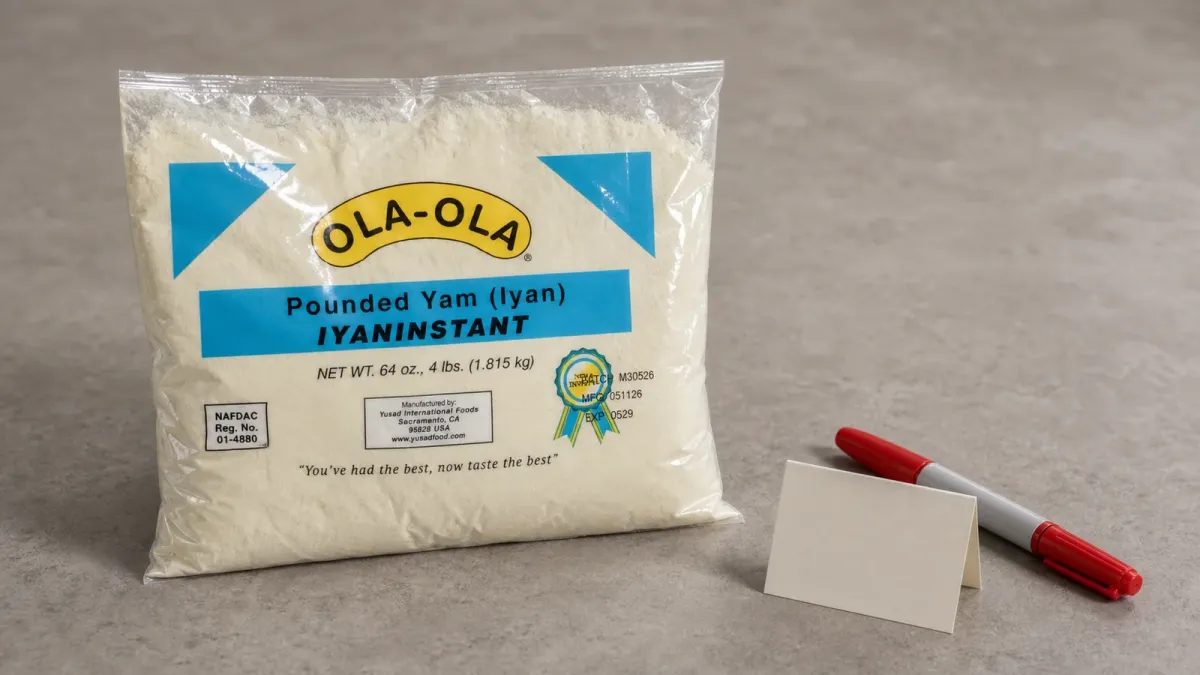
Fayus Inc. has expanded its recall of Ola-Ola Pounded Yam because some packages may contain sodium caseinate, a milk-derived ingredient, without declaring milk on the label.
The Food and Drug Administration posted the expanded company announcement on July 17, 2026. The recall now covers 2-pound, 4-pound, 5-pound and 10-pound packages of Ola-Ola Pounded Yam.
The company said no illnesses or injuries have been reported. The risk is highest for people who have a milk allergy or severe milk sensitivity, because an undeclared allergen can trigger a serious or life-threatening reaction.
What changed
The original recall involved Ola-Ola Pounded Yam packaging that did not disclose sodium caseinate. The expanded notice says Fayus added more package sizes after an internal investigation found the labeling problem was tied to a temporary breakdown in production and packaging processes.
The Canadian Food Inspection Agency sampled the 4-pound product and confirmed the milk-allergen omission, according to the FDA-posted company announcement. That confirmation is important because it supports the recall with regulator testing, not only company review.
The recalled product was distributed through outlets in Canada and Australia, and in California, Georgia, Illinois, New Jersey, New York and Texas in the United States. The product was distributed between December 2025 and May 2026.
What to check
Look for Ola-Ola Pounded Yam in clear plastic packaging with the Ola-Ola brand name and the product description Pounded Yam or Iyan. FDA's product photos show front and back labels for affected packages, including nutrition facts and ingredient information.
Food-safety coverage of the earlier recall identified expiration dates from November 2028 through May 2029. Consumers should compare the size, brand, product name and date information with the FDA recall page before deciding a package is covered.
Check pantry shelves, bulk-food storage containers and restaurant or catering supplies, not only unopened grocery bags. If the flour was poured into another container and the package is gone, treat it cautiously if you cannot confirm the brand, size and date.
People without a milk allergy may not face the same immediate risk, but the labeling error still matters in shared kitchens. A product that looks safe to one person can be dangerous to a guest, child, customer or relative who relies on ingredient labels.
For restaurants, caterers and community kitchens, the practical step is to separate affected stock before the next prep shift and tell staff why the label cannot be relied on.
Do this first
If anyone in the household has a milk allergy or severe milk sensitivity, do not eat the recalled product. Set it aside where it cannot be served by mistake, especially if the flour has been transferred to another container.
Consumers can return the product to the place of purchase for a full refund, according to the FDA-posted announcement. Fayus also said it is applying dairy-allergen warning stickers to affected products that remain on store shelves.
If the product has already been served and someone develops symptoms of an allergic reaction, seek medical guidance promptly. For recall questions, consumers can contact Fayus Inc. at the phone number or email listed in the FDA announcement.


