
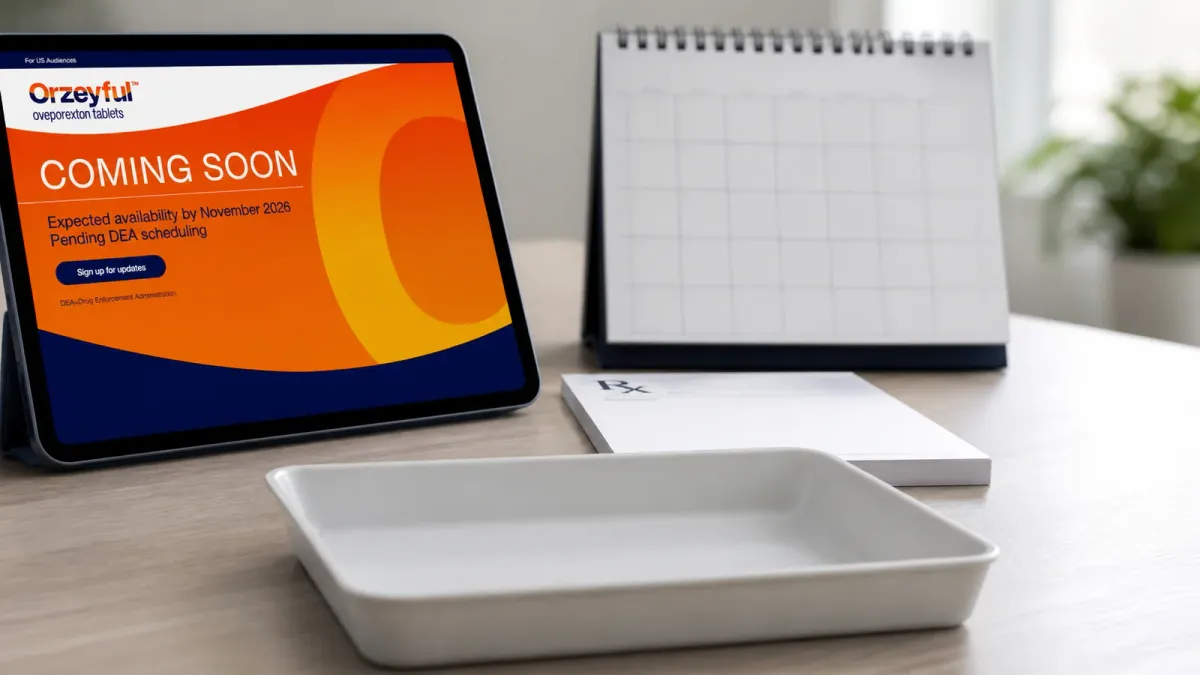
The Food and Drug Administration has approved Orzeyful, Takeda's twice-morning tablet for adults with narcolepsy type 1, marking the first U.S. approval of a medicine designed to act on the orexin system behind the disorder.
The approval is a meaningful shift for patients, but it is not the same as pharmacy availability. Takeda says it is preparing a U.S. launch and expects to make Orzeyful available after the Drug Enforcement Administration completes scheduling. The product site lists expected availability by November 2026, pending that DEA step.
What changed
Narcolepsy type 1 is linked to the loss of orexin, a brain chemical involved in wakefulness, sleep boundaries and muscle tone. Existing treatment often manages separate symptoms such as daytime sleepiness or cataplexy. The FDA said Orzeyful is the first approved medicine for narcolepsy type 1 as a complete disorder and the first to work by directly targeting orexin signaling.
Takeda said the approval covers adults with narcolepsy type 1, also called narcolepsy with cataplexy. The company describes Orzeyful as an oral orexin receptor 2 agonist, meaning it is intended to stimulate orexin signaling rather than work as a traditional stimulant.
That distinction is why the approval is bigger than a new brand name. It gives doctors a treatment option tied to the biology that defines narcolepsy type 1, while still leaving familiar questions about tolerability, access, coverage and real-world response. Patients should not change or stop existing medicines without clinical guidance.
What patients can do now
The practical step is not to assume the drug can be filled immediately. Patients and caregivers can ask their sleep specialist how the approval fits their current treatment plan, whether they may be appropriate candidates once the drug is available, and how insurance or specialty-pharmacy access may work after launch.
The prescribing information also matters. The label lists safety issues including urinary frequency or urgency and creatine phosphokinase elevations seen in trials. It also lists dosing instructions and interaction warnings that clinicians will need to consider. The FDA and Takeda both frame the drug as a new option, not a cure or a replacement for individualized medical care.
What to watch next
The next milestone is DEA scheduling, which determines how the drug is handled before it can be supplied. Takeda's public product page says availability is expected by November 2026, but that timing depends on the regulatory process.
Pricing and coverage are also unresolved public questions. A first-in-class treatment can change the medical conversation before it changes daily life, especially if patients must wait for formulary decisions, prior authorization rules or specialty-pharmacy instructions. Those access details may matter as much as the approval date for many households.
For patients living with narcolepsy type 1, the approval changes the treatment conversation now, even if the prescription counter has not caught up yet. The right question for the next appointment is not only whether Orzeyful is new, but when it may be accessible, what monitoring it requires, and how its risks compare with the medicines a patient already uses.


