
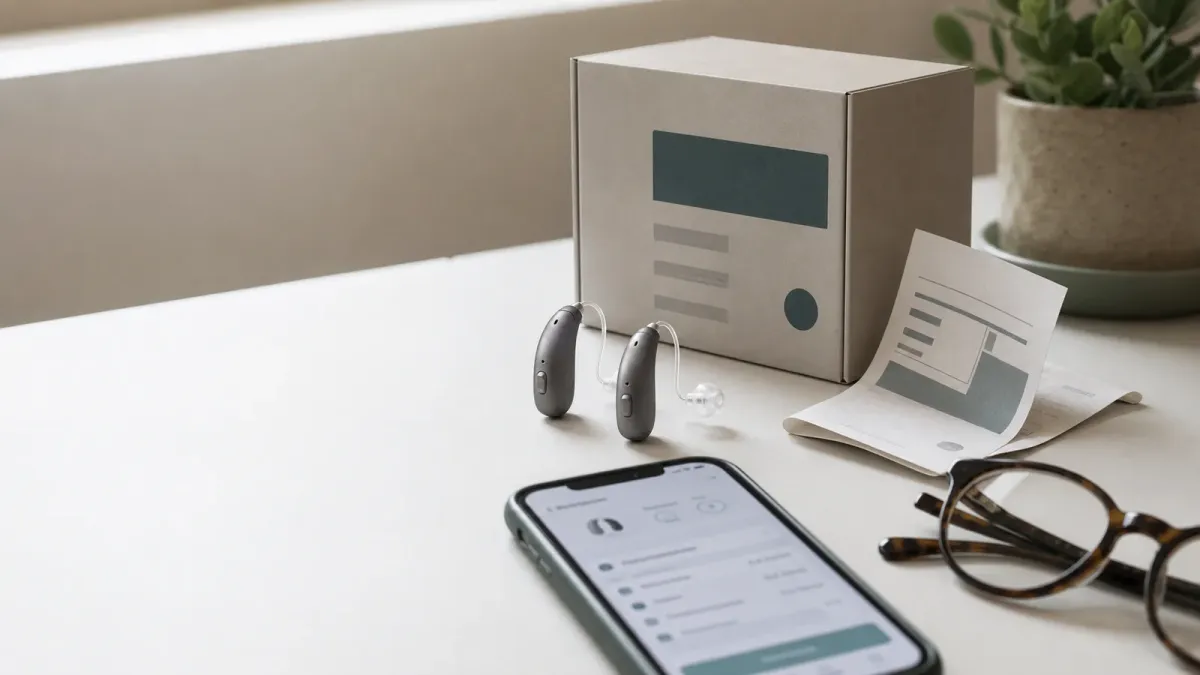
Over-the-counter hearing aids can be worth trying if you are an adult with gradual, mild to moderate hearing trouble, but they are not a cheap substitute for every hearing problem.
The buyer's mistake is assuming that any small amplifying device is a hearing aid. The Food and Drug Administration regulates OTC hearing aids as medical devices for adults, while personal sound amplification products are for people without hearing loss and are not regulated as medical devices for hearing loss.
The stakes are practical: the National Institute on Deafness and Other Communication Disorders says about 28.8 million U.S. adults could benefit from hearing aids, yet many never use them. OTC options lower one barrier, but the label, return policy and your symptoms matter more than the marketing.
The short answer
Use OTC hearing aids only if you are 18 or older and your hearing trouble sounds mild to moderate: speech seems muffled, groups are hard to follow, phone calls are difficult, listening is tiring, or the TV has to be louder than other people prefer. If you have sudden hearing loss, pain, fluid or blood from the ear, vertigo, one-sided hearing loss, or trouble hearing loud sounds, treat that as a reason to see a licensed professional first.
Do this first
Before you buy, check five things in order.
- Confirm the device says OTC hearing aid. The FDA says OTC hearing-aid packaging should prominently display the words OTC and hearing aid. Avoid treating general sound amplifiers, earbuds or vague wellness devices as equivalent.
- Match the product to your symptoms. OTC hearing aids are meant for perceived mild to moderate hearing loss, not severe or profound hearing loss. A device that cannot provide enough output may waste money and delay care.
- Read the return policy before checkout. The FDA says its rules do not require manufacturers to provide a warranty, so shoppers should understand any trial, return or warranty period before they need it.
- Check whether an app or remote is required. Some devices use a phone or remote for setup and control. That can be useful, but it is a problem if the buyer will not use the app comfortably.
- Know where to report problems. The FDA asks consumers to report injuries, malfunctions and other adverse events involving medical devices, including OTC hearing aids, through MedWatch or by phone.
This is not a product ranking. It is a risk check. The best device on paper can still be a bad fit if the return window is short, the controls are confusing, or the buyer's symptoms point to a problem that needs medical care.
What the label should help you decide
The outside package should tell you who the device is for, when to seek health care, whether the hearing aid is used or rebuilt, what batteries it needs, and whether a mobile phone or remote-control device is necessary. The point of reading the box is not paperwork; it is to answer whether this is a reasonable self-fit purchase for the person who will wear it.
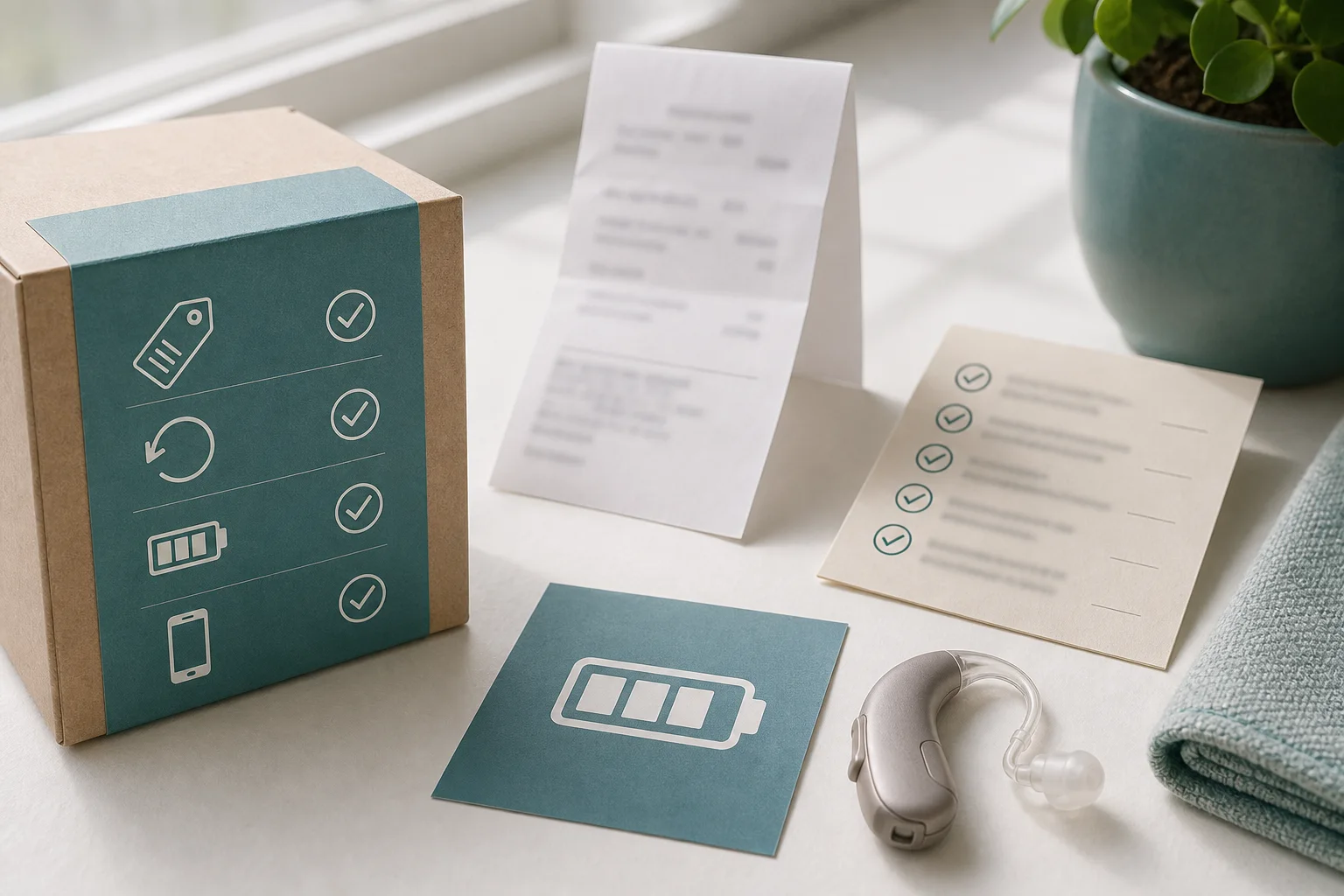
Be careful with authority-sounding phrases. The FDA warns that statements such as FDA Registered or FDA Certified and use of an FDA logo on package labeling may be misleading. FDA regulation of a device category is not the same thing as a government endorsement of a specific model.
When OTC is the wrong first step
Do not use the OTC aisle to work around warning signs. The NIDCD and FDA both point shoppers toward professional care when hearing loss is sudden, one-sided, linked with pain or discharge, paired with severe dizziness, or too severe for ordinary conversations. Children also need prescription hearing aids and medical care, not OTC devices.
A simple rule helps: if the problem is mainly understanding speech in noisy places, groups, phone calls or television at ordinary levels, an OTC trial may be reasonable. If the problem is hearing loud sounds, hearing in a quiet room, symptoms in one ear, or a recent sudden change, pause the purchase and get evaluated.
How to test one without fooling yourself
Plan a trial across real listening situations instead of judging the device on the first hour. Try a quiet conversation, a restaurant or group setting, a phone call, television at a normal volume, and a routine errand. Keep notes on comfort, speech clarity, feedback, battery life, app setup and whether you actually wear the device.
Give yourself time to adjust, but do not let the return window close while hoping the product will become useful. The FDA says it can take time and practice to get used to hearing aids, but it also advises seeking a hearing-health consultation if you are not receiving benefit.
Bottom line
OTC hearing aids can make hearing help easier to access, especially for adults who have delayed care because of cost, stigma or inconvenience. The smart purchase starts with a narrow question: does this regulated device match mild to moderate symptoms, offer enough time to test it, and clearly explain when to get professional help? If the answer is no, the better move is not a different ad. It is a hearing evaluation.


