
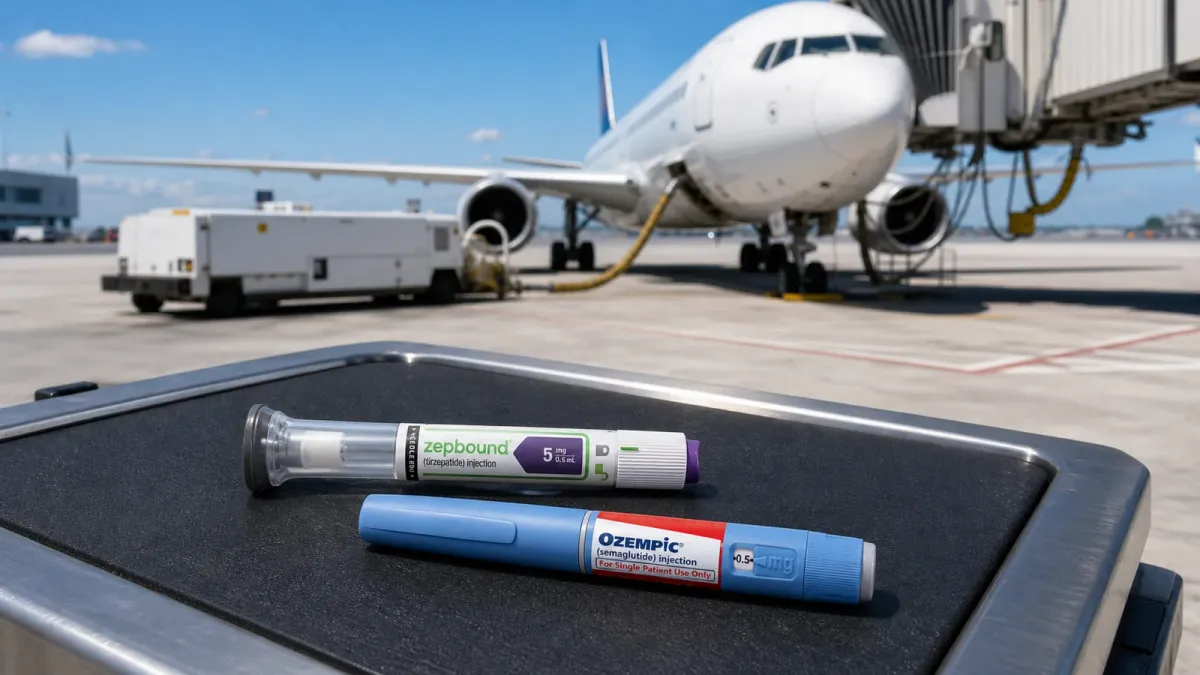
Eli Lilly’s weight-loss business is creating a potential winner far beyond pharmaceuticals: U.S. airlines. Lilly said on August 5 that second-quarter 2026 revenue climbed 48% to $23.0 billion, driven mainly by Mounjaro and Zepbound volume. As medicines in this class reach more patients, analysts say lower average passenger weight could quietly reduce the fuel required to fly.
First, a brand correction: Ozempic is made by Novo Nordisk. Lilly, whose stock trades under the ticker LLY, makes Mounjaro for type 2 diabetes, Zepbound for obesity and the newer oral GLP-1 Foundayo. “Ozempic” has become common shorthand for the category, but the projected airline benefit depends on broad GLP-1 adoption, not on one company or medicine.
The short answer is that lighter aircraft generally need less fuel. If average passenger weight falls enough across millions of trips, a small saving on each flight can become meaningful at the industry level. No major U.S. carrier, however, has publicly identified GLP-1 use as a realized source of earnings.
The numbers behind the airline estimate
A January analysis from Jefferies estimated that American Airlines, Delta Air Lines, Southwest Airlines and United Airlines could together save as much as $580 million a year on fuel. The model assumed average passenger weight declined 10%, reducing the total weight of a loaded aircraft by roughly 2%.
Under that scenario, the four carriers’ combined fuel costs could fall by up to 1.5%, while earnings per share could rise by about 4%, according to reporting on the Jefferies work. The estimate used a projected $38.6 billion combined 2026 fuel bill and 16 billion gallons of consumption. It is a sensitivity analysis: it shows what could happen if the weight assumption is reached, not what has already happened.
The adoption trend is real enough to make the scenario worth watching. A Gallup survey conducted from May 28 through June 5 found that 11% of U.S. adults said they currently use GLP-1 medicines for weight loss, up from 3% in 2024. Gallup also found the self-reported adult obesity rate had declined to 36.4% in 2026 from a 39.9% peak in 2022. The survey shows an association, not proof that the medicines caused all of the change.
Why a small fuel saving matters now
Fuel is large enough to move airline margins even when the percentage change looks modest. Delta reported $4.4 billion in adjusted fuel expense for the June 2026 quarter, up 77% from a year earlier. Its adjusted operating margin fell to 8.8% even as revenue grew.
American said its second-quarter fuel expense increased by more than $2.2 billion, or 83%, year over year. Record revenue helped offset part of the shock, but the airline reported just $71 million in GAAP net income. Against that backdrop, a recurring efficiency worth tens or hundreds of millions of dollars would matter—even though it would not come close to neutralizing a sudden surge in fuel prices.
Why Lilly’s growth strengthens the premise
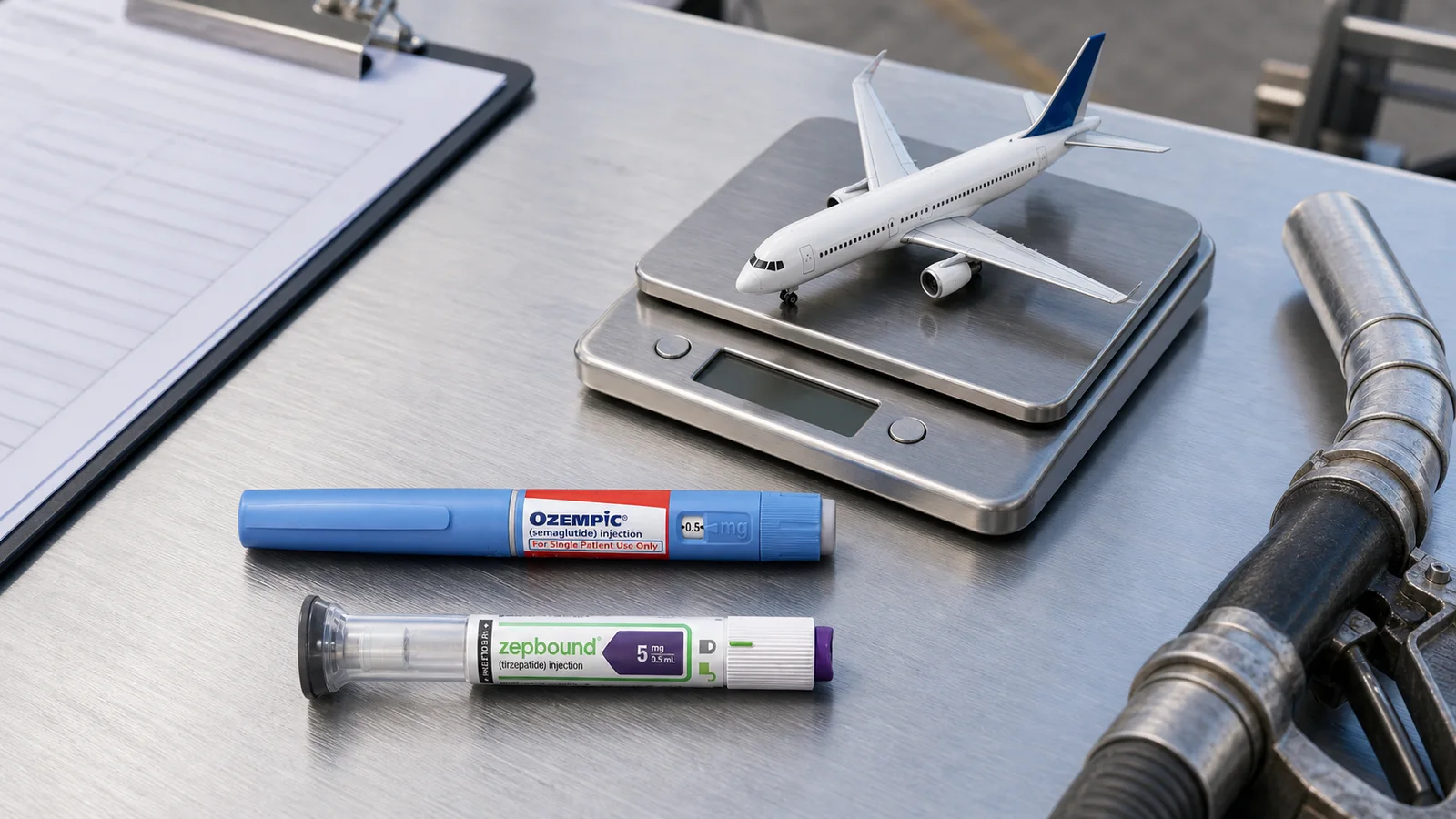
Lilly’s August 5 results show how quickly the market is expanding. Worldwide Mounjaro revenue rose 91% from a year earlier to $9.94 billion in the second quarter, while Zepbound revenue climbed 46% to $4.93 billion. Foundayo, launched in 2026, generated $98 million. Lilly raised its full-year revenue forecast to $85 billion to $87 billion.
Those sales do not translate directly into pounds removed from passenger loads. Some patients use Mounjaro or Ozempic for diabetes; not everyone loses the same amount of weight; access, adherence and side effects vary; and national survey data cannot tell an airline the weight of passengers on a specific route. The link from drug sales to airline fuel use therefore remains indirect.
The biggest caveat: airlines do not report this saving
Airlines disclose fuel gallons, price per gallon and total fuel expense, but they do not publish a “GLP-1 benefit.” Fuel burn also depends on aircraft type, trip length, cargo, seating configuration, route and operating decisions. A lighter passenger load could be partly offset if an airline carries more cargo or changes capacity.
The modeled benefit also should not be confused with a promise of cheaper tickets. If the saving emerges, it could support margins, finance other costs, be competed away through lower fares or be overwhelmed by fuel-price volatility. Jefferies also noted a possible offset in weaker onboard snack sales if GLP-1 users buy less food.
What investors and travelers should watch
The cleanest evidence would be a sustained decline in fuel gallons per available seat mile that cannot be explained by newer aircraft, denser seating or route changes. Airline management teams would also need to acknowledge lower assumed passenger weight or a related change in planning before the market could call the effect realized.
For now, the GLP-1 airline thesis is best understood as a plausible margin tailwind. Lilly and Novo Nordisk are expanding the medicines that make the scenario possible, while 2026 airline results show why even tiny changes in fuel consumption attract attention. But the headline number remains an analyst estimate, not $580 million already sitting in airline profits.


