
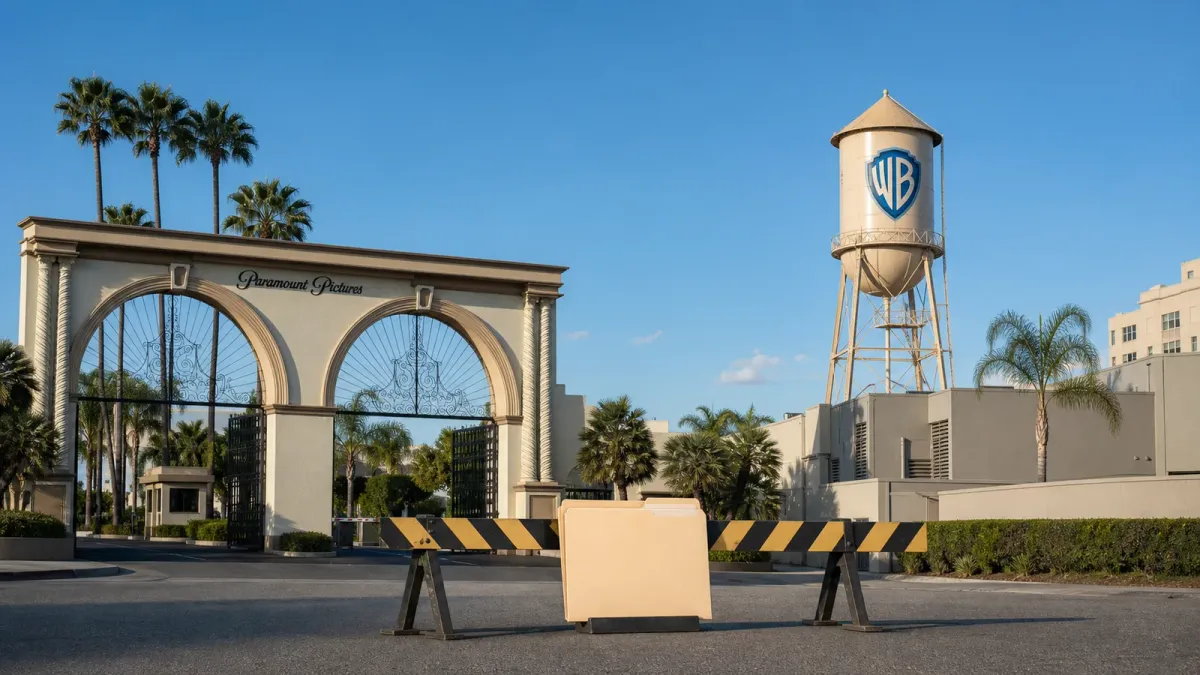
A federal judge has temporarily paused the proposed Paramount Skydance-Warner Bros. Discovery deal, giving 12 states more time to press an antitrust challenge before the companies can close one of Hollywood's largest consolidation attempts.
The order, granted on Monday, July 20, 2026, blocks the deal for at least two weeks and puts the next major decision on the calendar for August 3, when the court is expected to consider a preliminary injunction. California Attorney General Rob Bonta, who is leading the state coalition, described the ruling as an early win in a lawsuit aimed at stopping the acquisition.
For viewers, the immediate effect is not a changed subscription price or a disappearing channel. It is uncertainty. The case asks whether putting Paramount, CBS, CNN, HBO, Warner Bros., Paramount+, and other entertainment assets under one corporate roof would reduce competition in theaters, cable bundles, streaming negotiations, advertising, and production jobs.
What changed
Paramount and Warner Bros. Discovery cannot complete the transaction during the temporary pause. The Associated Press reported that U.S. District Judge Araceli Martinez-Olguin granted the restraining order after the states argued they needed time for their challenge to be heard before the companies could close.
The states say the deal would give the combined company too much control over theatrical film distribution and basic cable programming. California's filing frames the transaction as a $110 billion acquisition of Warner Bros. Discovery by Paramount Skydance, while AP described the court order as pausing an $81 billion merger. The difference reflects how large media transactions can be described using different deal-value measures, but the legal fight is the same: whether the combination would leave consumers and workers with fewer realistic alternatives.
The companies argue the opposite. Paramount has said the merger is needed to compete with larger technology and streaming rivals, and Warner Bros. Discovery has pointed shareholders to the transaction as an all-cash path to close. The federal Justice Department had already approved the deal, but state attorneys general can still bring their own antitrust case.
Why viewers should care
The case is not just about which studio owns which mountain, shield or streaming app. It is about leverage. If one company controls more must-have movies, premium shows, news networks and cable channels, it may have more power when it negotiates with theaters, cable providers, streaming bundles and advertisers.
That does not automatically mean prices rise. A larger company can argue that scale lets it spend more on programming, build a stronger streaming service and compete against Netflix, Amazon, Apple and other deep-pocketed rivals. But the states are asking the court to focus on narrower markets, including theatrical releases and cable channel licensing, where fewer sellers could mean fewer choices for distributors, theaters, creators and viewers.
What happens next
The next key date is August 3, 2026. If the judge grants a preliminary injunction, the deal could be blocked for longer while the lawsuit proceeds. If the judge declines, the companies may be able to resume the closing process unless another court order intervenes.
Timing matters because large merger agreements often carry financial penalties if closing slips past a deadline. AP reported that Paramount faces daily penalties if the deal is not finalized by September 30. That creates pressure on the companies to move quickly and on the states to show that waiting is necessary to prevent harm that cannot be repaired later.
The practical takeaway for viewers is simple: nothing changes in your app list today, but the fight over who controls Hollywood's next bundle is now in court. Watch August 3 for the next signal on whether the deal is merely delayed or facing a much longer legal road.


