
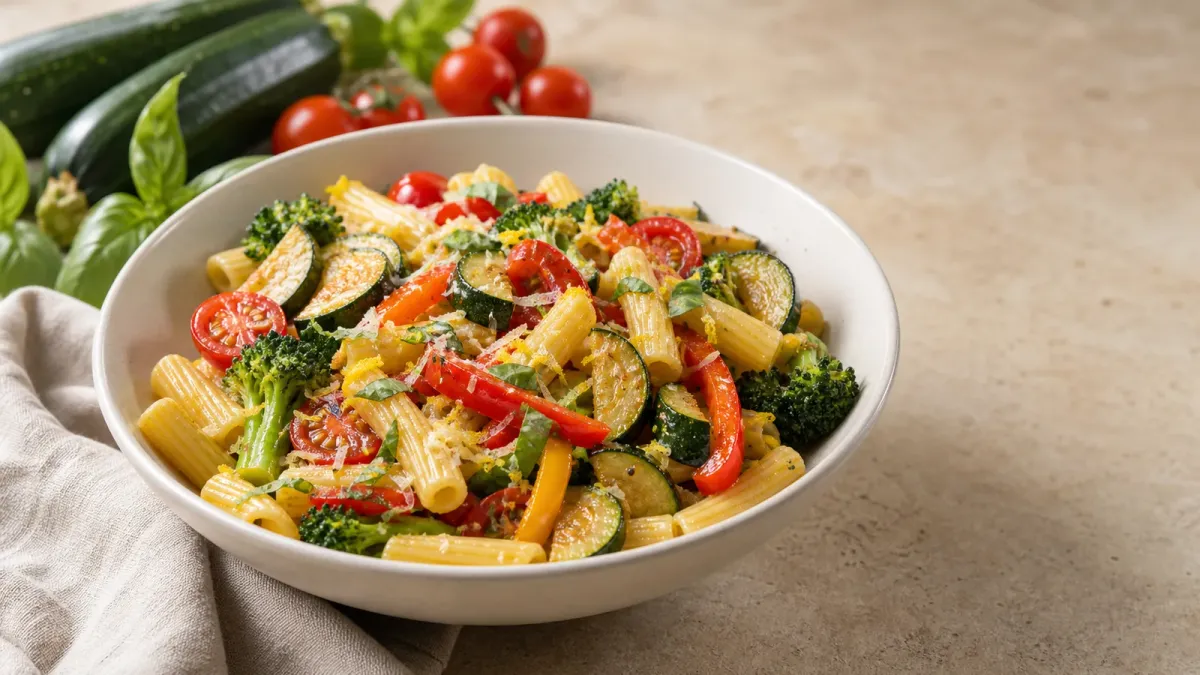
Pasta primavera should taste like vegetables first: sweet tomatoes, just-tender zucchini, crisp bell pepper and basil, all held together by a glossy Parmesan sauce. This version serves four and takes about 40 minutes, with enough structure to avoid the two most common problems—a watery pan and soft, colorless vegetables.
Late summer is an especially useful time to make it. Utah State University Extension says zucchini is most abundant in farmers markets and home gardens from July through September, while USDA MyPlate pairs zucchini and tomatoes in a quick summer preparation. The recipe remains flexible: swap in the best vegetables available, but keep the total volume about the same.
The short answer is to cook the vegetables in batches, stop while they still have bite, and finish the pasta with starchy cooking water before adding the vegetables back. That sequence gives the sauce body without burying the produce under heavy cream.
What you need
Yield: 4 main-course servings
Prep time: 20 minutes
Cook time: 20 minutes
Ingredients
- 12 ounces short pasta, such as rigatoni, penne or casarecce
- 2 tablespoons extra-virgin olive oil, divided
- 1 medium zucchini, cut into half-moons about 1/4 inch thick
- 1 small red or yellow bell pepper, cut into thin strips
- 1 cup small broccoli florets
- 1 cup cherry tomatoes, halved
- 3 garlic cloves, thinly sliced
- 1/4 teaspoon red-pepper flakes, optional
- 1/2 teaspoon kosher salt, plus more for the pasta water
- 1/2 cup finely grated Parmesan, plus more for serving
- 1 tablespoon unsalted butter
- 1 teaspoon finely grated lemon zest
- 1 tablespoon fresh lemon juice, plus more to taste
- 1/3 cup torn basil leaves
- Freshly ground black pepper
If you want extra protein, add one drained 15-ounce can of chickpeas with the tomatoes. For a dairy-free version, omit the butter and Parmesan, use another tablespoon of olive oil, and finish with toasted breadcrumbs for texture.
How to make pasta primavera
- Start the pasta water. Bring a large pot of water to a boil. Salt it until pleasantly seasoned, not aggressively salty. Add the pasta and cook until about two minutes shy of the package's al dente time.
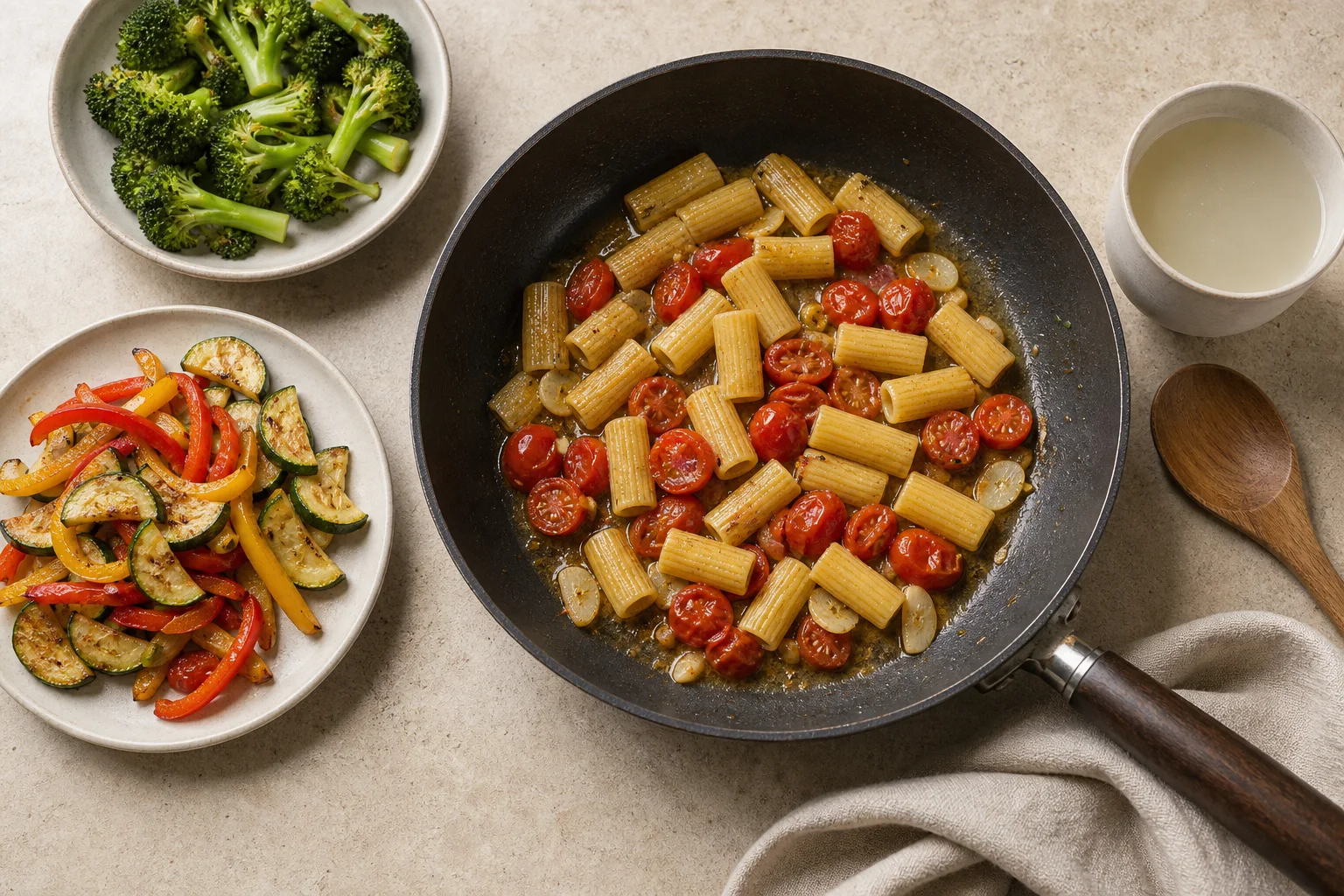
- Brown the firm vegetables. While the pasta cooks, heat 1 tablespoon olive oil in a wide skillet over medium-high heat. Add the zucchini and bell pepper in one layer. Cook, stirring only once or twice, for 3 to 4 minutes, until lightly browned but still firm. Transfer to a plate.
- Cook the broccoli. Add the remaining tablespoon of oil and the broccoli to the skillet. Cook for 2 minutes, then add 2 tablespoons of water and cover for 1 minute. Uncover and transfer the broccoli to the vegetable plate. It should be vivid green and crisp-tender.
- Build the base. Reduce the heat to medium. Add the tomatoes, garlic, red-pepper flakes and 1/2 teaspoon salt. Cook for 2 to 3 minutes, shaking the skillet, until the tomatoes soften and release a little juice but do not collapse completely.
- Finish the pasta in the skillet. Before draining, scoop out 1 1/2 cups of pasta water. Add the drained pasta to the tomatoes with 1/2 cup pasta water. Toss over medium heat for 1 to 2 minutes, adding another splash of water if the pan looks dry.
- Make it glossy. Turn the heat to low. Add the butter and Parmesan in three additions, tossing continuously. Add pasta water a tablespoon at a time until the sauce clings to the noodles and looks shiny rather than soupy.
- Return the vegetables. Fold in the zucchini, bell pepper and broccoli just long enough to heat through, about 1 minute. Remove from the heat and add the lemon zest, lemon juice, basil and several grinds of black pepper. Taste before adding more salt.
Why the method works
A crowded skillet traps steam. Cooking the vegetables in batches lets their surfaces brown while their centers stay crisp, and moving each batch to a plate stops the cooking. The tomatoes come later because their juice becomes part of the sauce.
Pasta water does more than thin the mixture. Its starch helps the oil, butter and cheese form a sauce that coats the pasta. Low heat matters when the Parmesan goes in; high heat can make aged cheese tighten into strings or clumps. If that happens, pull the pan off the burner and toss in a spoonful of warm pasta water.
The light-sauce approach is a deliberate departure from the richest restaurant versions. Saveur's account of Le Cirque's classic describes a cream-laced pasta finished with vegetables and pine nuts. A June 2026 Bon Appétit update likewise uses cream, Parmesan, butter and pasta water, then adds lemon and basil for brightness. Here, the starchy water and a smaller amount of dairy keep the same glossy idea while letting late-summer produce lead.
Smart substitutions
- For zucchini: Use yellow summer squash, thin asparagus pieces or trimmed green beans.
- For broccoli: Use broccolini, sugar snap peas or frozen peas. Add peas only during the final minute.
- For cherry tomatoes: Use two chopped plum tomatoes. Drain very juicy tomatoes briefly so the skillet does not flood.
- For basil: Use flat-leaf parsley, chives or a smaller amount of fresh oregano.
- For short pasta: Use spaghetti or linguine, but reserve extra pasta water because long noodles can absorb more during tossing.
Common mistakes to avoid
Do not cook every vegetable for the same length of time. A broccoli floret and a halved tomato do not reach their best texture together. Keep the batches small, and remember that everything cooks once more when it returns to the skillet.
Do not rinse the pasta. The surface starch helps the sauce cling, and the noodles need to be hot when they meet the tomatoes. Also avoid adding all the reserved water at once; it is easier to loosen a tight sauce than to rescue a flooded one.
Finally, add the lemon after the pan leaves the heat. The fresh acidity sharpens the vegetables and cheese. Serve immediately with extra Parmesan and black pepper, and refrigerate leftovers within two hours. Reheat gently with a splash of water rather than more oil.
Sources and recipe notes
This original Daily Newsfront recipe was informed by seasonal-produce guidance from Utah State University Extension and USDA MyPlate, plus historical and technique references from Saveur and Bon Appétit. Ingredient amounts and cooking sequence were independently developed for this article.


