
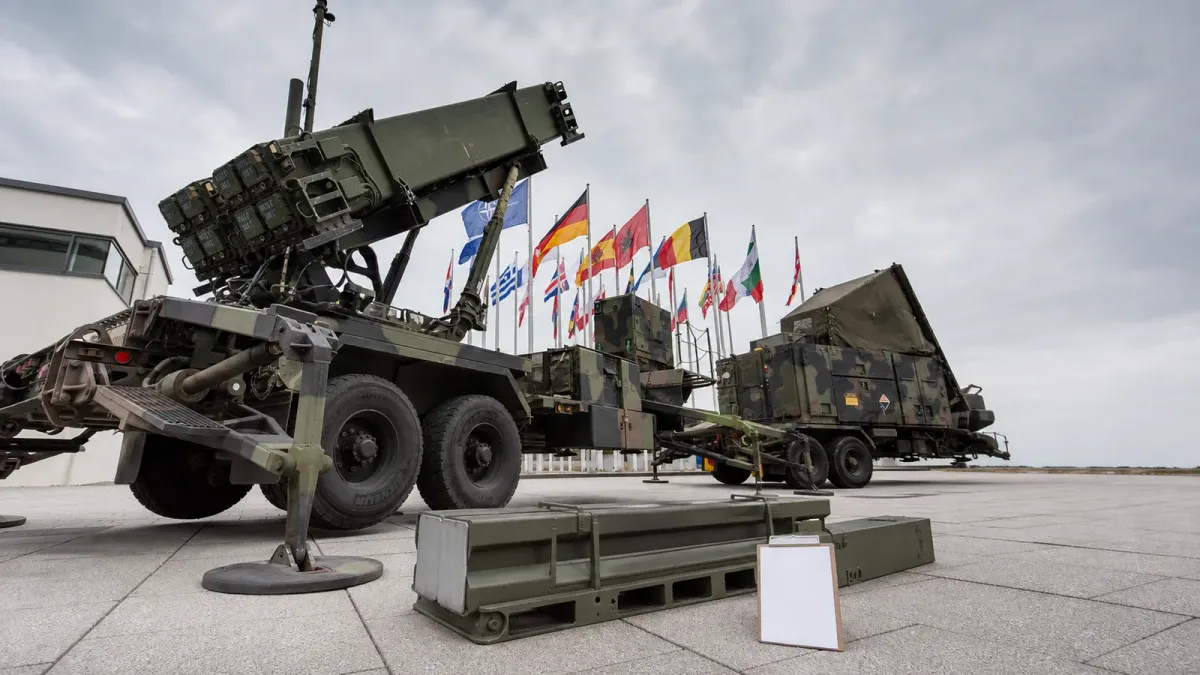
U.S. Patriot interceptor stocks in Europe are at a critically low level after missiles were shifted toward the war with Iran, according to two officials who spoke to The Associated Press. Named Pentagon and NATO spokespeople publicly rejected that characterization, making the central fact a dispute over readiness rather than a confirmed inventory count.
The AP report cites a U.S. defense official in Europe and a NATO official, both speaking anonymously because the stock levels are classified. They said the shortage would leave limited capacity against a sustained ballistic-missile attack and could complicate defense against even a single strike or a missile that crossed into NATO territory by mistake.
U.S. Army Col. Martin O’Donnell, a senior NATO military spokesperson, said the alliance has enough air-defense munitions to defend its territory and continue supporting Ukraine. Pentagon spokesperson Sean Parnell separately called claims of U.S. munition shortages false.
What is not known
No public inventory figure for Patriots stationed in Europe was provided. That means readers should not treat the anonymous officials’ assessment as a verified count, but the concern fits a documented supply problem: interceptor demand has risen across Ukraine, Europe and the Middle East faster than production can immediately respond.
Defense News reported on August 11 that the Pentagon gave weapons makers 21 days to propose faster delivery schedules and production increases for critical systems. It cited a Center for Strategic and International Studies estimate that total U.S. Patriot interceptor stocks fell from about 2,330 before the Iran war to between 759 and 827 after the latest operations. Those are outside estimates, not official stock numbers for Europe.
Why Patriots are hard to replace
Patriot systems are among the few widely deployed defenses capable of intercepting advanced ballistic missiles, which descend at extreme speed and leave defenders little time to react. A battery protects a limited area, so commanders need both launchers in the right locations and enough interceptors to withstand repeated attacks.
NATO has already acknowledged the pressure. At a July defense-industry forum, Deputy Secretary General Radmila Shekerinska said the alliance needed many more interceptors, sensors and command systems. She said NATO’s procurement agency had acquired large numbers of PAC-2 missiles and was pursuing more, while European companies expanded air-defense production.
How the Iran war changed the balance
Patriot transfers to Ukraine had already reduced available stocks, but the Iran war created a second high-intensity demand center. U.S. and allied forces in the Middle East have used interceptors against Iranian missiles and drones, and systems have been repositioned from Europe to support that mission.
The concern is not that a Russian attack on NATO is known to be imminent. It is that a shortfall, if the anonymous officials are correct, could narrow commanders’ choices during an accident, limited strike or sudden escalation before new production arrives.
What happens next
The most meaningful signals will be procurement contracts, production targets, additional deployments and any public change in aid to Ukraine. Until officials release verifiable numbers, the readiness claim remains contested. The broader production squeeze, however, is already visible in NATO’s own calls for more interceptors and the Pentagon’s push for faster manufacturing.


